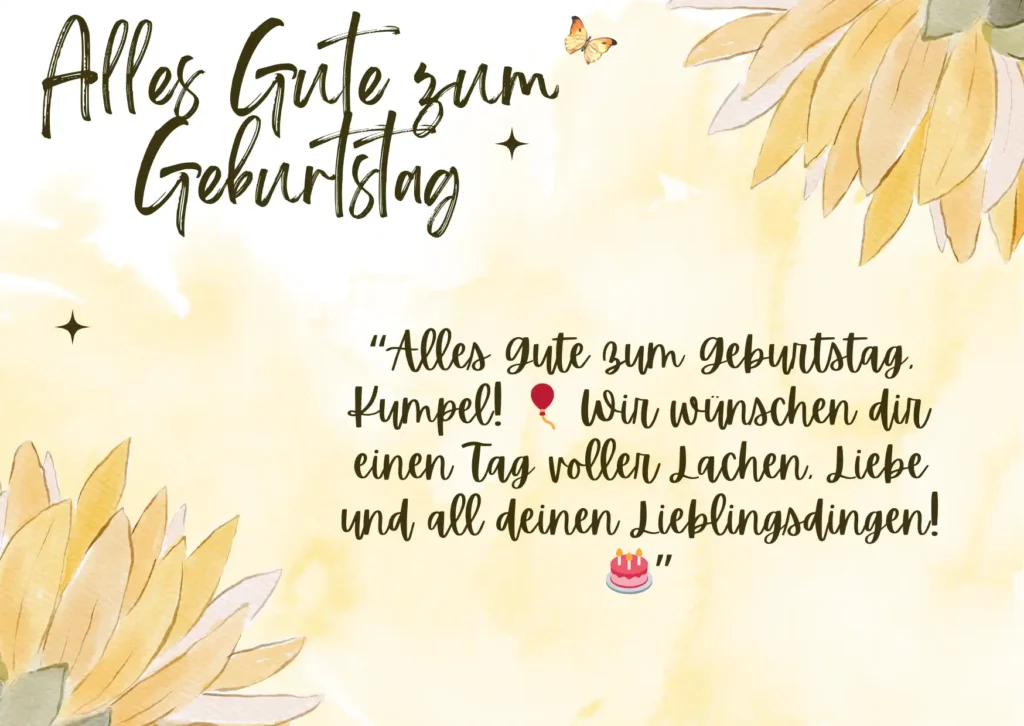
Alles Gute Zum Geburtstag Junger Mann

"Alles Gute Zum Geburtstag Junger Mann" Explained
Let's break down this German phrase. It's something you might hear at a party. Or read in a birthday card. It’s a common and important phrase to understand. Especially if you have German-speaking friends.
First, let's define each word. Knowing the individual meanings helps understand the complete phrase. We'll start with the basics. Think of it like building blocks.
Word by Word
Alles means "all." It's a pretty straightforward word. You can use it in many situations. For example, "Alles ist gut" means "Everything is good."
Next is Gute. This means "good." However, it's important to note that it's an adjective. It describes something as good. "Ein guter Tag" means "a good day."
Now comes Zum. This is a contraction of "zu dem." "Zu" means "to." "Dem" is a form of "the" (dative masculine/neuter). So "zum" can be translated as "to the." Think of it as a shortcut.
Geburtstag means "birthday." This is made up of "Geburt" (birth) and "Tag" (day). Put them together, and you get "birthday." Very logical, right?
Junger means "young." This is the adjective form, describing someone as young. Like "ein junger Hund" is "a young dog." It changes based on grammar.
Finally, we have Mann. This simply means "man." It refers to a male person. Clear and simple.
Putting It All Together
Now that we know what each word means, let's combine them. "Alles Gute zum Geburtstag" translates to "All the best for your birthday." It’s a wish for everything good on their birthday.
The "junger Mann" part adds specificity. It means "young man." So, the entire phrase translates to: "All the best for your birthday, young man!" It's a gendered and age-specific birthday wish.
Think of it this way: you wouldn't say this to your grandmother! You would use a different phrase depending on the person’s gender and age.
When To Use It
This phrase is suitable for younger males. Teenagers, young adults, boys. It's appropriate for most casual settings. Birthday parties, cards, messages. You can't go wrong in these contexts. You might see it written on a cake.
However, context matters. It might not be appropriate in very formal settings. Or if you don't know the person well. In those cases, a more general phrase might be better. Something without "junger Mann."
For example, simply saying "Alles Gute zum Geburtstag!" is always a safe bet. It's a general "Happy Birthday!" that works for everyone. You can't offend anyone with that!
Variations and Alternatives
There are other ways to wish someone a happy birthday in German. Consider these alternatives depending on the situation.
Herzlichen Glückwunsch zum Geburtstag! This is a more formal way of saying "Happy Birthday!" It translates to "Heartfelt congratulations on your birthday!" Use this for more formal situations.
If you want to say it to a woman, you would say "Alles Gute zum Geburtstag, junge Frau!" “Frau” means woman.
You can also use more specific wishes. For instance, "Ich wünsche dir alles Gute zum Geburtstag!" This means "I wish you all the best for your birthday!" It adds a personal touch.
Pronunciation Tips
Pronunciation is key to being understood. German can have some tricky sounds.
Practice the "ch" sound in "ich." It’s not the same as the English "ch." It's a sound made in the back of your throat. Also, the "ü" sound is different from "u". It’s made by rounding your lips while saying "ee."
Listen to native speakers online. Many resources offer audio clips. Repeating the phrase can help. Practice makes perfect!
"Alles Gute zum Geburtstag, junger Mann!" is a common and useful phrase for wishing a young man a happy birthday. Understanding each word and its context will allow you to use it correctly and confidently.
Learning German phrases can be fun and rewarding. It opens up new cultural understanding. It helps you connect with others. So, go ahead and practice. And wish someone a happy birthday in German!