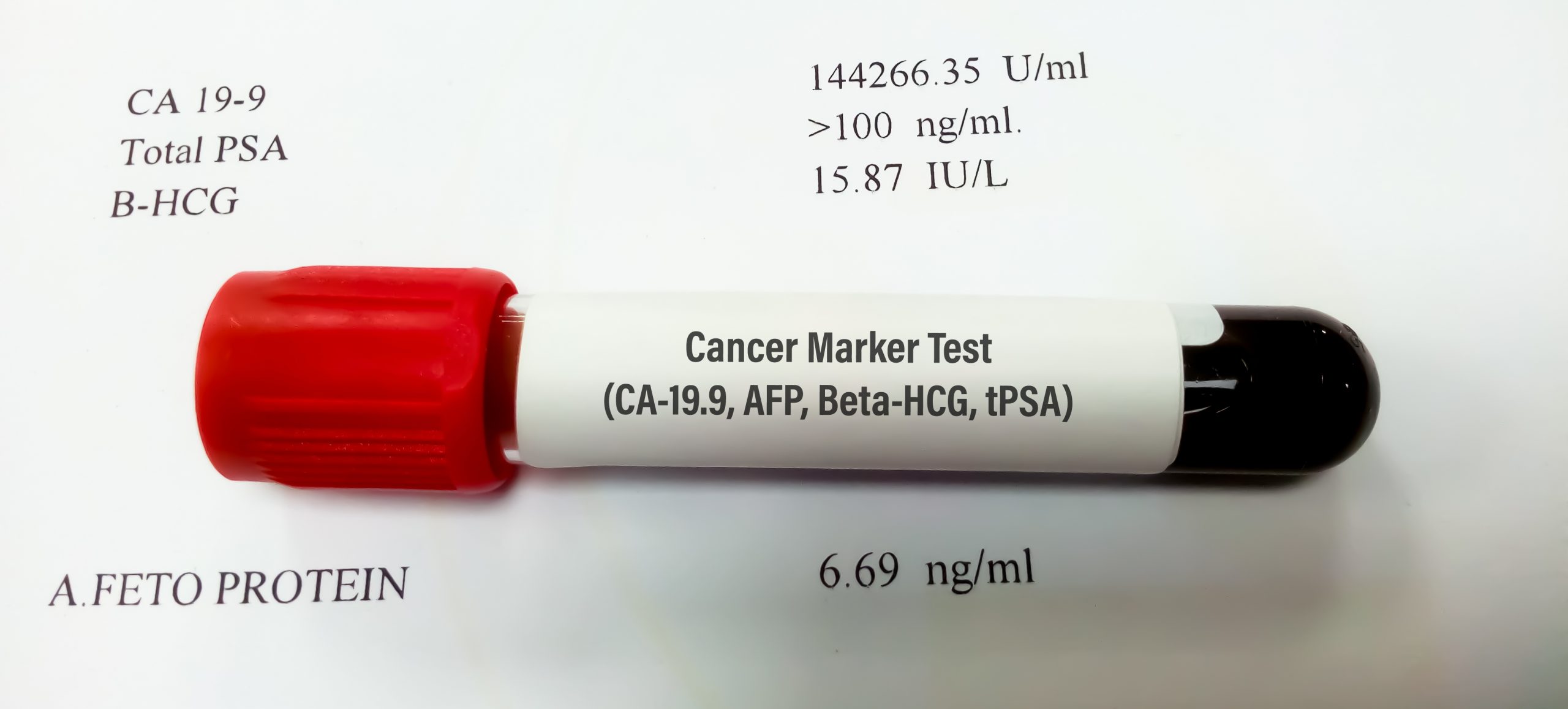
Alpha Fetoprotein As A Tumor Marker
+cont..jpg)
Alpha-Fetoprotein (AFP) is a protein made mainly by the leber and yolk sac in a developing fetus. It's like a special ingredient that helps the baby grow properly.
AFP: Normal and Abnormal Levels
Normally, after a baby is born, AFP levels drop significantly. By the time a child is a year old, it should be very low. However, in some situations, AFP levels can be high in adults. This is when it can act as a tumor marker.
What is a Tumor Marker?
Think of a tumor marker like a flag. It's a substance, often a protein, that's found in higher amounts than normal in the blood, urine, or body tissues when cancer is present. It doesn't mean that if you have elevated AFP you definitely have cancer, but it may indicate further testing is needed.
AFP as a Tumor Marker: What does it mean?
When AFP is used as a tumor marker, doctors are looking for elevated levels in adults. High AFP can be a sign of certain cancers, mainly:
- Leberzellkarzinom (HCC): This is a type of Leberkrebs. Increased AFP levels are strongly associated with HCC.
- Keimzelltumoren: These are cancers that start in the cells that develop into eggs or sperm. They can occur in the Hoden or Eierstöcke, but also in other areas of the body.
Elevated AFP isn't always cancer. It can also be caused by non-cancerous conditions, such as Leberzirrhose (scarring of the liver) or Hepatitis (inflammation of the liver).
How is AFP Measured?
AFP is measured with a simple Bluttest. The doctor takes a blood sample and sends it to a lab. The lab measures the amount of AFP in the blood. The result is usually given in units of nanograms per milliliter (ng/mL).
What does an AFP Test Show?
The AFP test result needs to be interpreted by a doctor. A high AFP level doesn't automatically mean cancer. The doctor will consider other factors, such as your medical history, other test results, and physical examination findings. Further tests, such as imaging scans (CT-Scan, MRT), might be necessary to determine the cause of the elevated AFP.
The test result also needs to be seen in relation to other parameters. For example, in the case of Keimzelltumoren, AFP is often used in conjunction with other Tumormarker, like humanes Choriongonadotropin (hCG).
AFP in Cancer Treatment
Besides helping with diagnosis, AFP levels can also be used to monitor how well cancer treatment is working. If AFP levels go down during treatment, it suggests the treatment is effective. If they stay the same or go up, it might mean the treatment isn't working as well.
Important Considerations
It's important to remember that AFP is just one piece of the puzzle. A single AFP test result shouldn't be used to make a diagnosis. Always talk to your doctor about your AFP levels and what they mean in your specific situation.
Additionally, the normal range for AFP can vary slightly between different laboratories. Your doctor will take this into account when interpreting your results.
AFP in Pregnancy
Although this article focuses on AFP as a Tumormarker, it's important to know that AFP is also used during pregnancy to screen for certain birth defects. In pregnant women, higher AFP levels are normal early in the pregnancy. This article does not refer to AFP during pregnancy but on AFP levels in non-pregnant adults.