Arabic Numbers 1 100 In Arabic Words

Let's explore Arabic numbers from 1 to 100, but instead of the numerals (1, 2, 3), we'll learn their Arabic word equivalents. This isn't about the Arabic numerals *we* use daily; it's about the *Arabic language* words for those numbers. Think of it as learning "one," "two," "three," but in Arabic.
Numbers 1-10: The Foundation
These are the building blocks. Memorizing these makes learning larger numbers much easier.
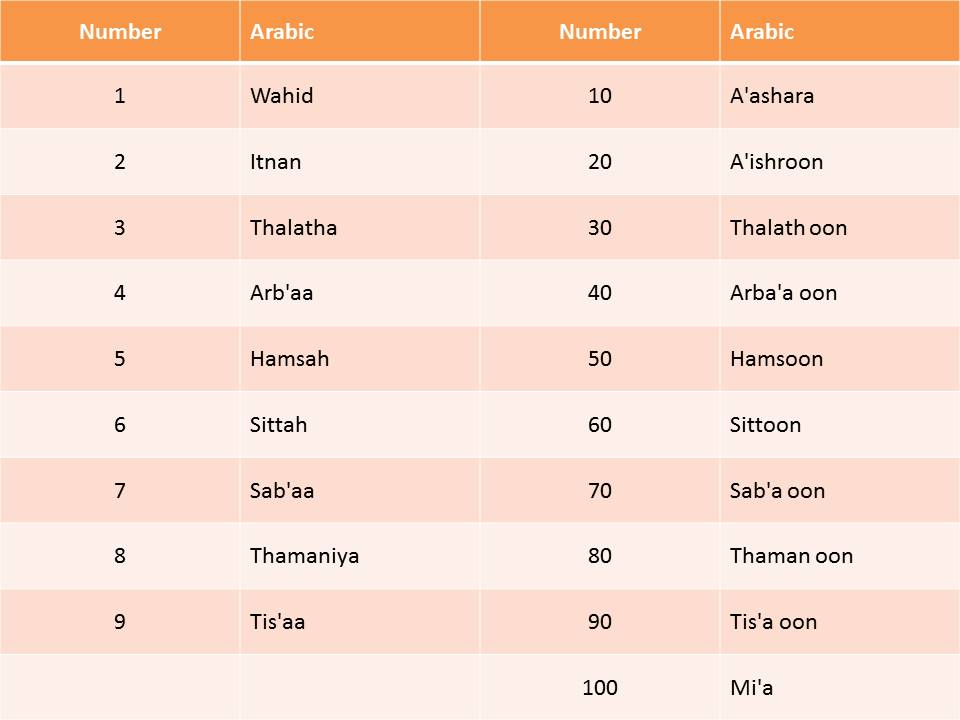
- 1: واحِد (waahid) - Think of it like "wah-hid." Imagine one awesome hideout.
- 2: إثْنَان (ithnaan) - Pronounced "ith-naan." Imagine two gnats.
- 3: ثَلاثَة (thalaatha) - Say "tha-laa-tha." Like three llamas.
- 4: أَرْبَعَة (arba'a) - Pronounced "ar-ba-ah." Imagine four armadillos.
- 5: خَمْسَة (khamsa) - Say "kham-sa." Like five camels in the sand.
- 6: سِتَّة (sitta) - Pronounced "sit-ta." Imagine six sit-ups.
- 7: سَبْعَة (sab'a) - Say "sab-ah." Like seven subs.
- 8: ثَمَانِيَة (thamaaniya) - Pronounced "tha-maa-nee-ya." Think eight tomatoes near ya.
- 9: تِسْعَة (tis'a) - Say "tis-ah." Like nine tissues.
- 10: عَشَرَة ('ashara) - Pronounced "ah-sha-ra." Think ten ash trees near a river.
Numbers 11-19: A Pattern Emerges
Notice a pattern? These numbers mostly combine "ten" ('ashara) with a modified version of the single-digit number. It's like saying "ten-one" or "ten-two," but with slight changes to the first number's word.
- 11: أَحَدَ عَشَر (ahada 'ashar) - More literally, "one and ten."
- 12: إِثْنَا عَشَر (ithnaa 'ashar) - "Two and ten."
- 13: ثَلاثَةَ عَشَر (thalaathata 'ashar) - "Three and ten."
- 14: أَرْبَعَةَ عَشَر (arba'ata 'ashar) - "Four and ten."
- 15: خَمْسَةَ عَشَر (khamsata 'ashar) - "Five and ten."
- 16: سِتَّةَ عَشَر (sittata 'ashar) - "Six and ten."
- 17: سَبْعَةَ عَشَر (sab'ata 'ashar) - "Seven and ten."
- 18: ثَمَانِيَةَ عَشَر (thamaanata 'ashar) - "Eight and ten."
- 19: تِسْعَةَ عَشَر (tis'ata 'ashar) - "Nine and ten."
The Tens: 20, 30, 40...
The tens are mostly based on the single-digit numbers too, but with a different ending. It's like a new family of words!
- 20: عِشْرُون ('ishroon) - Think "ish-roon."
- 30: ثَلاثُون (thalaathoon) - Notice the root "thalaatha" (three).
- 40: أَرْبَعُون (arba'oon) - Based on "arba'a" (four).
- 50: خَمْسُون (khamsoon) - Related to "khamsa" (five).
- 60: سِتُّون (sittoon) - From "sitta" (six).
- 70: سَبْعُون (sab'oon) - Linked to "sab'a" (seven).
- 80: ثَمَانُون (thamaanun) - From "thamaaniya" (eight).
- 90: تِسْعُون (tis'oon) - Based on "tis'a" (nine).
Combining Tens and Ones: Building Blocks at Work
Now, let's build bigger numbers! You combine the tens and ones using the word وَ (wa), which means "and." Think of it like connecting LEGO bricks.
For example:
- 21: وَاحِد وَ عِشْرُون (waahid wa 'ishroon) - "One and twenty"
- 35: خَمْسَة وَ ثَلاثُون (khamsa wa thalaathoon) - "Five and thirty"
- 72: إِثْنَان وَ سَبْعُون (ithnaan wa sab'oon) - "Two and seventy"
- 99: تِسْعَة وَ تِسْعُون (tis'a wa tis'oon) - "Nine and ninety"
One Hundred
Finally, the big one!
- 100: مِائَة (mi'a) - Pronounced "mee-ah."
Learning Arabic numbers takes practice, but breaking them down into these smaller chunks makes it manageable. Keep practicing, and you'll be counting to 100 in Arabic in no time!