Bad Words In Italian Language
Ciao! Learning Italian is an exciting journey, opening doors to a beautiful culture, delicious food, and passionate people. But like any language, Italian comes with its own set of challenges, and one of those is navigating the world of... parolacce – bad words.
It's completely understandable to feel a bit nervous about this. You might be worried about accidentally offending someone, or even worse, getting into a sticky situation. You’re not alone! Many learners struggle with this, and that’s perfectly normal. We all want to communicate effectively and respectfully.
This guide is here to help you understand Italian swear words: what they mean, when (and when *not*) to use them, and how to avoid awkward moments. It’s not about encouraging you to swear, but rather about empowering you with the knowledge to understand and, if necessary, defend yourself. Think of it as equipping you with a linguistic "safety net."
Why Learn About Bad Words?
You might be thinking: "Why bother learning bad words? I just want to speak politely!" That's a fair point. However, understanding parolacce is crucial for several reasons:
Understanding Context: Imagine overhearing a conversation where someone uses a word you don't understand. It could be a compliment, an insult, or something in between. Knowing the potential negative words helps you understand the context of the conversation and avoid misinterpretations. It's about being aware of what's really being said.
Avoiding Offense: Some words are more offensive than others. Using a highly offensive word accidentally can create a negative impression and damage relationships. Knowing the severity of different words helps you choose your language carefully and avoid causing offense, even unintentionally.
Protecting Yourself: Sadly, not everyone you meet will be polite. Understanding swear words allows you to recognize when someone is being offensive towards you or others, and to react appropriately, whether it's standing up for yourself or simply removing yourself from the situation.
Understanding Italian Culture: Swearing, like it or not, is a part of many cultures. While it’s generally best to avoid using strong language in formal settings or with people you don’t know well, understanding the role of parolacce in Italian culture provides a more complete picture of the language and its people. You'll encounter these words in movies, music, and everyday conversations.
The Spectrum of "Bad"
It’s important to understand that "bad words" aren't a monolithic category. There's a whole spectrum of offensiveness, ranging from mild expressions of frustration to deeply offensive insults. Think of it like the colors of a rainbow – each shade has its own intensity.
Mild Exclamations: These are words or phrases that express frustration, annoyance, or surprise. They are generally considered less offensive and may be used in casual settings with close friends. Think of the English equivalent of "shoot!" or "damn."
Moderate Insults: These are words used to criticize or belittle someone. They are more offensive than mild exclamations and should be used with caution, if at all. Think of the English equivalent of "jerk" or "stupid."
Strong Oaths and Insults: These are the most offensive words, often relating to religion, sex, or bodily functions. They are generally considered unacceptable in polite conversation and can cause significant offense. Think of the English equivalent of the "F-word" or racial slurs.
Examples and Their Nuances
Here are a few examples of Italian "bad words," categorized by their level of offensiveness. Remember, the context and tone of voice can significantly impact the severity of a word.
Mild:
- Accidenti! - Darn! (Similar to "shoot!" or "rats!")
- Cavolo! - Cabbage! (A mild exclamation of surprise or frustration. It sounds silly in English, but it's a common expression.)
- Mamma mia! - My goodness! (Often used for surprise or shock, but can also be used in frustration. Context is key.)
Moderate:
- Stupido/a - Stupid (Fairly common, but still an insult. Be mindful of who you're talking to.)
- Scemo/a - Idiot (Similar to "stupido," but perhaps slightly more forceful.)
- Pazzo/a - Crazy (Can be playful or genuinely insulting depending on the context.)
- Rompiscatole - Pain in the neck (A relatively mild insult, often used playfully.)
Strong: These are just examples for understanding and should be used with extreme caution, if at all.
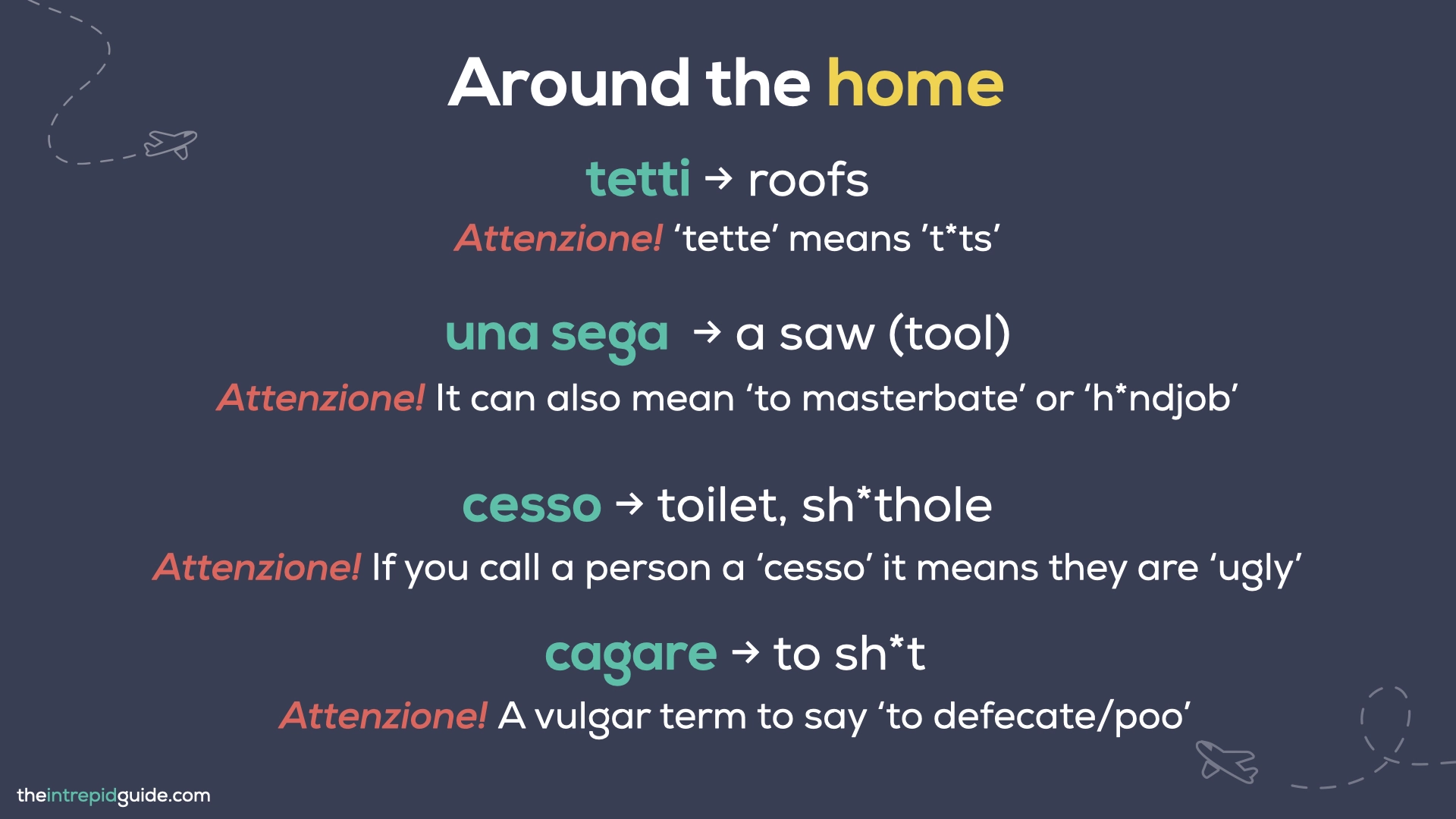
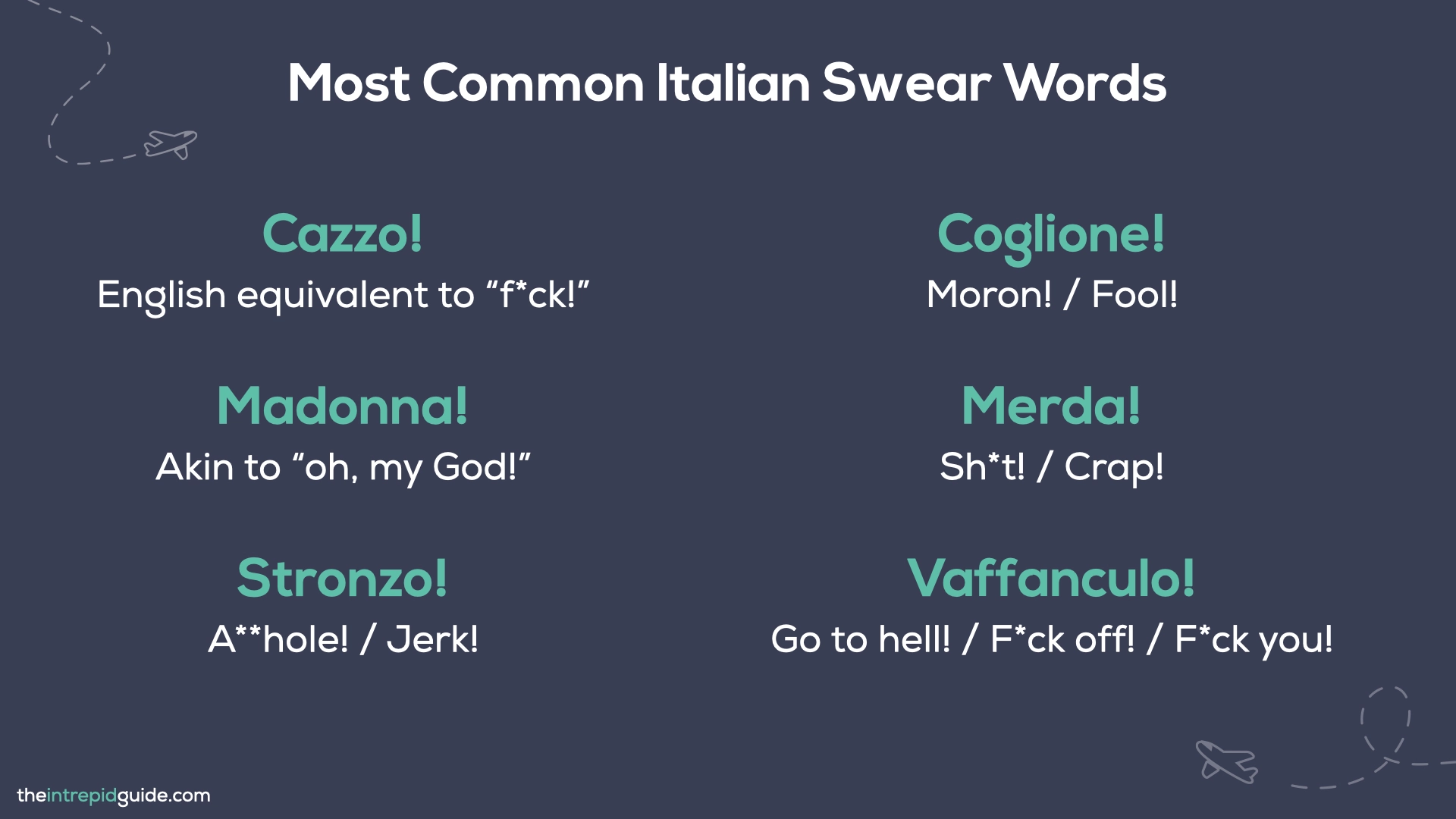
- Cazzo! - Literally "dick." (A very common, but very vulgar exclamation. Equivalent to the English "F-word." It can be used to express anger, frustration, surprise, or even emphasis, but it's generally considered offensive, especially in formal settings.)
- Str***o/a - Literally "piece of sh*t." (A very strong insult. Avoid using this at all costs.)
- Vaffanculo! - Go f*ck yourself! (A very offensive and aggressive phrase. Never use this unless you are intentionally trying to provoke someone.)
Important Note: These are just a few examples, and there are many other Italian swear words. Furthermore, the perceived offensiveness of a word can vary depending on the region, the age of the speaker, and the specific social context. Always err on the side of caution and avoid using language that could be considered offensive.
When *Not* to Swear
Now that you have a better understanding of the different levels of "bad words," let's talk about when you should avoid using them altogether:
Formal Settings: In professional environments, academic settings, or when speaking to people you don't know well, it's always best to use polite and respectful language. Avoid swearing in business meetings, job interviews, or when interacting with authority figures.
Around Children: This should be obvious, but swearing in front of children is generally considered inappropriate and can be harmful to their development.
Religious Settings: Avoid using swear words in churches, mosques, synagogues, or other places of worship. Showing respect for religious beliefs is essential.
When You're Unsure: If you're not sure whether a particular word or phrase is appropriate, it's always best to err on the side of caution and choose a more neutral alternative. It's better to be safe than sorry.
Counterpoints: The Case for Using *Parolacce*
While this guide emphasizes the importance of avoiding offensive language, it's important to acknowledge that there are situations where swearing might be considered acceptable, or even expected.
Among Close Friends: In informal settings with close friends who share a similar sense of humor, swearing can be a way to express camaraderie and build rapport. However, it's important to be mindful of individual preferences and sensitivities. Just because your friends swear doesn't mean they're comfortable with *you* swearing around them.
Expressing Intense Emotion: Sometimes, when experiencing intense pain, anger, or frustration, a well-placed swear word can provide a sense of catharsis. It's a way to release pent-up emotions and feel a sense of relief. However, it's important to be mindful of the impact your language might have on others, and to avoid directing your anger at specific individuals.
Adding Emphasis: In some cases, a swear word can be used to add emphasis to a statement or to highlight a particular point. However, this should be done with caution, as it can easily come across as aggressive or unprofessional.
The Importance of Context: Ultimately, the acceptability of swearing depends on the context, the relationship between the speakers, and the cultural norms of the environment. What's considered acceptable in one situation might be completely inappropriate in another.
Alternatives to Swearing
If you want to express your emotions without resorting to potentially offensive language, there are plenty of alternatives you can use. Here are a few ideas:
Use Mild Exclamations: As mentioned earlier, words like "Accidenti!" or "Cavolo!" can be used to express frustration or surprise without causing offense.
Use Descriptive Language: Instead of using swear words to describe a negative situation, try using more descriptive language. For example, instead of saying "This is a sh*t situation," you could say "This is a very difficult and challenging situation."
Use Humor: Humor can be a great way to diffuse tension and express your feelings without resorting to offensive language. Try making a joke about the situation or using self-deprecating humor.
Take a Break: If you're feeling overwhelmed or frustrated, take a break from the situation. Step away, take a few deep breaths, and come back to it later when you're feeling calmer.
Express Your Feelings Directly: Instead of resorting to swear words, try expressing your feelings directly and honestly. Use "I" statements to communicate your needs and concerns. For example, instead of saying "You're being a jerk," you could say "I feel frustrated when you interrupt me."
Real-World Impact: Misunderstandings and Offenses
The impact of using the wrong word can be significant. Think about a tourist who unknowingly uses a highly offensive term when asking for directions. They might be met with anger, hostility, or even physical aggression. This highlights the importance of understanding the nuances of language and culture to avoid causing offense.
In professional settings, using inappropriate language can damage your reputation and career prospects. It can create a negative impression of you and your company, and can even lead to disciplinary action. Always be mindful of your language in the workplace and strive to maintain a professional demeanor.
Even among friends, using offensive language can strain relationships and damage trust. It can create a sense of discomfort and alienation, and can make it difficult to communicate effectively. Always be respectful of your friends' feelings and avoid using language that could be hurtful or offensive.
Staying Solution-Focused: Resources and Tips
So, what can you do to improve your understanding of Italian swear words and avoid potential pitfalls?
Listen Carefully: Pay attention to how native speakers use language in different contexts. Watch Italian movies and TV shows, listen to Italian music, and observe conversations between Italians. This will help you get a better sense of the nuances of the language and the appropriate use of different words and phrases.
Ask Questions: If you're unsure about the meaning or appropriateness of a particular word or phrase, don't be afraid to ask a native speaker for clarification. Most Italians are happy to help language learners and will appreciate your effort to communicate respectfully.
Use a Dictionary: Consult a reliable Italian dictionary to look up the meaning of unfamiliar words and phrases. Be sure to pay attention to the dictionary's notes on the level of formality and the potential for offense.
Read Articles and Books: There are many resources available online and in print that provide information about Italian swear words and their usage. Look for articles and books written by native speakers or experts in Italian language and culture.
Practice with a Language Partner: Find a language partner who is a native Italian speaker and practice using different words and phrases in different contexts. Ask them for feedback on your language and pronunciation.
Conclusion
Navigating the world of Italian parolacce can seem daunting, but with knowledge and awareness, you can confidently communicate in Italian without causing offense. Remember to be mindful of the context, your audience, and the potential impact of your words. Understanding the nuances of "bad words" isn’t about using them, but about understanding the conversations around you and protecting yourself.
What steps will you take to continue learning about and navigating the complexities of Italian language and culture?