Common Japanese Words And Phrases
Hallo! Let's dive into some common Japanese words and phrases. We'll cover what they mean, how to use them, and why knowing them is super helpful.
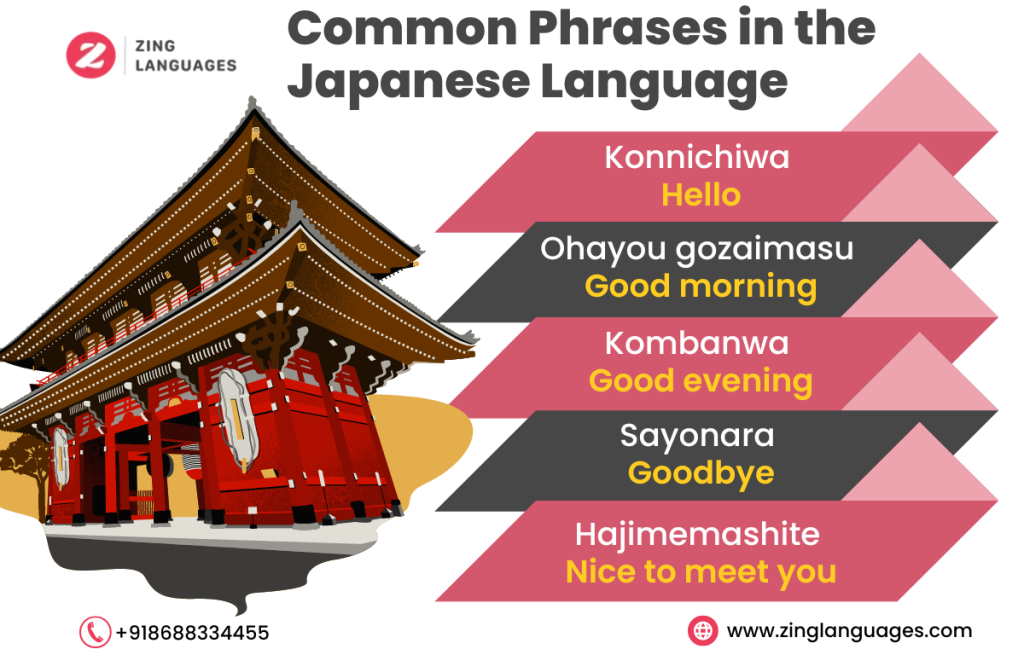
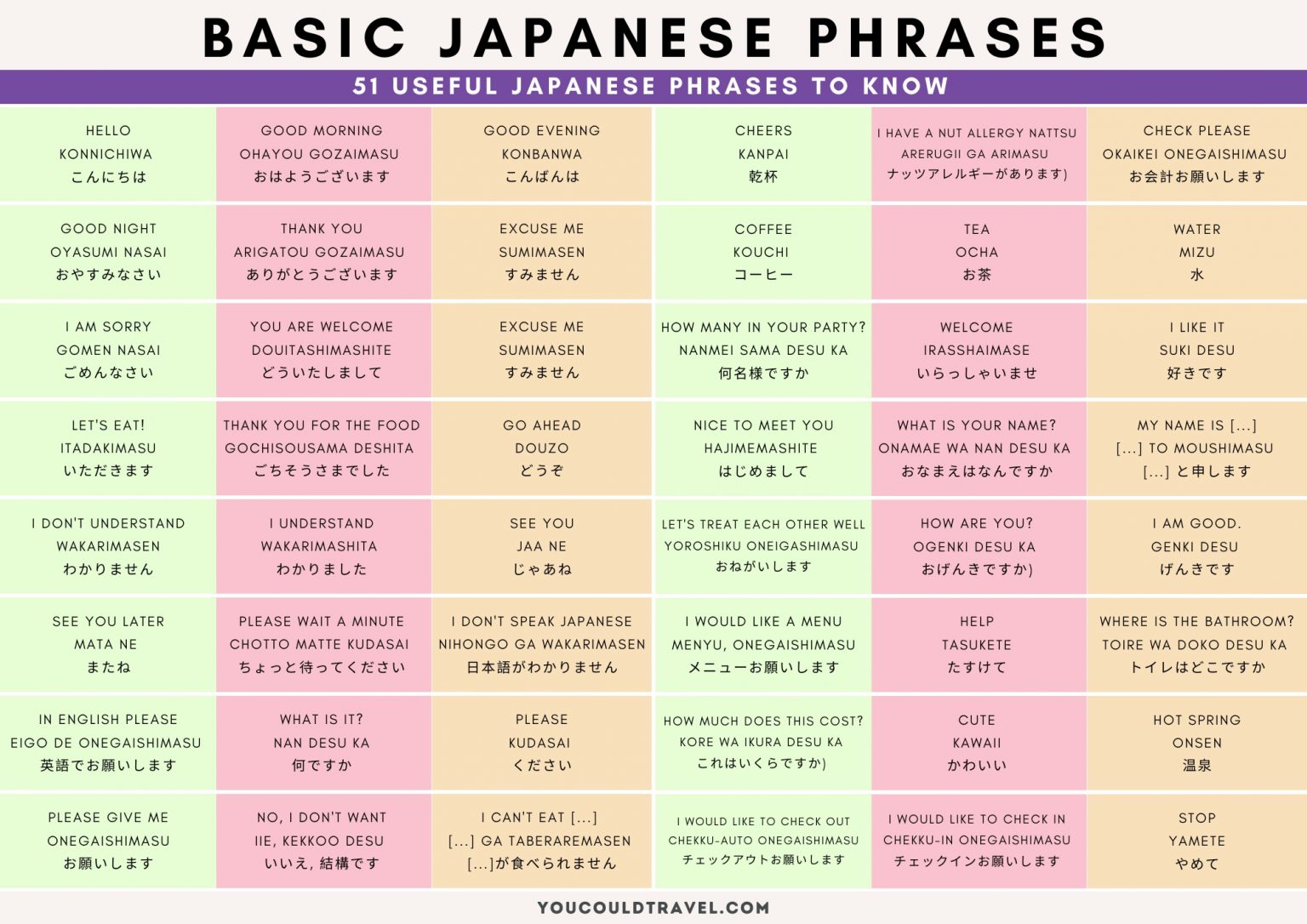
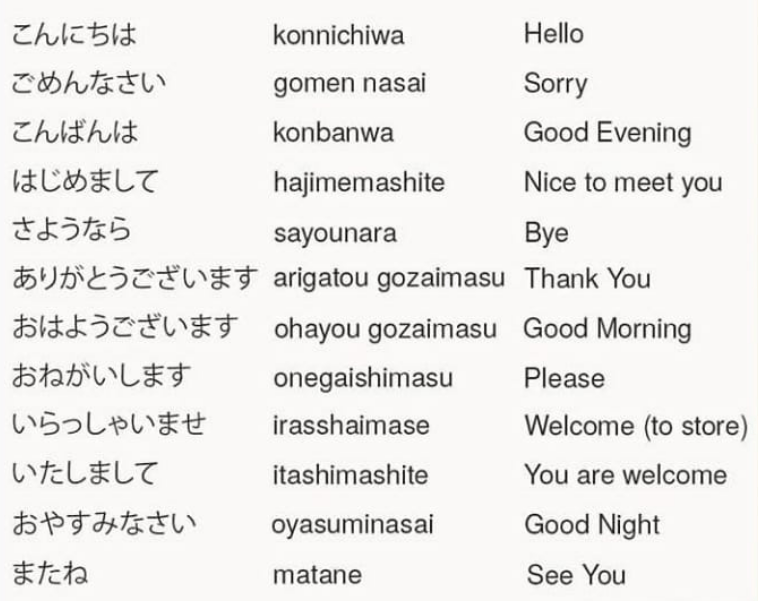
Kon'nichiwa (こんにちは) - What is it? It's a greeting that means "Hello" or "Good afternoon." How does it work? You use it during the daytime, usually from late morning until evening. Why does it matter? It's a basic and polite way to greet someone. Imagine you're entering a shop or meeting a neighbor; kon'nichiwa is perfect!
Arigatō (ありがとう) - What is it? It translates to "Thank you." How does it work? You say it when someone does something nice for you. Why does it matter? Showing gratitude is important in any culture, and arigatō is the simplest way to do so in Japanese. For instance, if someone holds the door open for you, a quick arigatō is perfect.
Sumimasen (すみません) - What is it? This word has multiple meanings, including "Excuse me," "Sorry," and even "Thank you" in some contexts. How does it work? It's incredibly versatile! You can use it to get someone's attention, apologize for a minor mistake, or even when receiving a gift (sort of like saying "I'm sorry for the trouble"). Why does it matter? It shows politeness and consideration. Bumping into someone? Sumimasen. Need to ask a question? Sumimasen. Received a compliment? Often sumimasen is used.
Hai (はい) - What is it? Simply put, it means "Yes." How does it work? You use it to agree or acknowledge something. Why does it matter? It's a fundamental word for communication. Are you ready to learn more? Hai!
Īe (いいえ) - What is it? The opposite of hai, it means "No." How does it work? You use it to disagree or decline something. Why does it matter? Just as essential as "yes," knowing how to say "no" is crucial. Do you want more coffee? Īe, thank you.
Wakarimasu ka (分かりますか) - What is it? This phrase means "Do you understand?" How does it work? You use it when you want to check if someone comprehends what you're saying. Why does it matter? Especially useful when teaching or explaining something. After explaining a grammar point, you can ask wakarimasu ka to ensure everyone is following along. If they understand, they'll likely reply with "Hai, wakarimasu (はい、分かります)," meaning "Yes, I understand."
O-namae wa nan desu ka (お名前は何ですか) - What is it? This phrase means "What is your name?" How does it work? You use it to politely ask someone for their name. Why does it matter? Introductions are important in any language. It's a great way to start a conversation. If they then ask you the same question, you can answer with "Watashi no namae wa [your name] desu (私の名前は[your name]です)," which means "My name is [your name]."
These are just a few basic Japanese words and phrases. Learning these will significantly enhance your interactions with Japanese speakers and provide a great foundation for further language learning. Good luck, or as they say in Japanese, Ganbatte! (頑張って!). Remember to practice regularly!