Die Großen Blauen Pferde Franz Marc
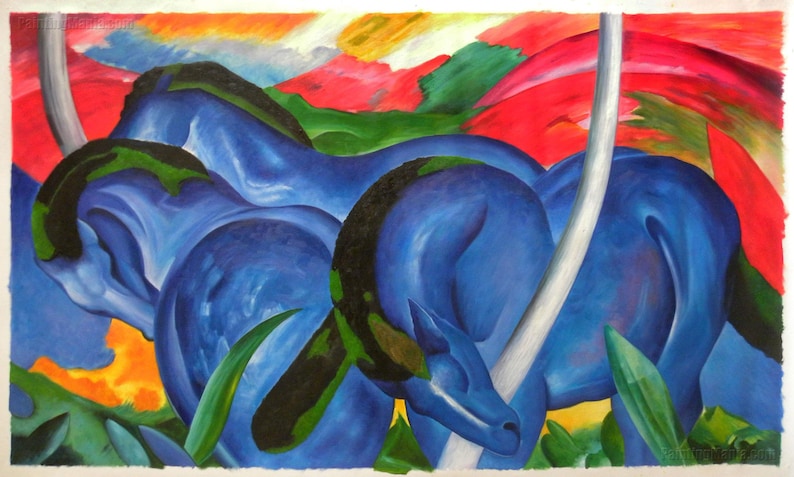
Die großen blauen Pferde (The Large Blue Horses) is a pivotal painting by Franz Marc, created in 1911. It's a prime example of German Expressionism, a movement characterized by its emphasis on subjective experience and emotional expression over objective reality. Think of it as a way for artists to show *how they feel* about something, rather than just painting *what they see*.
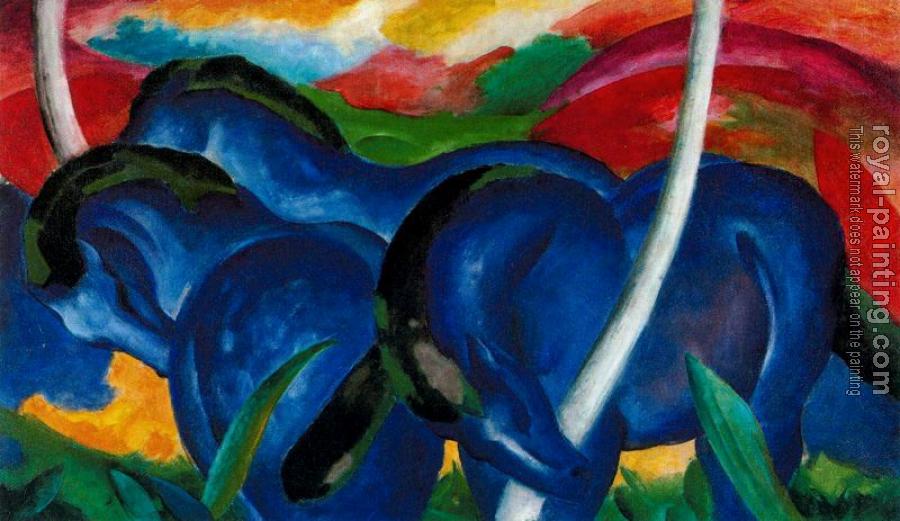
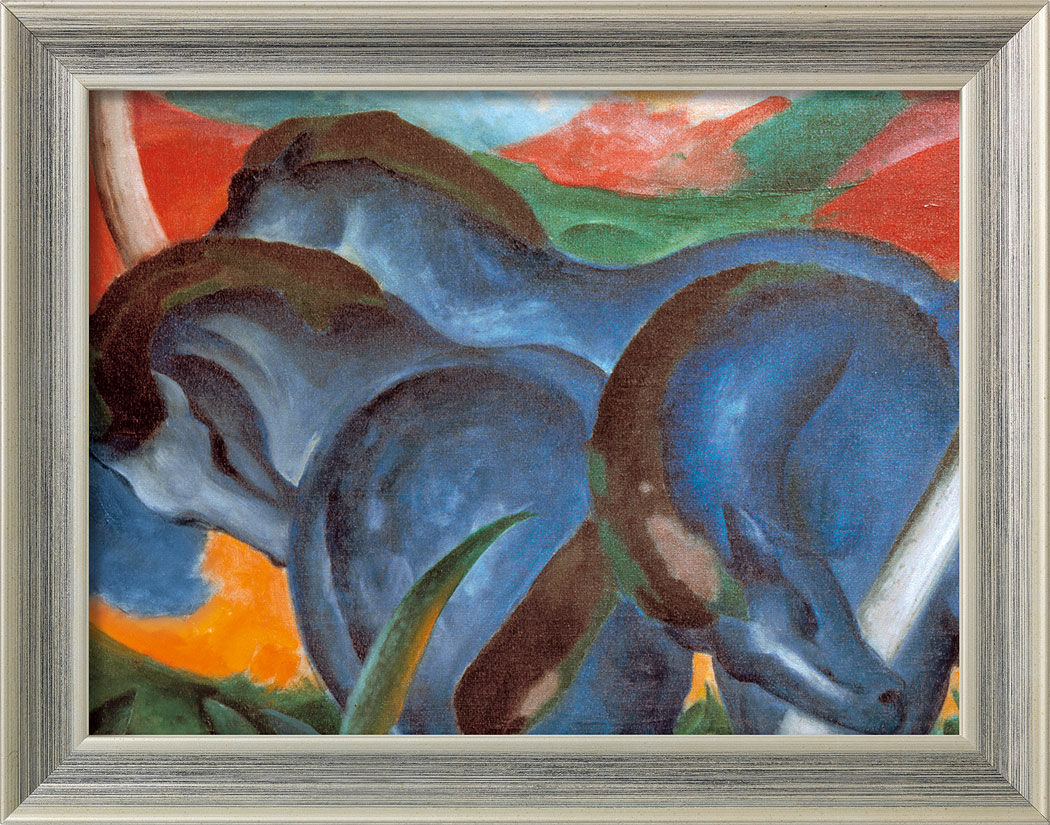
So, what exactly are we dealing with? At its core, Die großen blauen Pferde uses bold colors, simplified forms, and dynamic composition to convey a sense of energy, spirituality, and the connection between humans and nature. Instead of photorealistic accuracy, Marc prioritized creating an *emotional impact* on the viewer. The painting depicts a group of horses rendered primarily in shades of blue, grazing peacefully in a vibrant landscape.
The painting's significance lies in its exploration of themes central to Expressionism: the search for authenticity, the desire to connect with the natural world, and the expression of inner emotions. Marc believed that animals, unlike humans, still possessed a pure connection to nature, untainted by societal constructs. He used them as symbols of spirituality and harmony. Blue, for Marc, represented spirituality and masculinity.
Decoding Die Großen Blauen Pferde: A Phased Walkthrough
Let's break down the painting into key elements to understand Marc's artistic choices:
Phase 1: Color Analysis - More Than Just Blue
- Dominant Blue: Notice the pervasive use of blue in the horses. This isn't random. Blue, for Marc, symbolized spirituality and masculinity. It suggests a sense of calm, power, and connection to something larger than oneself.
- Complementary Colors: Look for other colors, such as red and yellow, strategically placed to create contrast and visual interest. These colors aren't necessarily "realistic" for a landscape, but they contribute to the overall emotional intensity. Consider the warm colors near the bottom; they give a feeling of warmth and vitality contrasting with the cooler blues.
- Beyond Representation: Forget trying to match the colors to reality. Marc used color to evoke feelings, not to replicate what he saw. The colors are emotionally driven.
Phase 2: Form and Shape - Simplifying the Essence
- Simplified Forms: Observe how the horses are depicted with simplified, almost geometric shapes. This is a key characteristic of Expressionism. Marc was interested in capturing the essence of the horses, not their precise anatomical details.
- Interlocking Shapes: Notice how the shapes of the horses blend into the landscape, creating a sense of unity and interconnectedness. This reinforces the idea of harmony between animals and nature. The forms are almost faceted, like cut gems.
- Dynamic Lines: The lines are not static. They curve and flow, creating a sense of movement and energy. This contributes to the overall feeling of vitality and dynamism in the painting.
Phase 3: Composition and Meaning - Putting it All Together
- Arrangement of Horses: The horses are grouped closely together, suggesting a sense of community and shared experience. They are not isolated individuals, but part of a larger whole.
- Landscape Integration: The landscape isn't just a backdrop; it's an integral part of the composition. The hills and valleys echo the curves of the horses, further emphasizing the connection between them and their environment. The landscape itself feels alive.
- Symbolism: Remember that Marc used animals as symbols of purity and spiritual connection. Die großen blauen Pferde can be interpreted as a celebration of these qualities, a longing for a simpler, more harmonious existence.
Practical Application: Quick Fixes for Understanding Expressionism
- Problem: "This painting doesn't look realistic!" Fix: Stop looking for realism! Focus on the artist's *emotional intent* and how the colors and forms contribute to that feeling.
- Problem: "I don't understand the symbolism." Fix: Research the artist's beliefs and motivations. What did color mean to them? What were their views on nature and society? Understanding the context can unlock deeper layers of meaning.
- Problem: "I don't like abstract art." Fix: Approach it with an open mind. Don't try to find recognizable objects; instead, let the colors and forms wash over you and see what emotions they evoke. Think of it as music for the eyes.
By understanding the principles of Expressionism and analyzing the key elements of Die großen blauen Pferde, you can gain a deeper appreciation for Franz Marc's artistic vision and the power of art to communicate emotions and ideas beyond the realm of objective representation. It's about feeling, not just seeing.