Die Vier Fälle In Deutsch
Die Vier Fälle: A Simple Guide
German grammar can seem complicated at first. One of the biggest hurdles for learners is understanding the four cases, also known as die vier Fälle. These cases determine the function of a noun or pronoun within a sentence. Mastering them is essential for constructing grammatically correct and meaningful sentences. It's not as difficult as it initially appears!
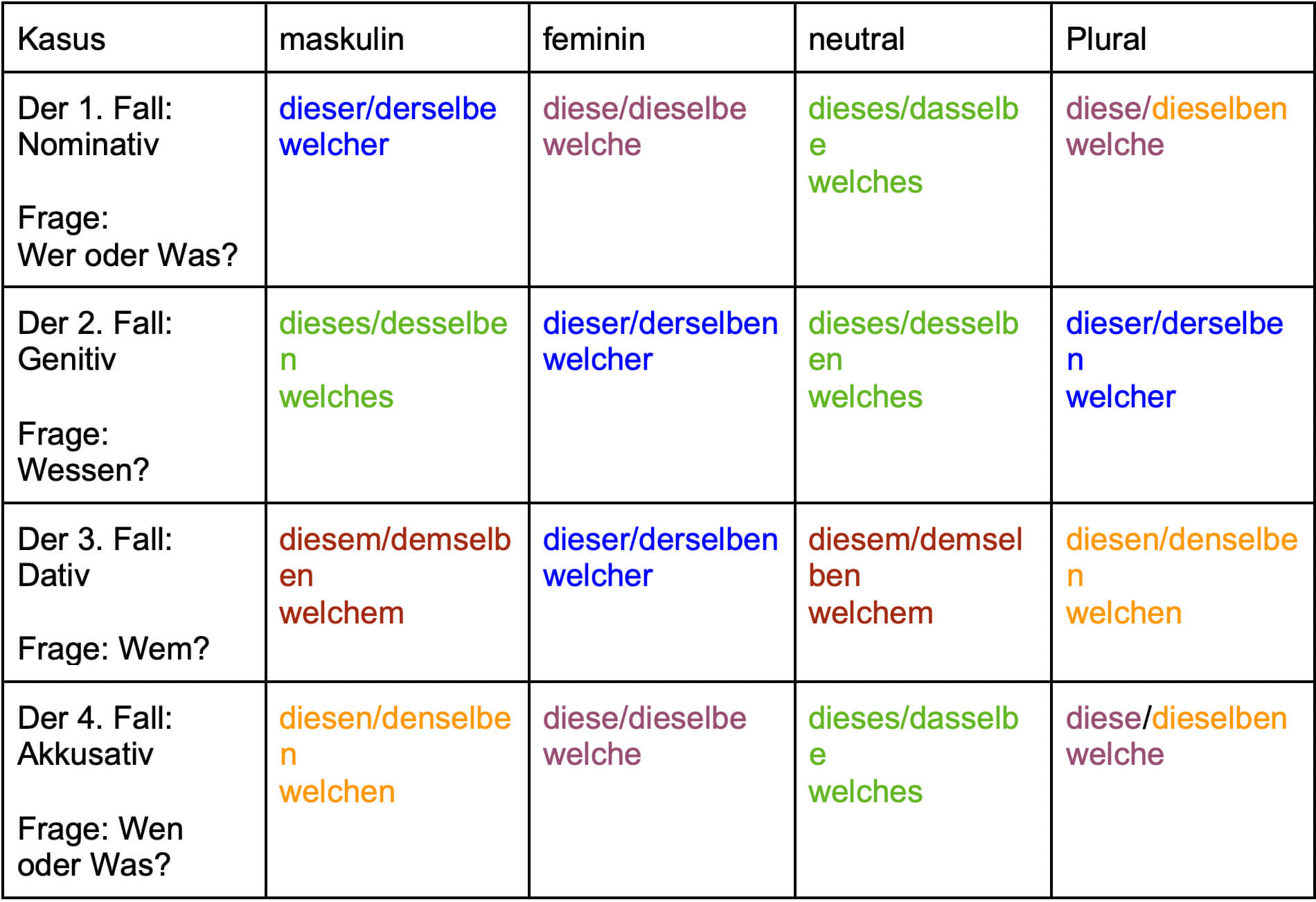
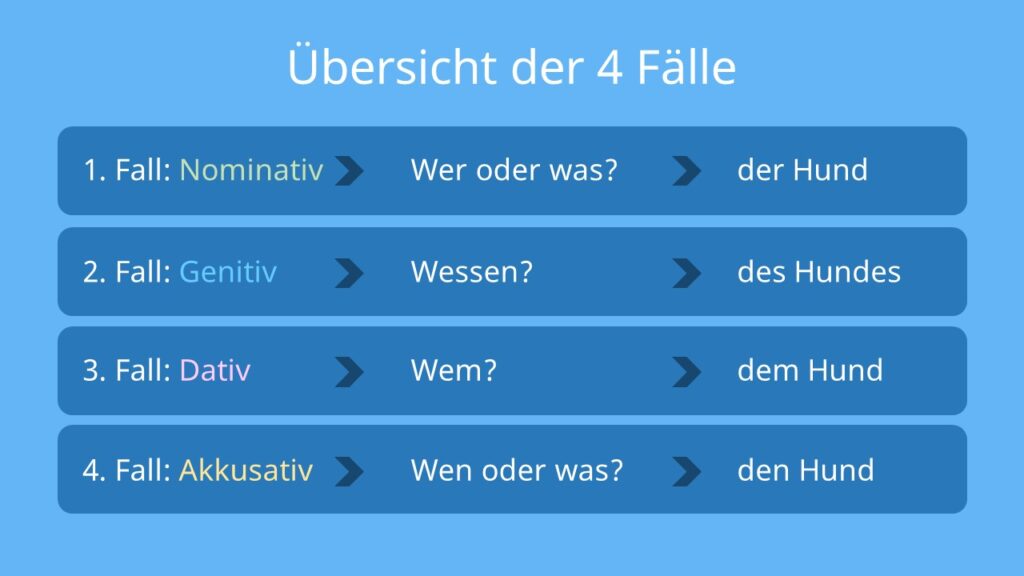
The four cases are: Nominativ, Akkusativ, Dativ, and Genitiv. Each case answers a specific question about the noun's role in the sentence. Think of them as different hats a noun can wear. The hat determines its job.
Nominativ: The Subject
The Nominativ case identifies the subject of the sentence. The subject is the person or thing performing the action. It answers the question "Wer?" (Who?) or "Was?" (What?).
Example: Der Mann liest ein Buch. (The man reads a book.) Here, "der Mann" (the man) is in the Nominativ because he is performing the action of reading. We ask: Wer liest ein Buch? Der Mann. The article "der" changes depending on the case. This is a key indicator.
Another example: Die Frau singt. (The woman sings.) We ask: Wer singt? Die Frau. The noun "die Frau" is in the Nominativ. This shows us who is doing the singing.
Akkusativ: The Direct Object
The Akkusativ case identifies the direct object of the sentence. The direct object receives the action of the verb. It answers the question "Wen?" (Whom?) or "Was?" (What?).
Example: Der Mann liest ein Buch. (The man reads a book.) Here, "ein Buch" (a book) is in the Akkusativ because it is receiving the action of reading. We ask: Wen oder was liest der Mann? Ein Buch. Notice how the article changes.
Another example: Ich sehe den Hund. (I see the dog.) We ask: Wen sehe ich? Den Hund. "Den Hund" is in the Akkusativ. The direct object is the dog.
Dativ: The Indirect Object
The Dativ case identifies the indirect object of the sentence. The indirect object is the recipient of the direct object. It often involves giving or showing something to someone. It answers the question "Wem?" (To whom? or For whom?).
Example: Ich gebe dem Mann das Buch. (I give the man the book.) Here, "dem Mann" (to the man) is in the Dativ because he is receiving the book. We ask: Wem gebe ich das Buch? Dem Mann.
Another example: Sie hilft der Frau. (She helps the woman.) We ask: Wem hilft sie? Der Frau. The woman is the indirect object.
Genitiv: Possession (Less Common)
The Genitiv case indicates possession or belonging. It answers the question "Wessen?" (Whose?). It is less commonly used in modern German, especially in spoken language. Often, it's replaced by the Dativ case with the preposition "von".
Example: Das ist das Auto des Mannes. (That is the car of the man / the man's car.) Here, "des Mannes" (of the man) is in the Genitiv because it shows possession of the car. We ask: Wessen Auto ist das? Des Mannes.
Another example: Die Farbe des Himmels ist blau. (The color of the sky is blue.) We ask: Wessen Farbe ist blau? Des Himmels. The sky possesses the color.
Practical Application and Tips
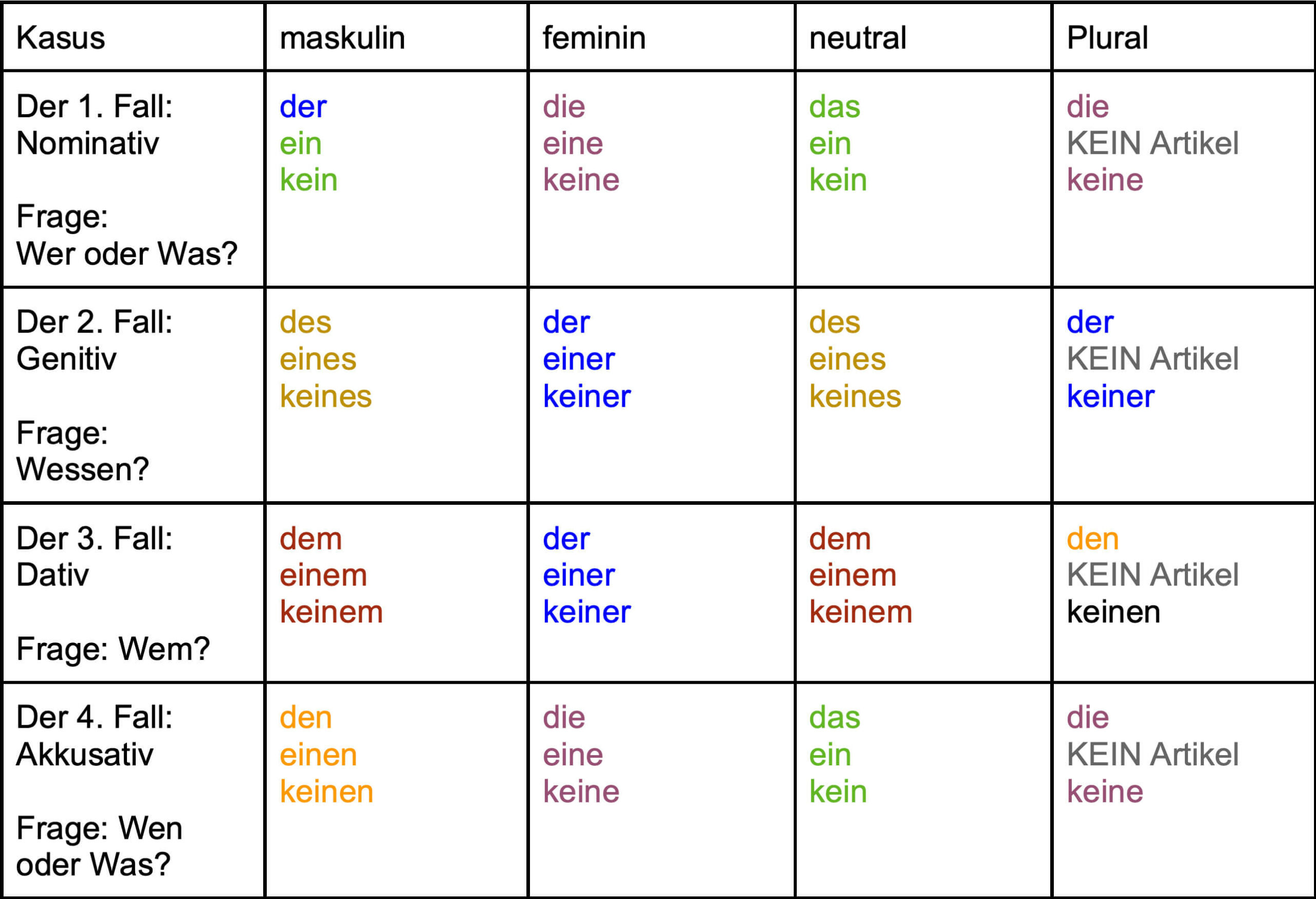
Learning the cases takes time and practice. Start by focusing on the Nominativ, Akkusativ, and Dativ. These are the most frequently used cases. Pay close attention to the articles (der, die, das) and how they change depending on the case.
Use flashcards, online exercises, and practice sentences. Read German texts and try to identify the case of each noun. Don't be afraid to make mistakes; that's how you learn! Remember the questions: Wer? Wen? Wem? Wessen? These will help you identify the correct case.
Don't get discouraged if it seems overwhelming at first. With consistent effort, you'll master die vier Fälle and improve your understanding of German grammar. Keep practicing and you will succeed!