Du Bist Der Beste Schreibweise
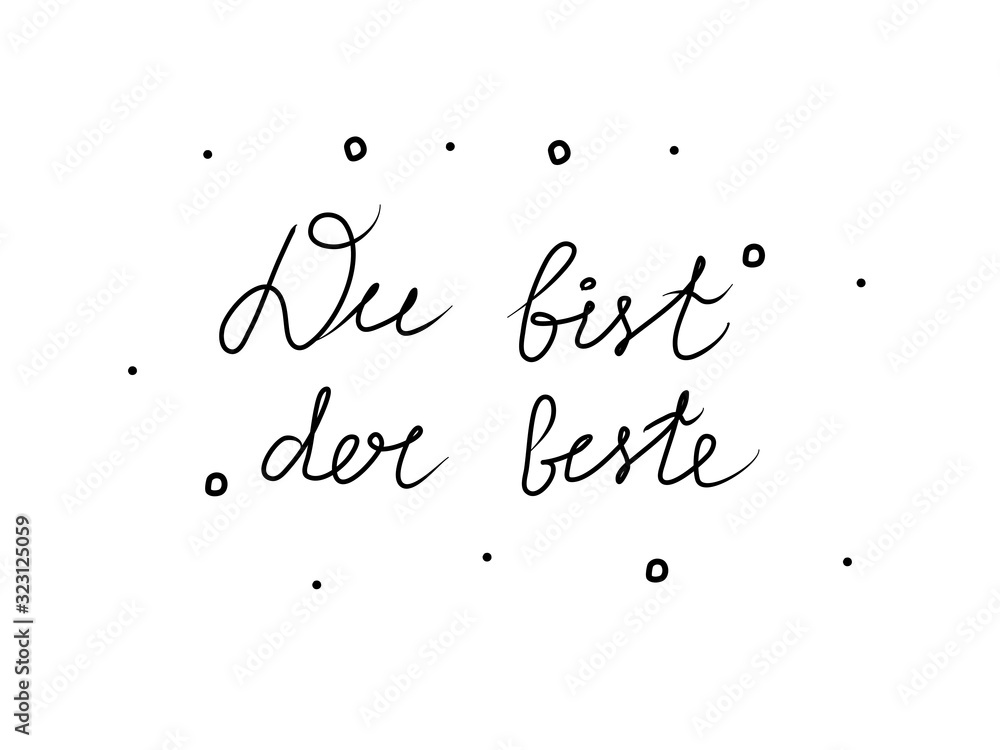
"Du bist der/die/das Beste" means "You are the best" in German. It's a compliment. It's used to express high praise. Let's break it down.
Understanding the Parts
The phrase has four main parts:
- Du: This means "You". It's the person being praised. For example, "Du bist sehr nett" (You are very nice).
- Bist: This is the verb "sein" (to be) conjugated for "du". So, "bist" means "are". Think of it like "I am", "you are", "he/she/it is". In German, it's "Ich bin", "Du bist", "Er/Sie/Es ist".
- Der/Die/Das: This is the definite article "the". German has three: der (masculine), die (feminine), and das (neuter). Which one you use depends on the gender of the noun that follows.
- Beste: This means "best". It's the superlative form of "gut" (good). "Gut" becomes "besser" (better) and then "beste" (best).
Why Three "Thes"? Der, Die, Das
This is a crucial part of German grammar. Nouns have genders. Like people are male or female, nouns are masculine, feminine, or neuter. You have to memorize the gender of each noun.
Examples:
- Der beste Freund (The best male friend). "Freund" (friend) is masculine.
- Die beste Freundin (The best female friend). "Freundin" (female friend) is feminine.
- Das beste Restaurant (The best restaurant). "Restaurant" (restaurant) is neuter.
So, if you're talking about a male friend, you'd say "Du bist der Beste". If you're talking about a female friend, you'd say "Du bist die Beste". And if you are referring to a restaurant you liked, you would say "Das ist das Beste!". Notice how "das" is repeated when "das" is referring to the restaurant, a neuter noun. However, when complementing a restaurant itself, you might say "Du bist das Beste!" to the restaurant directly if personifying it.
Putting It Together
The complete phrase adapts depending on who or what you are complimenting. This changes the "der/die/das" part.
Here are some examples:
- To a male: "Du bist der Beste!" (You are the best!)
- To a female: "Du bist die Beste!" (You are the best!)
- About a neuter thing (like a restaurant): "Das ist das Beste Restaurant!" (That is the best restaurant!)
More Examples in Context
Let's see how it's used in real conversations:
- "Vielen Dank für deine Hilfe! Du bist der Beste Freund, den man sich wünschen kann!" (Thanks a lot for your help! You are the best friend anyone could wish for!) (Talking to a male friend).
- "Dieses Eis ist unglaublich! Es ist das Beste Eis, das ich je gegessen habe!" (This ice cream is incredible! It is the best ice cream I have ever eaten!)
- "Du hast das Examen mit Bravour bestanden! Du bist die Beste Studentin!" (You passed the exam with flying colors! You are the best student!) (Talking to a female student).
Important Note on Declension
Sometimes you'll see "besten" instead of "beste". This is because German adjectives decline depending on the case (Nominativ, Akkusativ, Dativ, Genitiv). This topic is more advanced. But just know that "besten" is another form of "beste" that appears in different grammatical contexts.
For now, focus on understanding "Du bist der/die/das Beste" in the Nominativ case. This is the most common and easiest to use.
Conclusion
"Du bist der/die/das Beste" is a great way to express admiration in German. Pay attention to the gender of what you're praising to choose the correct "the": der, die, or das. With a little practice, you'll be using this phrase like a native speaker!