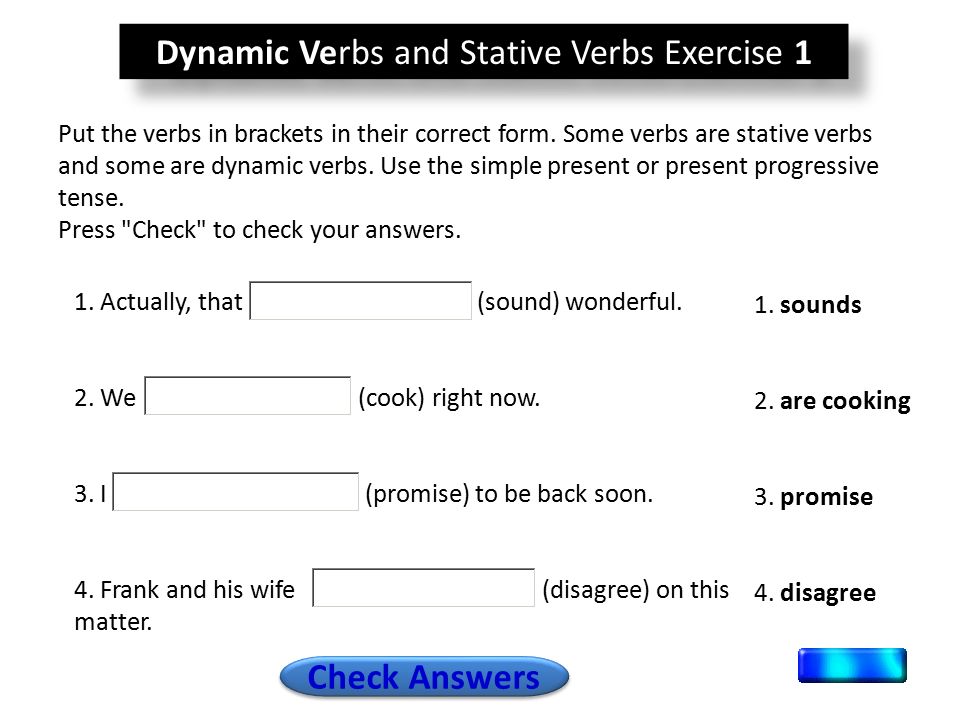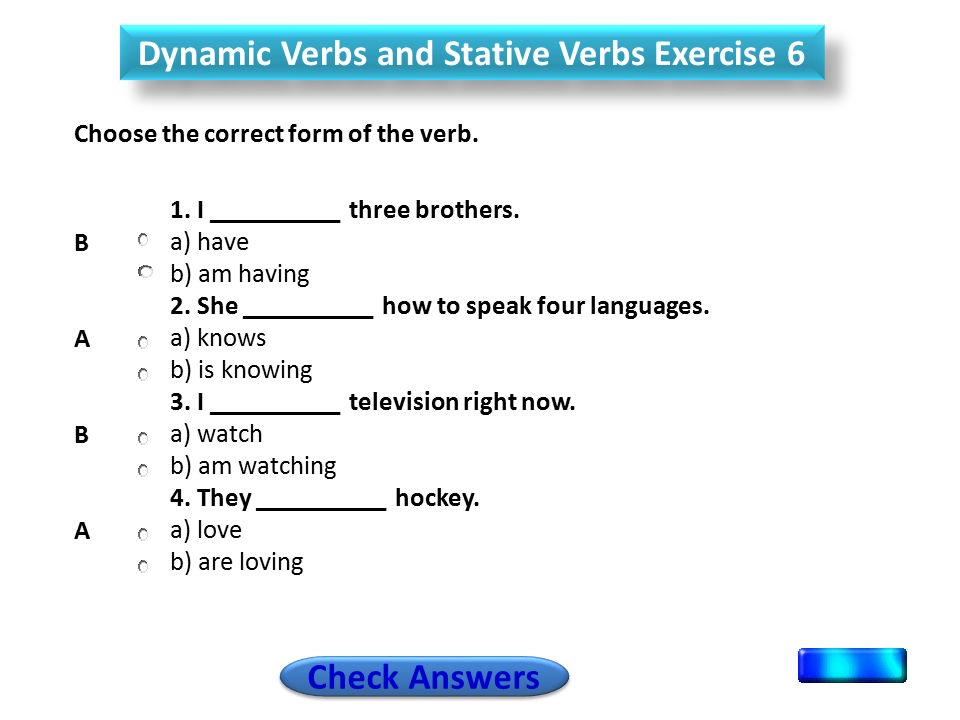
Dynamic Or Stative Verbs Exercises
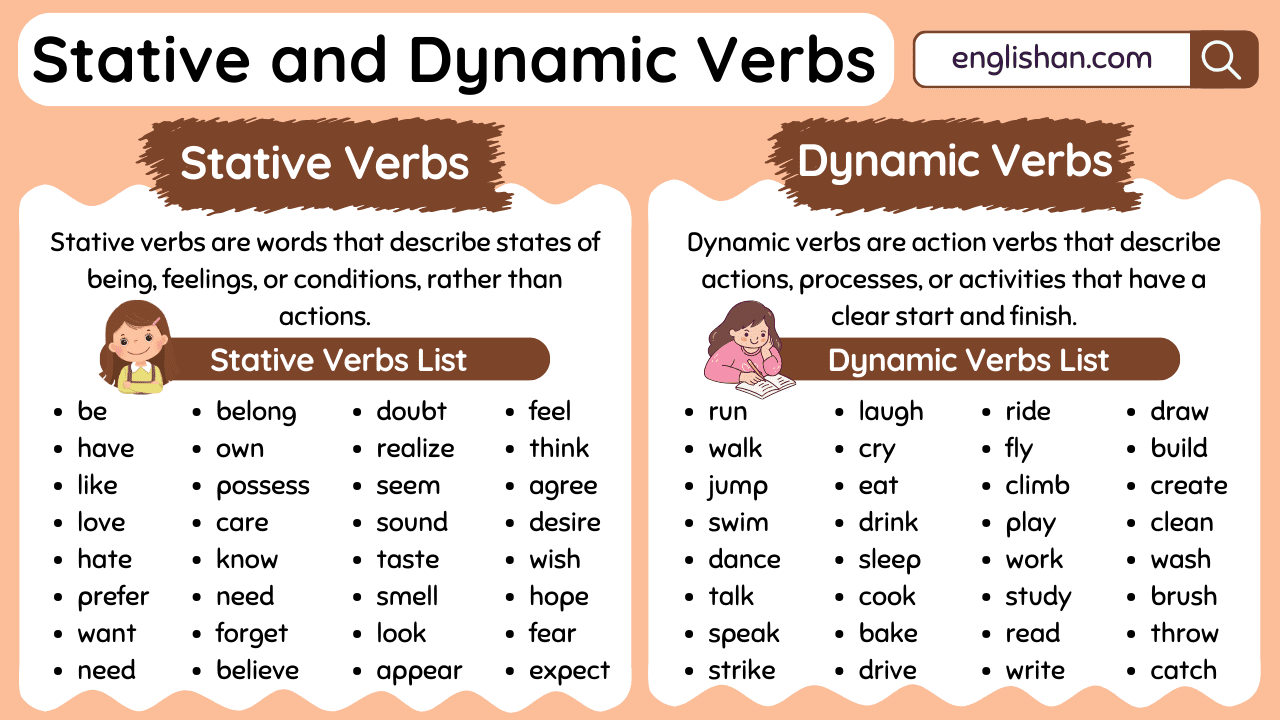
Let's dive into the world of verbs and understand the difference between dynamic and stative verbs. It's a fundamental concept in grammar that affects how we use tenses.
At its core, a dynamic verb describes an action or process. These verbs show something is happening, changing, or being done. Think of verbs that involve movement, activity, or change. We often call them action verbs.
On the other hand, a stative verb describes a state, condition, or feeling. They describe things that are more constant and less about active change. Think of verbs that describe emotions, thoughts, or possessions.
Let's explore the main ideas in more detail.
Dynamic Verbs: Action in Motion
Dynamic verbs show an activity happening. They are often verbs you can picture someone (or something) doing. Examples include: run, jump, eat, write, build, sing.
Consider these examples:
Notice how these actions are ongoing or repeatable.He is running a marathon. (Action: running)
The bird is singing beautifully. (Action: singing)
They are building a house. (Action: building)
Stative Verbs: Describing a State
Stative verbs, on the other hand, describe a state of being. These verbs are often associated with thoughts, feelings, senses, possession, or qualities. Common examples include: know, believe, love, hate, seem, own, understand.
Here are some examples:
These verbs represent a condition, a belief, or a relationship that is generally stable.I know the answer. (State: knowing)
She believes in magic. (State: believing)
They own a car. (State: owning)
Key Differences & Considerations
One important distinction is that dynamic verbs can typically be used in continuous tenses (e.g., present continuous, past continuous). Stative verbs often sound awkward or incorrect when used in continuous tenses.
For example, saying "I am knowing the answer" sounds incorrect. It's much better to say "I know the answer". However, "I am running a race" sounds perfectly natural because "run" is a dynamic verb. There are exceptions, though. Some verbs can be both dynamic and stative depending on the context. The verb "think" is a great example. "I think that's a good idea" (stative - expressing an opinion). "I am thinking about my vacation" (dynamic - an active process of thought).
Practical Applications
Understanding the difference between dynamic and stative verbs helps you write and speak more accurately. It helps you choose the correct tense and avoid grammatical errors. For example, knowing that "believe" is usually stative will prevent you from saying "I am believing."
By mastering the concept, you'll be able to craft sentences that are clearer and more effective in communicating your intended meaning. Recognizing these verbs in your reading will also deepen your understanding of the text.
So, practice identifying dynamic and stative verbs in sentences. The more you practice, the easier it will become to recognize and use them correctly!