E Mail Auf Englisch Vorlage
E-Mail Auf Englisch Vorlage: Your Guide to Writing Professional Emails
Let's talk about email templates! In German, it's E-Mail Auf Englisch Vorlage. Basically, it's a pre-written email you can reuse, saving you time and ensuring your emails are professional.
Step 1: Understanding the Basics
Before diving into templates, grasp the key parts of an English email:
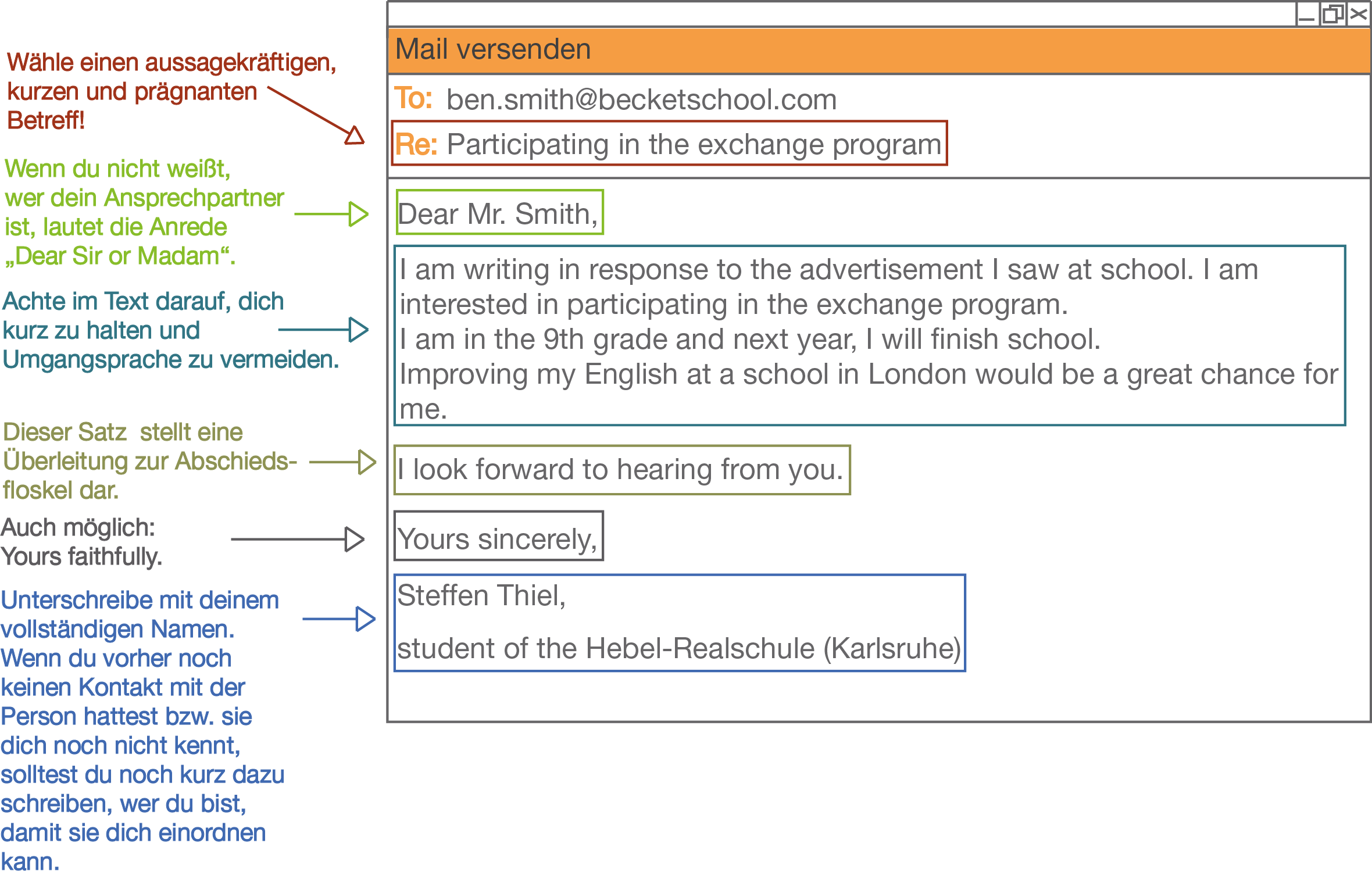
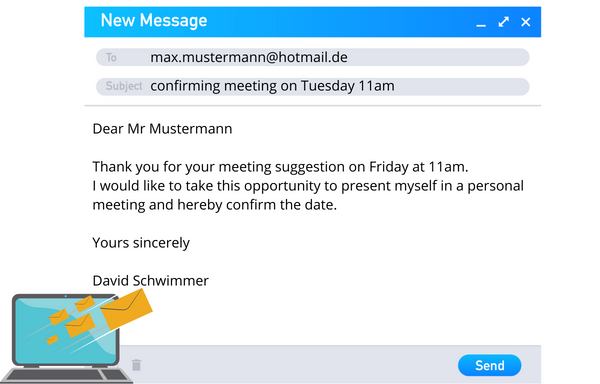
- Subject Line: Be specific! "Meeting Request - Project Alpha" is better than "Meeting".
- Greeting: Start politely. Common options include "Dear Mr./Ms./Dr. [Last Name]," or "Dear [First Name]," if you know them well. For general emails, use "To Whom It May Concern," (formal, but less common) or "Dear Sir or Madam,".
- Body: This is where you explain your message clearly and concisely.
- Closing: Use a polite closing like "Sincerely," "Best regards," or "Yours faithfully," followed by your name.
- Signature: Include your name, title (if applicable), and contact information.
Step 2: Creating Your First Template
Let's create a simple template for requesting information:
Subject: Information Request - [Topic]
Dear [Name],
I hope this email finds you well.
I am writing to request some information regarding [Specific topic]. I am particularly interested in [Specific details you need].
It would be greatly appreciated if you could provide this information by [Date, if applicable].
Thank you for your time and consideration.
Best regards,
[Your Name]
[Your Title/Position - optional]
[Your Contact Information]
Explanation:
- Replace "[Topic]", "[Name]", "[Specific topic]", "[Specific details you need]", and "[Date, if applicable]" with the relevant information.
Step 3: Types of Email Templates
Here are some common types of email templates and examples:
- Meeting Request: "Subject: Meeting Request - [Project Name]". The body explains the meeting's purpose, potential dates/times, and location/platform.
- Follow-up Email: "Subject: Following Up on [Previous Communication]". Reminds the recipient of a previous email or conversation and reiterates your request or interest.
- Thank You Email: "Subject: Thank You - [Reason]". Expresses gratitude for their time, help, or opportunity.
- Introduction Email: "Subject: Introduction - [Your Name]". Briefly introduces yourself and explains why you're reaching out.
- Complaint Email: "Subject: Complaint Regarding [Product/Service]". Clearly and politely describes the issue and the desired resolution.
Example: Thank You Email
Subject: Thank You - Informational Interview
Dear [Name],
Thank you so much for taking the time to speak with me yesterday. I truly appreciate you sharing your insights about [Industry/Company/Role].
Our conversation was very helpful, and I learned a great deal about [Specific thing you learned].
I am very interested in [Company/Industry/Role] and your advice was invaluable. Thank you again for your generosity.
Sincerely,
[Your Name]
Step 4: Customizing Your Templates
Never send a template without carefully customizing it! Make sure:
- The name is correct.
- The information is accurate and relevant.
- The tone is appropriate for the recipient.
- You've proofread for grammar and spelling errors.
A generic, unedited template can look unprofessional and impersonal.
Step 5: Tips for Effective Email Templates
- Keep it short and sweet: People are busy! Get to the point quickly.
- Use clear and concise language: Avoid jargon or overly complicated sentences.
- Proofread carefully: Errors can damage your credibility.
- Use a professional tone: Even if you know the recipient well, maintain a professional demeanor in your emails.
- Consider your audience: Tailor your language and tone to the specific recipient.
- Save your templates: Keep your templates organized and easily accessible.
By using E-Mail Auf Englisch Vorlage effectively, you can save time, improve your communication skills, and make a positive impression!