Essen Ich Du Er Sie Es

Essen: A Deep Dive for German Learners
Hallo! Let's tackle the verb "essen", a crucial one in German. It means "to eat." We'll break down its conjugation. This will help students grasp German verb basics. It is important to start with the present tense.
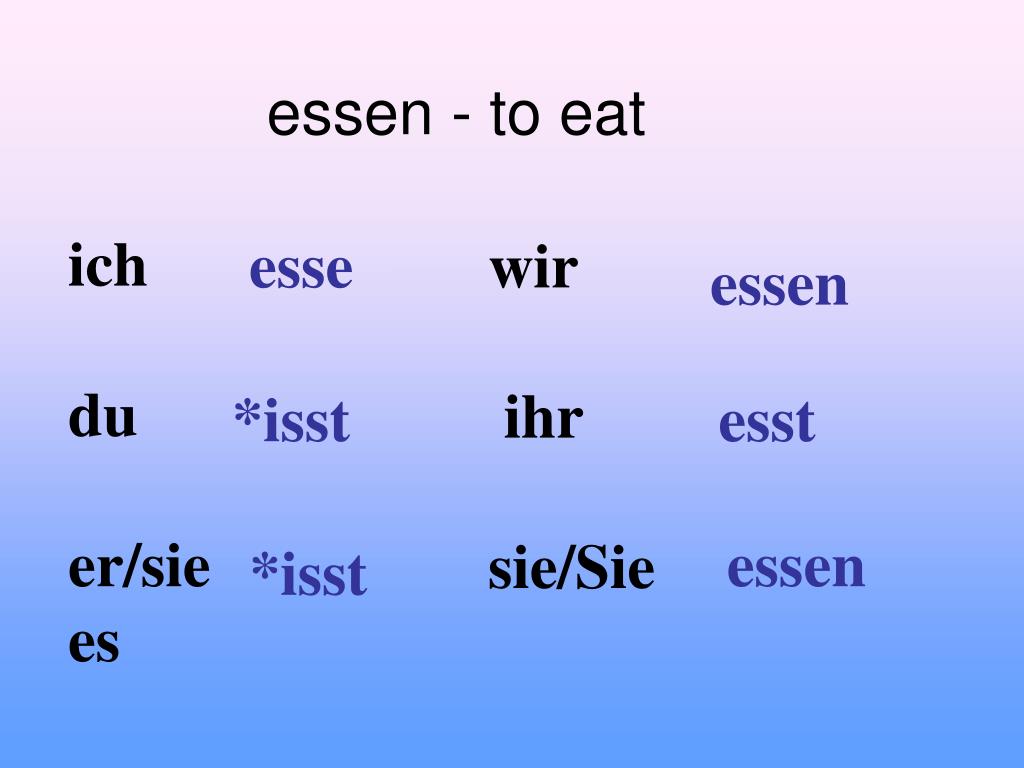
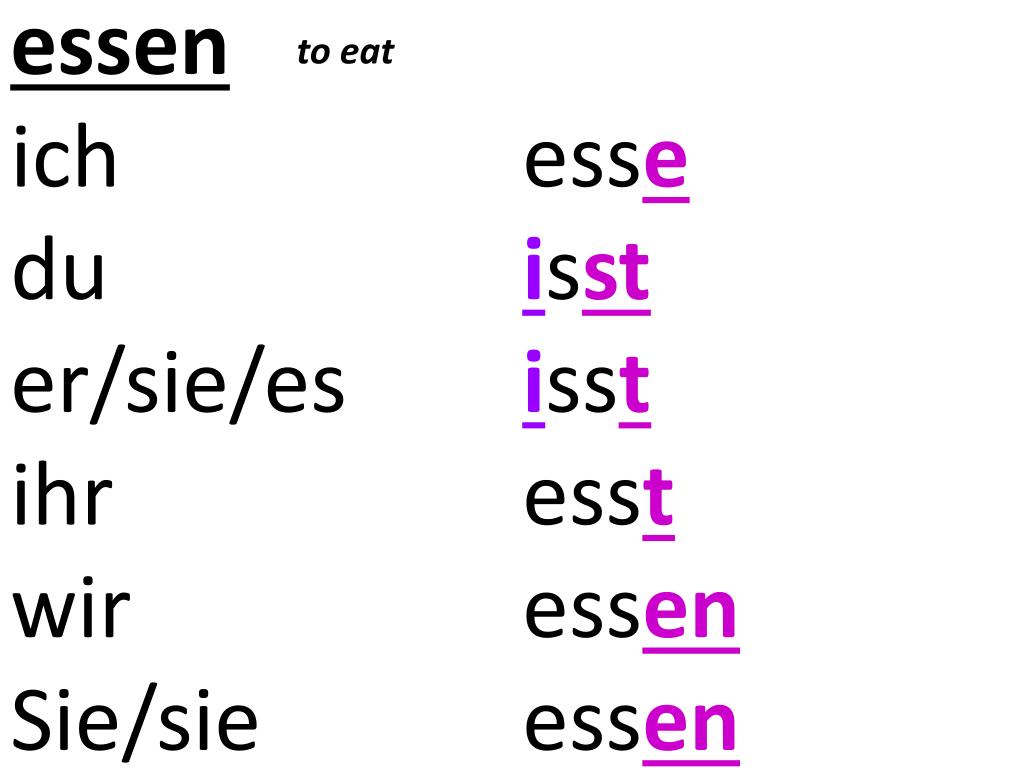
Ich esse
First, we have "ich esse". This translates to "I eat." It's the first-person singular form. Make sure students know their personal pronouns! Pronoun knowledge is vital.
Understanding the link between pronouns and verb endings is key.
Du isst
Next is "du isst", meaning "you eat." This is the informal "you." Emphasize the "-st" ending. It is unique to the "du" form. Remember to point out the vowel change!
The vowel changes from "e" to "i" in "du isst." This type of vowel change is common in German. It is a critical aspect to learn early on. Many verbs follow this pattern.
Er, Sie, Es isst
Now, we come to "er/sie/es isst". This means "he/she/it eats." Note the "-t" ending. It is consistent with other verbs.
This form is used for third-person singular. These pronouns are vital for forming sentences. Be certain students know these.
Common Misconceptions
Students often mix up "du isst" and "er/sie/es isst." The "-st" and "-t" endings can be confusing. Repetition and practice are essential here. Games can make practice fun. Use flashcards too!
Another issue is forgetting the vowel change. Reinforce this with examples. Compare "ich esse" with "du isst". Highlighting the difference is crucial.
Teaching Tips
Start with the basics: pronouns and verb endings. Then, introduce "essen". Use visual aids like pictures of people eating different foods. This creates a connection.
Incorporate interactive activities. Role-playing scenarios can be very effective. Have students act out sentences. For example, one student says "Ich esse einen Apfel."
Use games! Create a verb conjugation game. Students can compete in teams. Make it engaging and competitive. This boosts participation.
Making it Engaging
Connect "essen" to food and culture. Discuss German cuisine. Ask students what they like to eat. Then, translate those sentences into German. This makes learning relevant.
Create simple dialogues. For example: "Was isst du?" (What do you eat?) "Ich esse Brot." (I eat bread.) This promotes immediate application. Pair work is helpful.
Utilize real-life examples. Show pictures of everyday meals. Have students describe what they see. Then, have them translate those descriptions. Encourage them to use "essen" and other relevant vocabulary.
Sing songs about food! Find simple German songs about eating. Music can make learning fun and memorable. Repetition aids memorization.
Use technology! There are many online resources for learning German. Websites and apps can offer interactive exercises. They provide opportunities for extra practice. Many are free and easy to use.
Recap
Mastering "essen" is a building block for German fluency. Remember to emphasize the vowel change. Use interactive activities. Make it fun and relevant. Students will be eating up German in no time!
Good luck! Practice makes perfect. Remember that patience is key for both teachers and students! Happy teaching and learning!