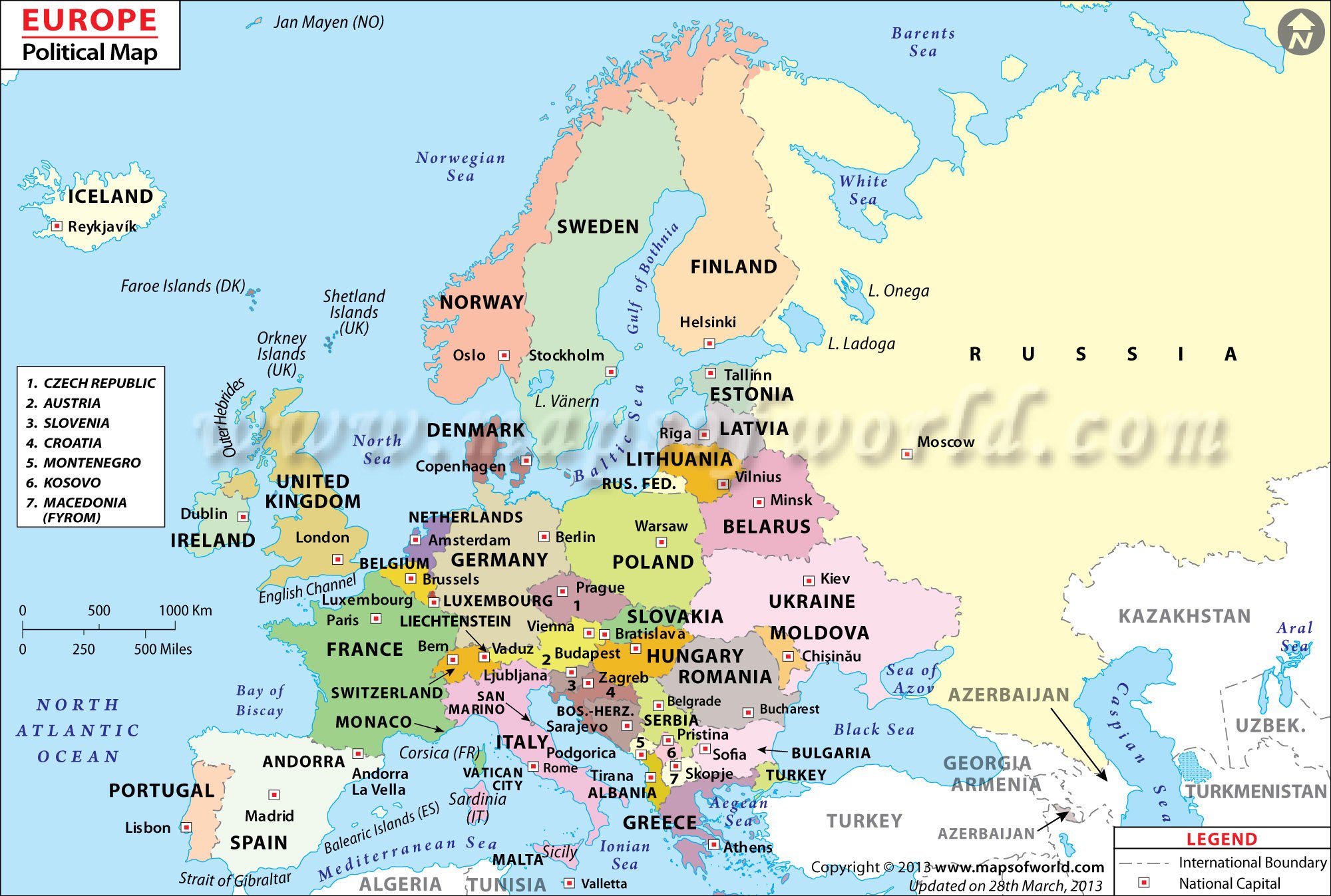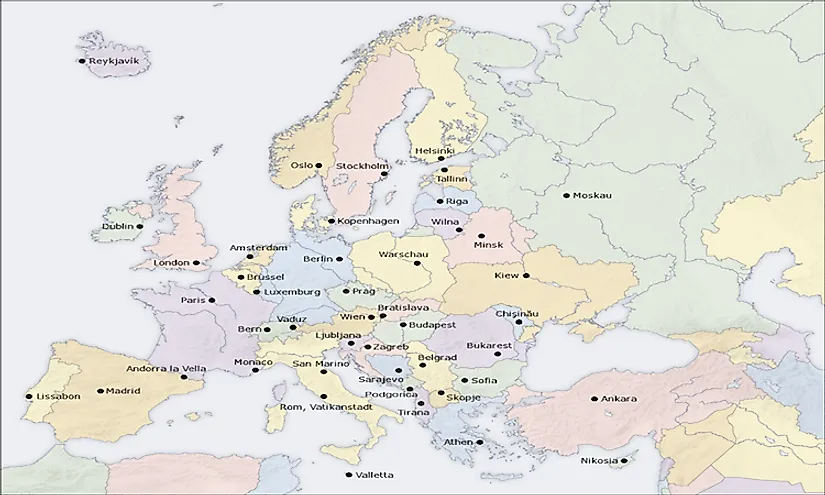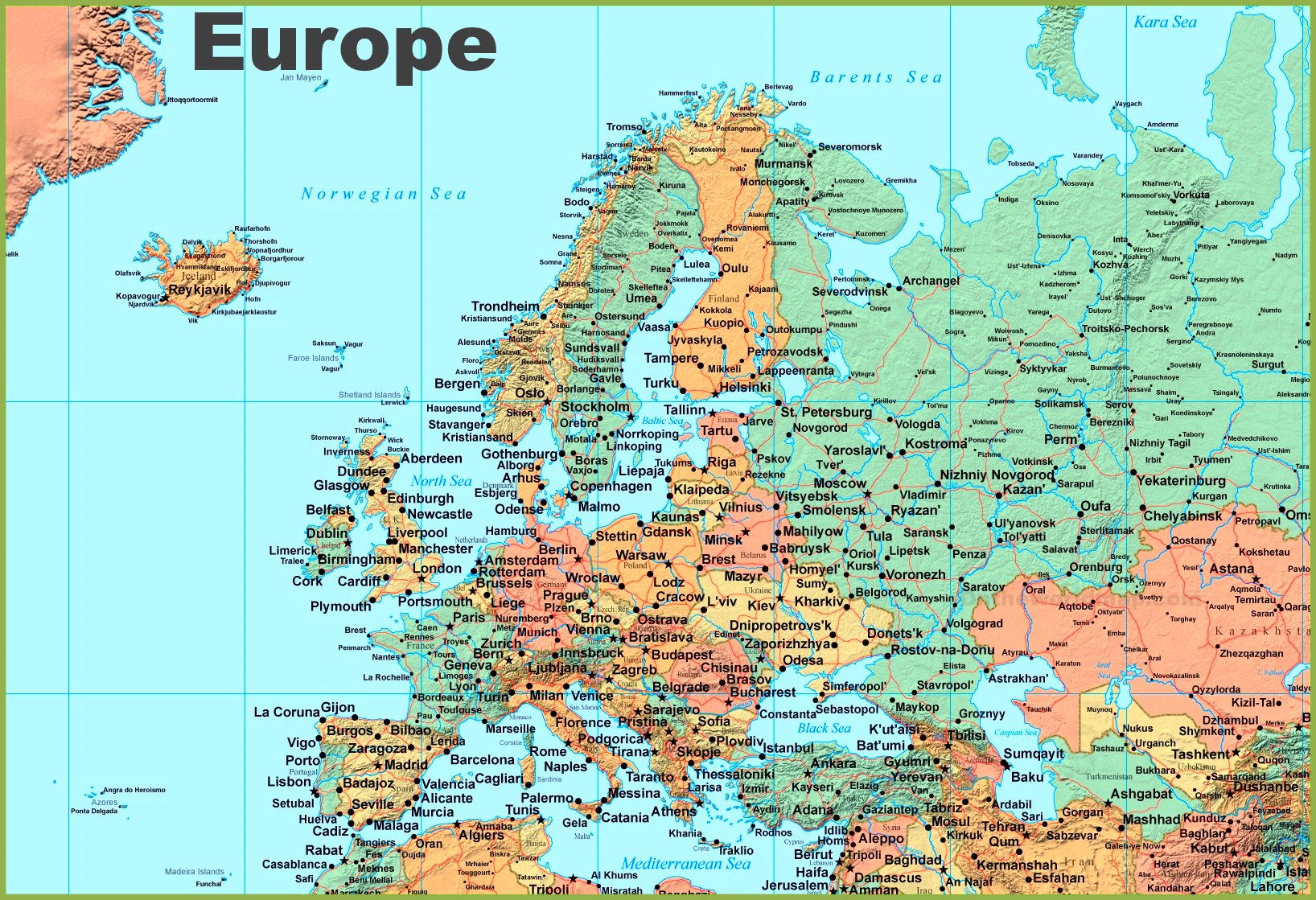
European Countries And Capital Cities

Hallo! Let's learn about European countries and their capital cities. It's easier than you think! We'll start with the basics, and you'll be a geography whiz in no time.
First, the definition. A country is a defined territory with its own government. A capital city is the primary center of government within that country. It's usually where the most important offices and institutions are located.
Europe is made up of many different countries. Each has its unique culture, history, and, of course, a capital city. Some countries are large, like Russia (though most of its territory is in Asia), while others are quite small, like Vatican City. The capital city often reflects the country's character.
Here are some key European countries and their capitals:
- Germany: Berlin
- France: Paris
- Italy: Rome
- Spain: Madrid
- United Kingdom: London
- Poland: Warsaw
- Ukraine: Kyiv
Memorizing these is a great start! Don't worry about getting them all right away. Practice makes perfect.
Let's look at some examples to understand this better. Paris, the capital of France, is known for its iconic landmarks like the Eiffel Tower and the Louvre Museum. It's a global hub for fashion, art, and culture. Similarly, Rome, the capital of Italy, is steeped in history. The Colosseum and the Roman Forum are testaments to its ancient past.
Capital cities often have a higher population density than other parts of the country. This is because they usually offer more job opportunities and access to important services. Think of London, the capital of the United Kingdom, a major financial center and a cultural melting pot.
It is important to not confuse dependent territories or autonomous regions within Europe with independent countries. For example, Greenland is a territory of Denmark, so its capital, Nuuk, is not considered the capital of an independent European country.
Sometimes, countries change their capitals throughout history. However, that is not very common. Normally the capital city is strategically placed inside the country.
So, how can you use this knowledge in everyday life? Well, for starters, it can make traveling more enjoyable. Knowing the capital cities helps you plan your trips and understand the importance of the places you're visiting. Imagine you're planning a trip to Spain. Knowing that Madrid is the capital gives you a starting point for your research.
Understanding European countries and their capitals is also helpful for understanding current events. Political and economic news often originates from the capital cities. When you read about a meeting in Berlin, you know it's happening in the heart of Germany's government.
This knowledge also enhances your general knowledge and makes you a more informed global citizen. You can impress your friends and family with your geography skills! Furthermore, it can spark an interest in learning more about the world.
Finally, think of it as a fun game. Try quizzing yourself or others on European countries and capitals. You can use online resources or create your own flashcards. The more you practice, the better you'll become!
Keep exploring and learning. Europe is a fascinating continent with a rich tapestry of countries and cultures. Knowing the capitals is just the beginning!