Forderungen Aus Lieferung Und Leistung

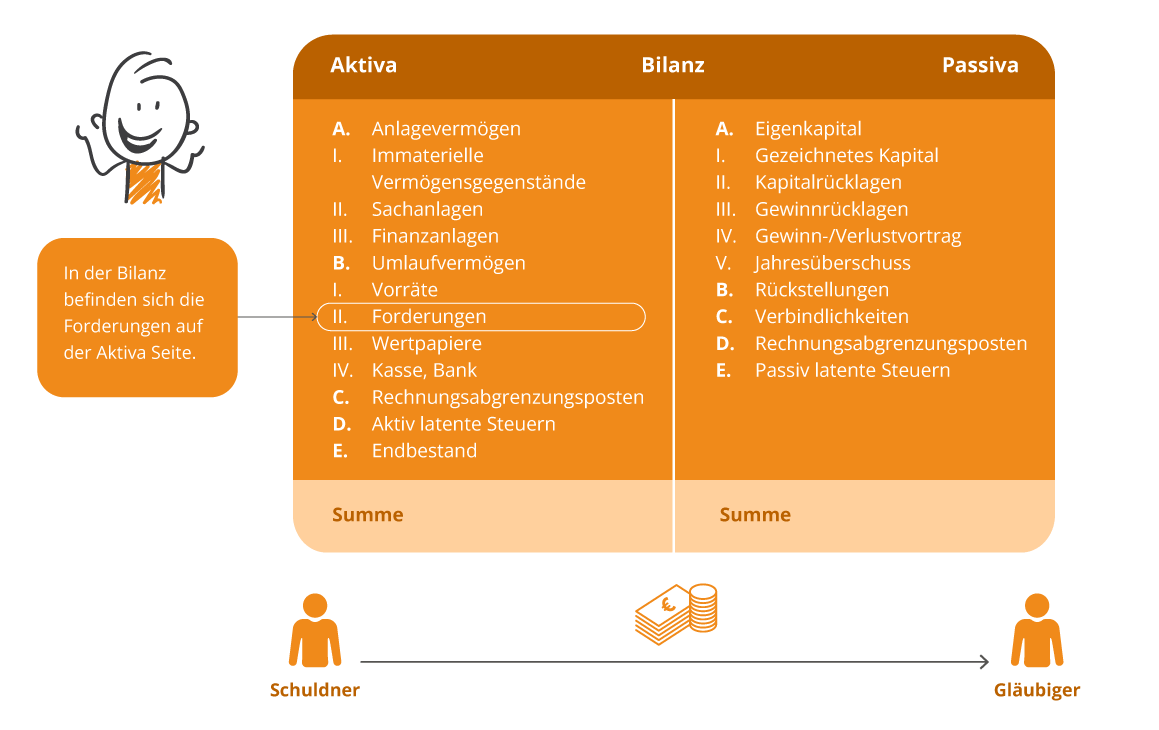
Forderungen aus Lieferung und Leistung (short: Forderungen LuL) are a key concept in business accounting. They represent the money your company is owed by customers for goods or services already delivered or performed, but not yet paid for.
What does it mean?
Think of it like this: you run a bakery. You bake a cake for a customer who promises to pay you next week. Until they pay, you have a Forderung LuL against them. You've delivered the cake (Leistung - service) or sold the cake (Lieferung - delivery), but haven't received the money yet.
The term is directly translated as "Receivables from deliveries and services". Lieferung refers to the delivery of tangible goods. Leistung covers the provision of services, like consulting, cleaning, or software development.
Why are they important?
Forderungen LuL are a crucial part of your company's assets. They show how much money you expect to receive in the near future. Managing these receivables effectively is vital for your company's cash flow and overall financial health. Too many unpaid invoices (high Forderungen LuL) can lead to liquidity problems.
How are they recorded?
When you deliver goods or provide a service on credit (i.e., you allow the customer to pay later), you create an invoice. This invoice is then recorded in your accounting system as a Forderung LuL. The accounting entry typically involves debiting (increasing) the Forderungen LuL account and crediting (increasing) the revenue account.
For example, let's say you're a freelance web designer and you complete a website for a client for €1,000. You invoice them for this amount. Your accounting entry would be:
- Debit: Forderungen LuL €1,000
- Credit: Revenue €1,000
This shows that the client owes you €1,000.
When are they removed?
When the customer pays the invoice, the Forderung LuL is settled and removed from your books. The accounting entry is then reversed. You debit (increase) your bank account (or cash account) and credit (decrease) the Forderungen LuL account.
Continuing the web designer example, when the client pays the €1,000, your accounting entry would be:
- Debit: Bank Account €1,000
- Credit: Forderungen LuL €1,000
This shows that the client has paid, and the Forderung LuL is no longer outstanding.
What happens if a customer doesn't pay?
Sometimes, customers don't pay their invoices. In this case, you have to consider the Forderung LuL as potentially bad debt. You might need to write it off, meaning you accept that you won't receive the money and reduce your profits accordingly. There are different methods for handling bad debt, depending on the specific circumstances and accounting regulations.
Key Takeaways
- Forderungen LuL represent money owed to you by customers.
- They are created when you deliver goods or services on credit.
- Effective management of Forderungen LuL is crucial for cash flow.
- Unpaid Forderungen LuL can become bad debt.
Understanding Forderungen aus Lieferung und Leistung is fundamental for any business owner or accounting professional. It's a core element of financial reporting and helps track the flow of money in and out of your company.