French Days Of The Weeks
Les Jours de la Semaine: Your Guide to French Days of the Week
Learning a new language can be exciting! French is a beautiful language. Understanding the days of the week is essential. It helps you schedule meetings, talk about your plans, and simply understand daily conversations.
Let's dive into the French days of the week. We will explore their pronunciation and how to use them in sentences.
The French Days of the Week
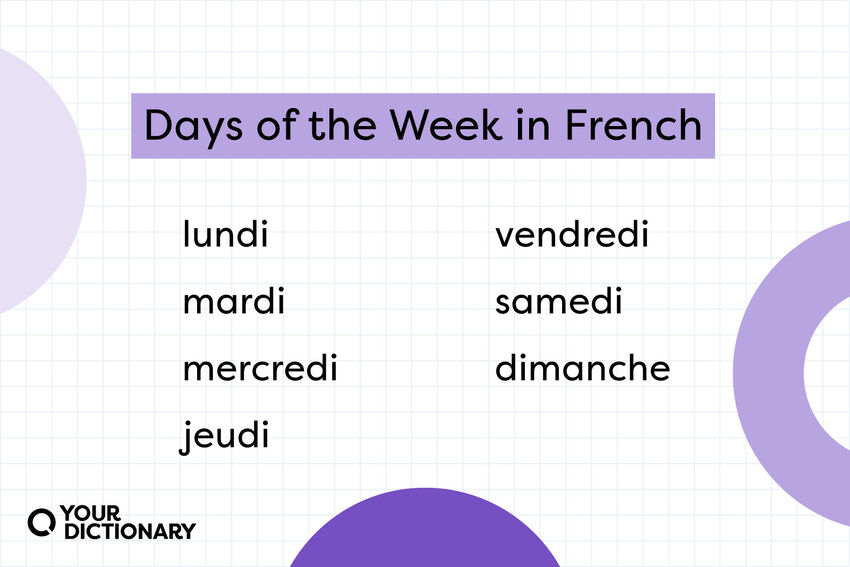
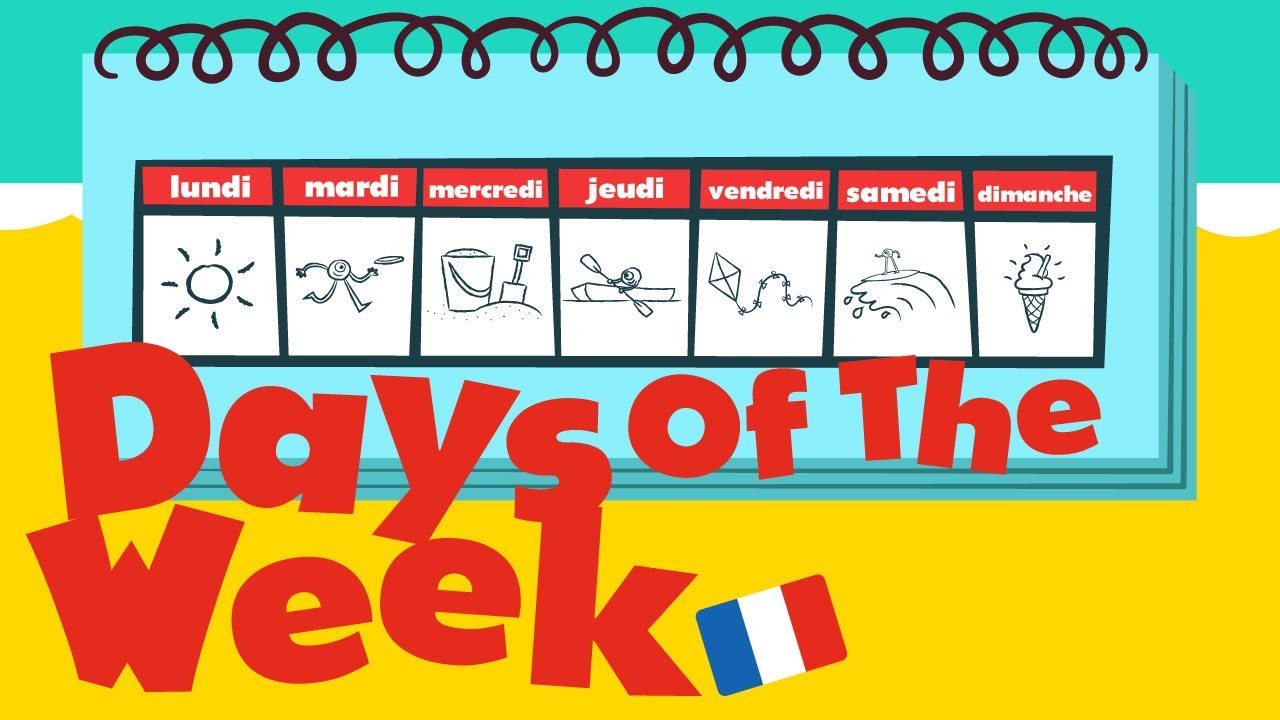
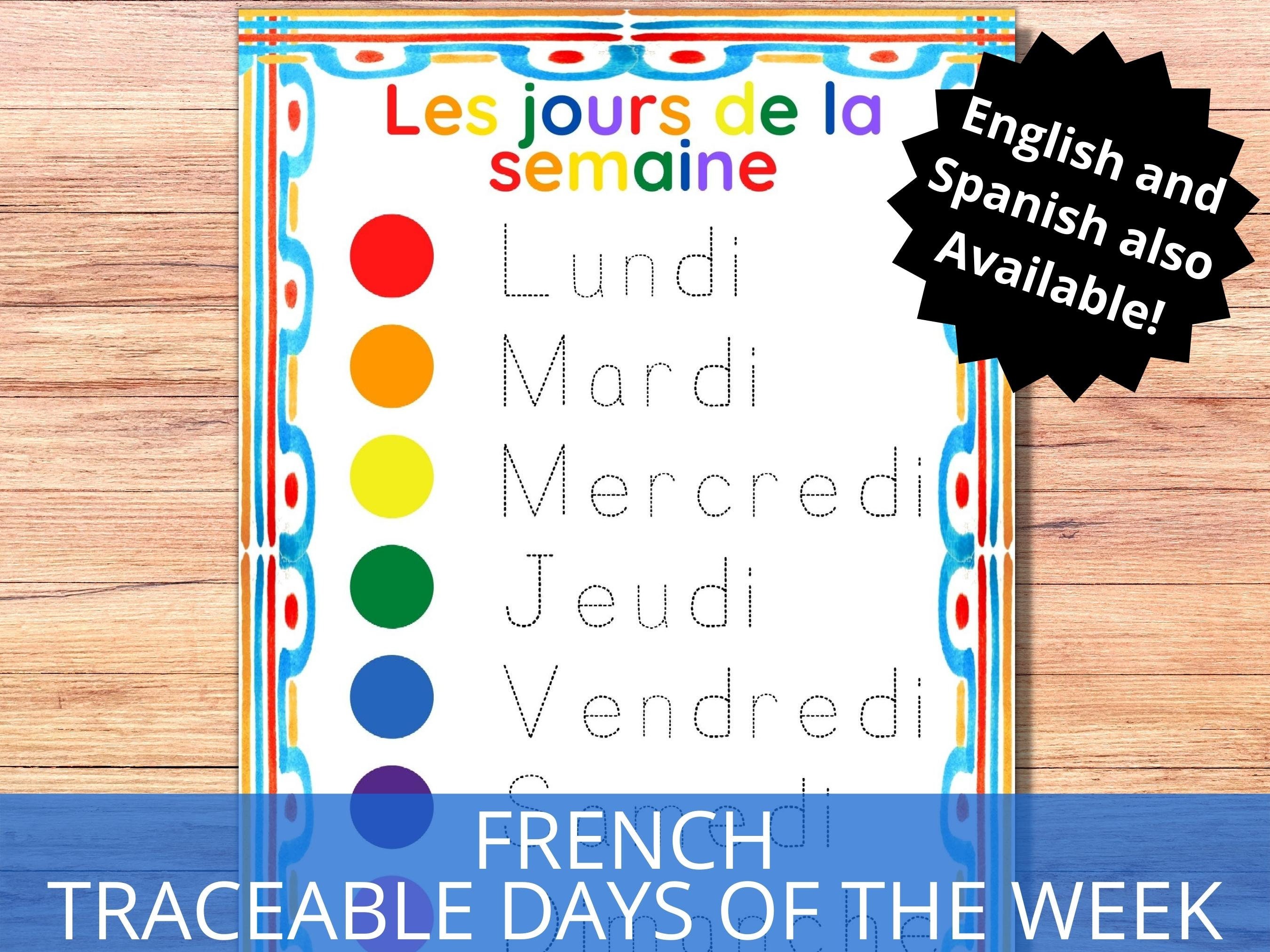
Here are the seven days of the week in French:
* Lundi (Monday) * Mardi (Tuesday) * Mercredi (Wednesday) * Jeudi (Thursday) * Vendredi (Friday) * Samedi (Saturday) * Dimanche (Sunday)Pronunciation Tips
French pronunciation can be tricky. It requires a bit of practice. Here's a breakdown to help you get started:
* Lundi: Pronounced like "luhn-dee". * Mardi: Pronounced like "mahr-dee". * Mercredi: Pronounced like "mehr-kruh-dee". The "r" is a guttural sound. * Jeudi: Pronounced like "zhuh-dee". The "j" sounds like the "s" in "measure". * Vendredi: Pronounced like "vahn-druh-dee". * Samedi: Pronounced like "sahm-dee". * Dimanche: Pronounced like "dee-mahnsh".Use online resources to hear the correct pronunciation. Many websites and apps offer audio examples.
Key Grammar Points
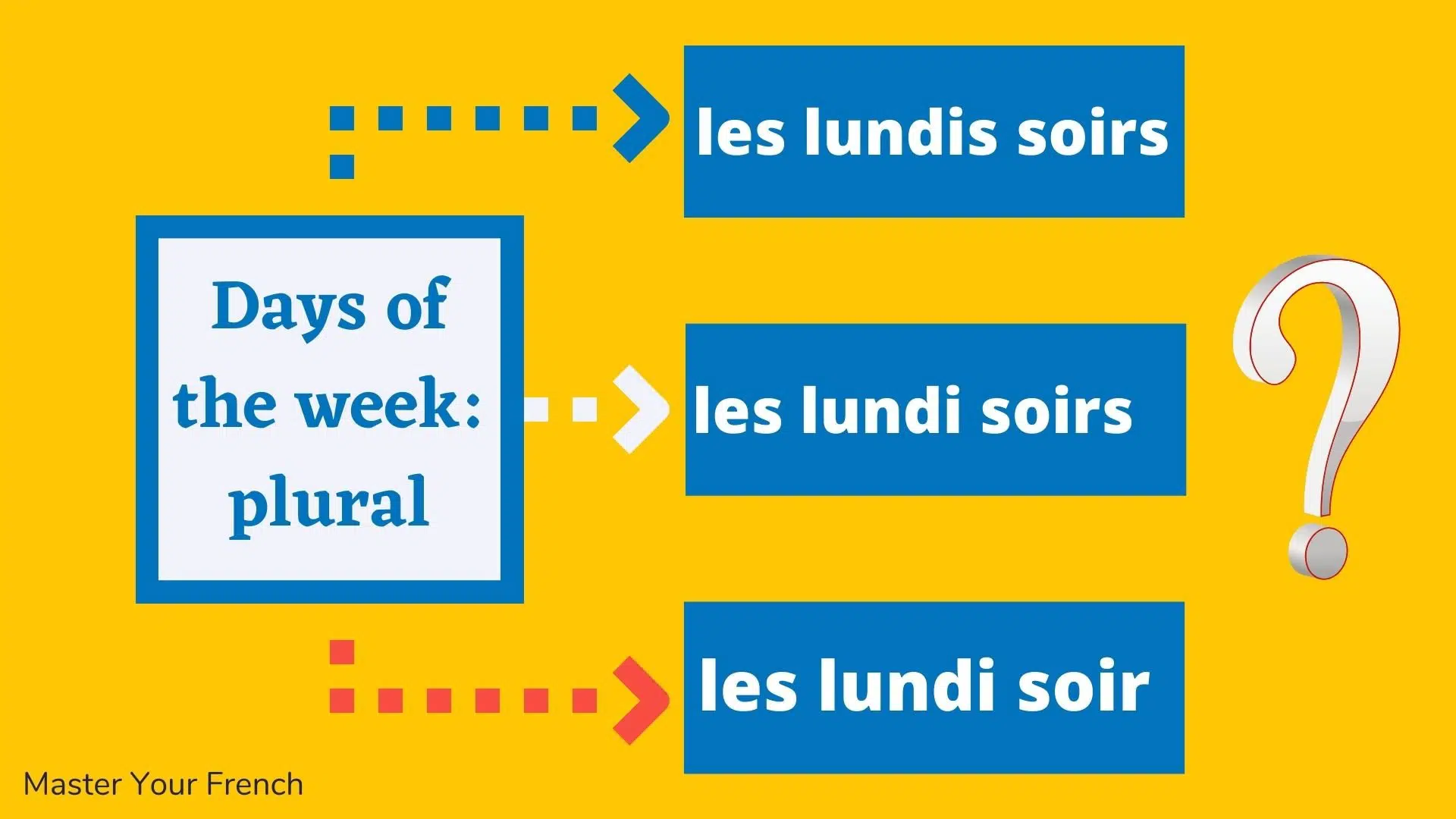
In French, the days of the week are masculine nouns. This means they are usually preceded by the masculine article "le". For instance, "le lundi" (Monday). When talking about a recurring event, use "le" followed by the day. For example: "Je vais au cinéma le samedi" (I go to the cinema on Saturdays).
Also, the days of the week are not capitalized in French. This is unless they begin a sentence.
Here's an important difference from English! French days of the week start with Monday, *lundi*, and end with Sunday, *dimanche*.
Using the Days in Sentences
Let's see how to use the days of the week in sentences.
* "Je travaille lundi et mardi." (I work on Monday and Tuesday.) * "Mercredi, j'ai un cours de français." (On Wednesday, I have a French class.) * "Est-ce que tu es libre jeudi soir?" (Are you free on Thursday evening?) * "Nous sortons vendredi soir." (We are going out on Friday evening.) * "Je me repose samedi et dimanche." (I rest on Saturday and Sunday.)To ask what day it is, you can say: "Quel jour sommes-nous?" or "Quel jour est-ce qu'on est?". You could answer it with: "Nous sommes lundi" (It is Monday).
Everyday Examples
Imagine you're making plans with a friend. You could say:
"On se voit mardi après-midi?" (Shall we meet on Tuesday afternoon?)
Or if you're talking about your routine:
"Le mercredi, je vais à la bibliothèque." (On Wednesdays, I go to the library.)
If you are planning what to do for the weekend:
"Qu'est-ce que tu fais samedi?" (What are you doing on Saturday?)
Remember, practice is key. Try incorporating these days into your everyday French conversations. The more you use them, the easier they will become.
Common Phrases
Here are some helpful phrases related to the days of the week:
* "La semaine" (The week) * "Le week-end" (The weekend) * "Tous les jours" (Every day) * "La semaine prochaine" (Next week) * "La semaine dernière" (Last week)Let's use some of these in sentences:
"Je suis occupé toute la semaine." (I am busy all week.)
"Qu'est-ce que tu vas faire pendant le week-end?" (What are you going to do during the weekend?)
Learning the French days of the week is a fundamental step in mastering the language. Keep practicing, and you'll be fluent in no time!