French Words Days Of The Week
In French, the days of the week are les jours de la semaine. Learning them is a great starting point for planning trips, making appointments, or simply understanding French schedules. They're all masculine nouns, so they usually take the definite article "le." Let's break them down one by one!
The Days: From Monday to Sunday
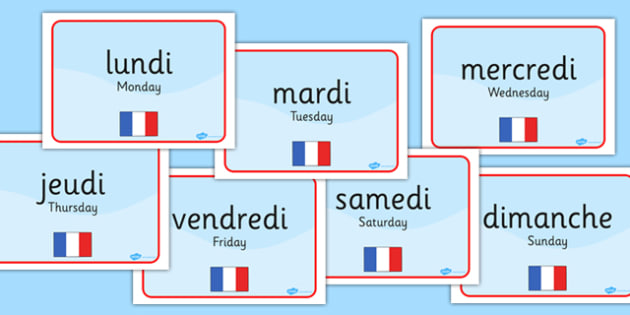
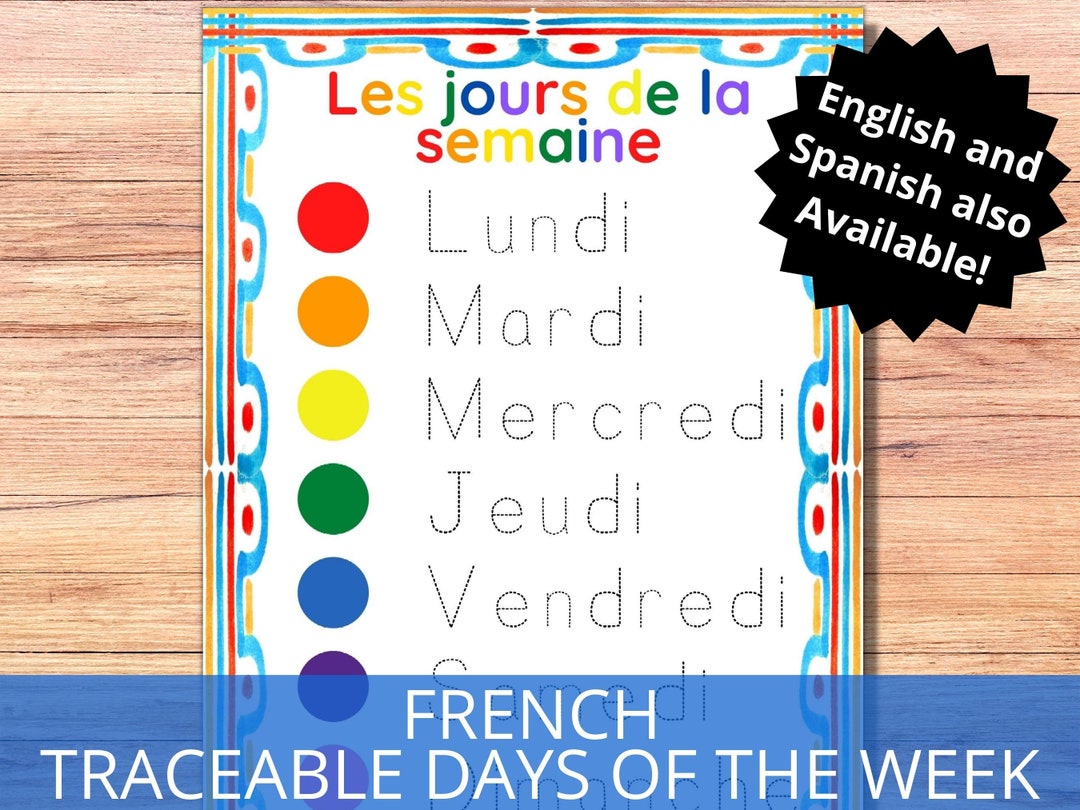
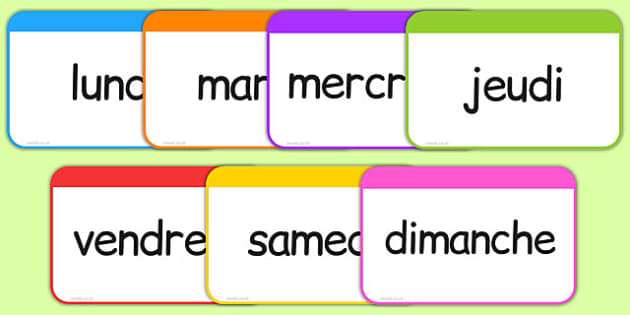
Here's a list of the French days of the week, along with their English equivalents:
- Lundi - Monday
- Mardi - Tuesday
- Mercredi - Wednesday
- Jeudi - Thursday
- Vendredi - Friday
- Samedi - Saturday
- Dimanche - Sunday
Notice that all the weekdays end in "-di." This comes from the Latin word "dies," meaning "day." Knowing this little pattern can help you remember them!
Pronunciation Tips
Pronunciation is key! Here are a few pointers:
- Lundi: Pronounced roughly as "luhn-dee." The "un" sound is nasal; try saying "uh" through your nose.
- Mardi: Pronounced "mahr-dee." The "r" is a guttural sound, made in the back of your throat.
- Mercredi: Pronounced "mehr-kruh-dee." This one has two "r" sounds!
- Jeudi: Pronounced "zhuh-dee." The "j" sound is like the "s" in "measure."
- Vendredi: Pronounced "vahn-druh-dee." Again, the "an" sound is nasal.
- Samedi: Pronounced "sahm-dee." Pretty straightforward!
- Dimanche: Pronounced "dee-mahnsh." Note the silent "e" at the end and the nasal "an" sound.
Don't worry if you don't get the pronunciation perfect right away. Practice makes perfect!
Using the Days in Sentences
Here are some examples of how to use the days of the week in sentences:
- Je travaille lundi, mardi, et mercredi. (I work Monday, Tuesday, and Wednesday.)
- Vendredi, je vais au cinéma. (On Friday, I'm going to the cinema.)
- Samedi et dimanche, je me repose. (Saturday and Sunday, I rest.)
- Le cours de français est le jeudi. (The French class is on Thursday.)
When referring to a specific day, you usually use the definite article "le" before the day. However, if you're talking about a recurring event on a specific day, you can omit it. For example, "Je vais au marché le samedi" (I go to the market on Saturdays - every Saturday) or simply "Je vais au marché samedi" (I'm going to the market this Saturday).
Capitalization Rules
In French, unlike English, the days of the week are not capitalized unless they begin a sentence.
Example:
- Correct: Lundi est un beau jour. (Monday is a beautiful day.)
- Correct: J'aime le lundi. (I like Mondays.)
- Incorrect: J'aime le Lundi.
Common Expressions
Here are a few useful French expressions using days of the week:
- À bientôt! (See you soon!) You might say this and add a day: À mardi! (See you on Tuesday!)
- Bon week-end! (Have a good weekend!) This is used before samedi and dimanche.
- Rendez-vous lundi prochain. (See you next Monday.)
Practice Makes Perfect
The best way to learn the French days of the week is to use them! Try incorporating them into your daily conversations or journaling. Write your schedule in French, or simply think about what you're doing each day in French. With a little practice, you'll master les jours de la semaine in no time!
Bonne chance! (Good luck!)