Georg Heym Die Stadt Analyse
Georg Heym's poem "Die Stadt" (The City), published in 1911 as part of his collection "Der ewige Tag" (The Eternal Day), is a powerful and disturbing vision of urban existence in the early 20th century. It's a crucial text for understanding Expressionism and its anxieties surrounding industrialization, urbanization, and the perceived dehumanization of modern life. Analyzing this poem allows us to delve into the complex emotions and social criticisms prevalent during that era.
Key Themes and Arguments in "Die Stadt"
The Grotesque and Monstrous City
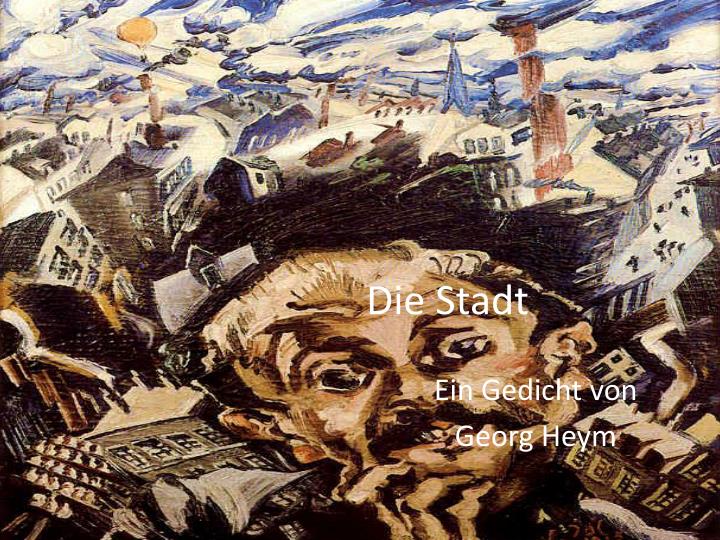
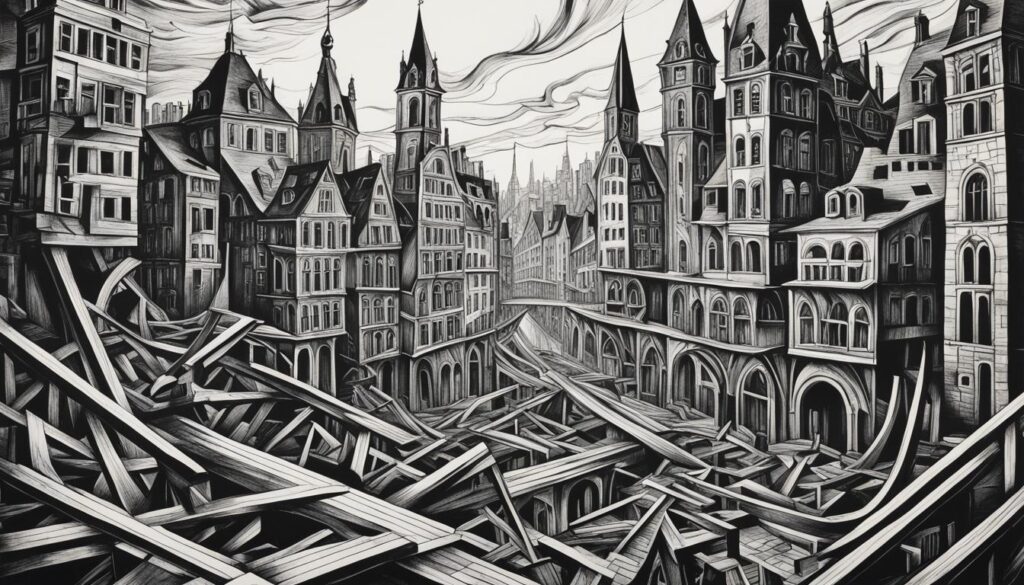
The poem doesn't depict the city as a place of beauty or progress. Instead, it presents a nightmarish landscape filled with grotesque imagery. Heym uses vivid, often shocking descriptions to convey the city's ugliness and its oppressive atmosphere. Think of lines describing the "steinerne Leiber" (stone bodies) of the buildings, suggesting a cold, lifeless environment. This monstrous city actively threatens its inhabitants, dwarfing them and stripping them of their individuality. The sheer scale of the urban environment becomes a symbol of its overwhelming power.
Consider the historical context. The rapid growth of cities like Berlin, where Heym lived, led to overcrowding, poor sanitation, and social inequality. Photographs from the time, like those by Jacob Riis documenting poverty in New York City slums, offer visual parallels to Heym's poetic descriptions. The sheer density of population and the lack of adequate infrastructure contributed to a feeling of alienation and despair, perfectly captured in Heym's poem. He’s not just describing brick and mortar; he's portraying a living, breathing, and deeply unsettling entity.
Dehumanization and Alienation
A central theme of "Die Stadt" is the dehumanization of individuals within the urban environment. The poem frequently depicts people as anonymous masses, stripped of their individuality and reduced to cogs in a machine. They are "Menschenströme" (streams of people) flowing through the streets, lost in the anonymity of the crowd. The city fosters a sense of alienation, where individuals are disconnected from each other and from their own humanity.
Emile Durkheim, a contemporary of Heym, wrote extensively about anomie, a state of normlessness and social disconnection that arises in rapidly changing societies. Durkheim argued that this lack of social cohesion can lead to feelings of isolation, despair, and even suicide. Heym’s poem embodies this sense of anomie. The characters within the poem are lost and adrift, unable to find meaning or connection in their urban surroundings.
Today, while technology connects us globally, feelings of isolation persist in urban centers. Studies show that loneliness and social isolation are growing concerns, even in hyper-connected cities. The constant stimulation and overwhelming choices can paradoxically lead to a sense of emptiness and detachment, mirroring the anxieties Heym expressed over a century ago. Consider the prevalence of social media addiction and the potential for superficial connections to exacerbate feelings of loneliness despite a vast network of "friends."
The Apocalypse and Impending Doom
"Die Stadt" is permeated by a sense of impending doom. The poem's imagery often evokes apocalyptic visions, suggesting that the city is on the brink of collapse or destruction. This is evident in phrases like "letzte Häuser" (last houses) and the overall atmosphere of decay and decay. This reflects the anxieties of the pre-World War I era, a time of increasing social and political unrest. The poem acts as a warning, suggesting that the unchecked growth and moral decay of the city will inevitably lead to its downfall.
The use of fire as a motif is particularly significant. Fire often symbolizes destruction and purification. In "Die Stadt," it represents the destructive forces at work within the urban environment, threatening to consume everything in its path. This imagery resonates with contemporary anxieties about industrial pollution and environmental degradation. The poem can be interpreted as a cautionary tale about the consequences of unchecked industrial growth and its impact on the environment.
Contemporary fears regarding climate change and environmental disasters offer a modern parallel. The threat of rising sea levels, extreme weather events, and resource depletion echo the apocalyptic anxieties expressed in Heym's poem. The poem serves as a reminder of the potential consequences of our actions and the importance of sustainable development.
The Role of the Spectator
The narrator in "Die Stadt" is largely an observer, a detached spectator witnessing the horrors of the urban landscape. This detachment reinforces the sense of alienation and helplessness. The narrator is unable or unwilling to intervene in the events unfolding before them, further highlighting the powerlessness of the individual in the face of the overwhelming forces of the city. This perspective is crucial to understanding the poem's overall message: that the individual is both a victim and a witness to the city's decay.
This detached observation can be linked to the concept of the flâneur, a term coined by Charles Baudelaire to describe a person who wanders the city streets, observing and documenting the changing urban landscape. While the flâneur is often portrayed as a detached observer, Heym's narrator experiences a deeper sense of unease and disillusionment. The flâneur is an observer; Heym's narrator is a witness to something deeply wrong.
Language and Style
Heym's use of language and style is crucial to the poem's impact. He employs vivid, often jarring imagery, creating a sense of unease and disorientation. The poem is characterized by its use of harsh sounds, dissonant rhythms, and unexpected juxtapositions. This reflects the chaotic and fragmented nature of urban life. The language itself becomes a tool for conveying the city's ugliness and its dehumanizing effects.
The use of personification is also significant. Heym frequently attributes human qualities to inanimate objects, such as the buildings and the streets. This blurring of the boundaries between the human and the non-human further emphasizes the city's overwhelming power and its ability to strip individuals of their agency. The city itself becomes a character, a malevolent force shaping the lives of its inhabitants.
Real-World Examples and Data
To connect Heym’s "Die Stadt" to real-world examples and data, we can look at: * **Historical Urban Planning Disasters:** The rapid and often poorly planned urban growth of the early 20th century created many of the problems Heym describes. Consider the overcrowded tenements of New York City, the industrial pollution of London, or the social segregation in many European cities. These tangible examples highlight the real-world consequences of unchecked urban expansion. * **Modern Urban Challenges:** While urban planning has improved in many areas, modern cities still face significant challenges. Issues such as traffic congestion, air pollution, affordable housing shortages, and social inequality continue to plague urban centers worldwide. Data on air quality, housing costs, and income disparities can provide concrete evidence of these challenges, mirroring the anxieties expressed in Heym's poem. * **Mental Health Statistics in Urban Areas:** Studies consistently show higher rates of mental health issues, such as anxiety and depression, in urban populations compared to rural areas. This suggests that the urban environment can contribute to feelings of stress, isolation, and alienation. These statistics provide empirical support for Heym's portrayal of the city as a dehumanizing and oppressive force. * **Documentary Photography and Film:** Visual media, such as documentary photography and film, can offer powerful insights into the realities of urban life. The works of photographers like Henri Cartier-Bresson or filmmakers like Fritz Lang can provide visual parallels to Heym's poetic descriptions, capturing the city's energy, its beauty, and its ugliness.
Conclusion and Call to Action
Georg Heym's "Die Stadt" remains a relevant and powerful poem today. It serves as a stark warning about the potential dangers of unchecked urbanization and the dehumanizing effects of modern life. By analyzing the poem's key themes and connecting them to real-world examples, we can gain a deeper understanding of the challenges facing cities and the importance of creating more sustainable, equitable, and humane urban environments.
The poem challenges us to ask critical questions about the nature of urban life: * How can we foster a sense of community and connection in increasingly large and diverse cities? * How can we ensure that all residents have access to affordable housing, clean air, and green spaces? * How can we mitigate the negative impacts of urbanization on the environment and on mental health?
As a call to action, consider engaging with your local community to address these issues. Support initiatives that promote sustainable development, affordable housing, and social inclusion. Advocate for policies that prioritize the well-being of all residents, not just the wealthy and powerful. Most importantly, remember that cities are not just collections of buildings and streets; they are living, breathing organisms that require constant care and attention. By working together, we can create cities that are not only economically prosperous but also socially just and environmentally sustainable. It is our responsibility to ensure that future generations do not inherit the dystopian vision presented in Heym's "Die Stadt," but rather a vision of urban life that is both vibrant and humane.