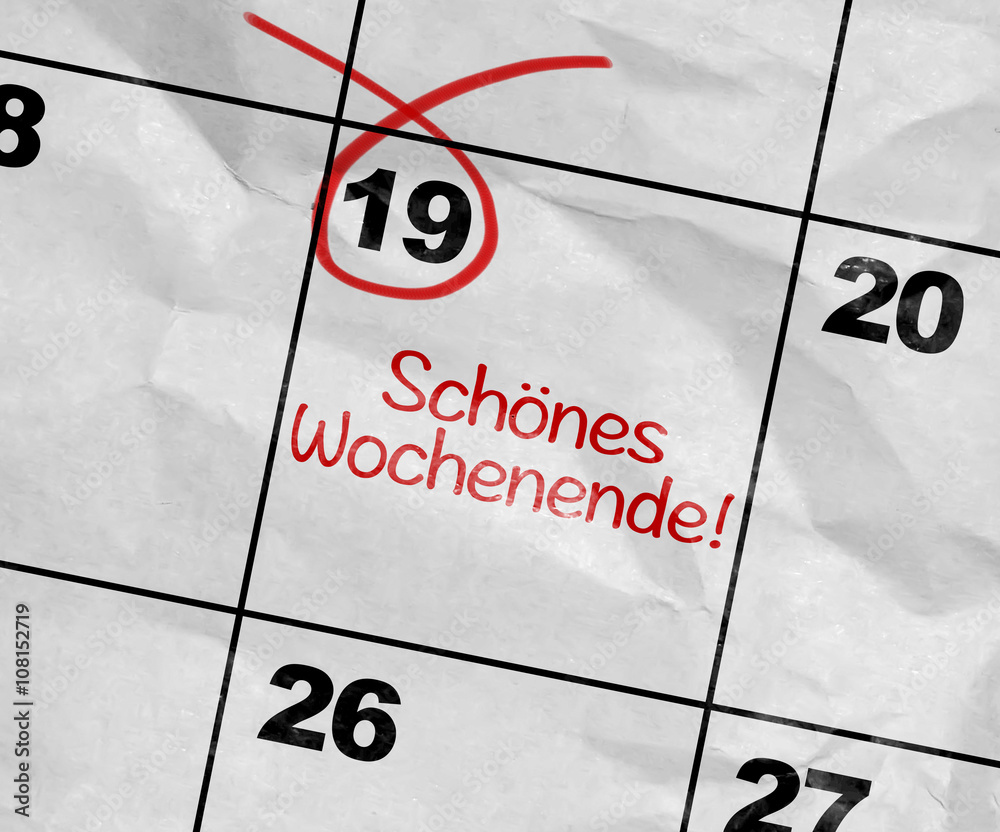
German For Have A Good Weekend
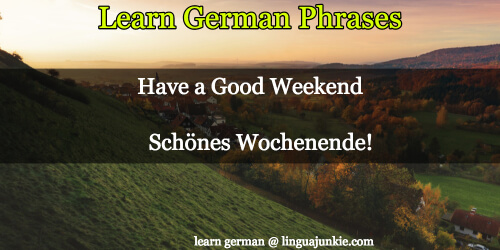
Want to wish someone a great weekend in German? It's easier than you think! This article breaks down the best ways to say "Have a good weekend" in German, step-by-step.
Option 1: The Classic – "Schönes Wochenende!"
This is the most common and versatile way to say "Have a good weekend" in German. Think of it as the German equivalent of a friendly "Have a nice weekend!"
Let's break it down:
- Schönes: Means "nice" or "beautiful." It's an adjective.
- Wochenende: This directly translates to "weekend." It's a noun.
Together, "Schönes Wochenende!" literally means "Nice weekend!" It's short, sweet, and everyone will understand it.
Example: Your colleague is leaving for the day. You say: "Schönes Wochenende, Maria!" (Have a nice weekend, Maria!)
Option 2: Adding Emphasis – "Ich wünsche dir/Ihnen ein schönes Wochenende!"
This option adds a personal touch and translates to "I wish you a nice weekend!" It's a bit more formal, especially when using "Ihnen."
Breaking it down:
- Ich wünsche: Means "I wish."
- dir: Means "you" (informal, used with friends and family).
- Ihnen: Means "you" (formal, used with people you don't know well or in professional settings).
- ein: Means "a."
- schönes Wochenende: As explained above, "nice weekend."
So, you have two versions:
- Ich wünsche dir ein schönes Wochenende! (Informal - "I wish you a nice weekend!")
- Ich wünsche Ihnen ein schönes Wochenende! (Formal - "I wish you a nice weekend!")
Example (Informal): Talking to your friend: "Ich wünsche dir ein schönes Wochenende! Was machst du?" (I wish you a nice weekend! What are you doing?)
Example (Formal): Speaking to your boss: "Ich wünsche Ihnen ein schönes Wochenende, Herr Schmidt." (I wish you a nice weekend, Mr. Schmidt.)
Option 3: A More Enthusiastic Version – "Hab ein schönes Wochenende!"
This is a more casual and enthusiastic way to say it, closer to "Have a great weekend!"
Breaking it down:
- Hab: Short for "habe," meaning "have." It's the informal, imperative form.
- ein: Means "a."
- schönes Wochenende: Again, "nice weekend."
"Hab ein schönes Wochenende!" translates to "Have a nice weekend!" but it feels more energetic.
Example: Saying goodbye to a classmate: "Hab ein schönes Wochenende! Bis Montag!" (Have a nice weekend! See you Monday!)
Option 4: Focus on Relaxation – "Erhol dich gut am Wochenende!"
This translates to "Relax well over the weekend!" It's a thoughtful option, especially if someone seems stressed.
Breaking it down:
- Erhol dich: Means "relax yourself" (informal). The verb is "sich erholen" (to relax).
- gut: Means "well."
- am Wochenende: Means "on the weekend" or "over the weekend."
Example: Your friend has been working hard: "Erhol dich gut am Wochenende! Du verdienst es!" (Relax well over the weekend! You deserve it!)
Key Takeaways and Pronunciation Tips
- Remember the difference between dir (informal "you") and Ihnen (formal "you"). Choose wisely!
- "Schönes Wochenende!" is always a safe and effective choice.
- Practice the pronunciation. "Wochenende" can be tricky! Focus on the "ch" sound, which is similar to the "ch" in "Bach."
- Don't be afraid to use these phrases. Germans appreciate the effort!
Now you're ready to wish everyone a "Schönes Wochenende!" confidently. Viel Glück! (Good luck!)