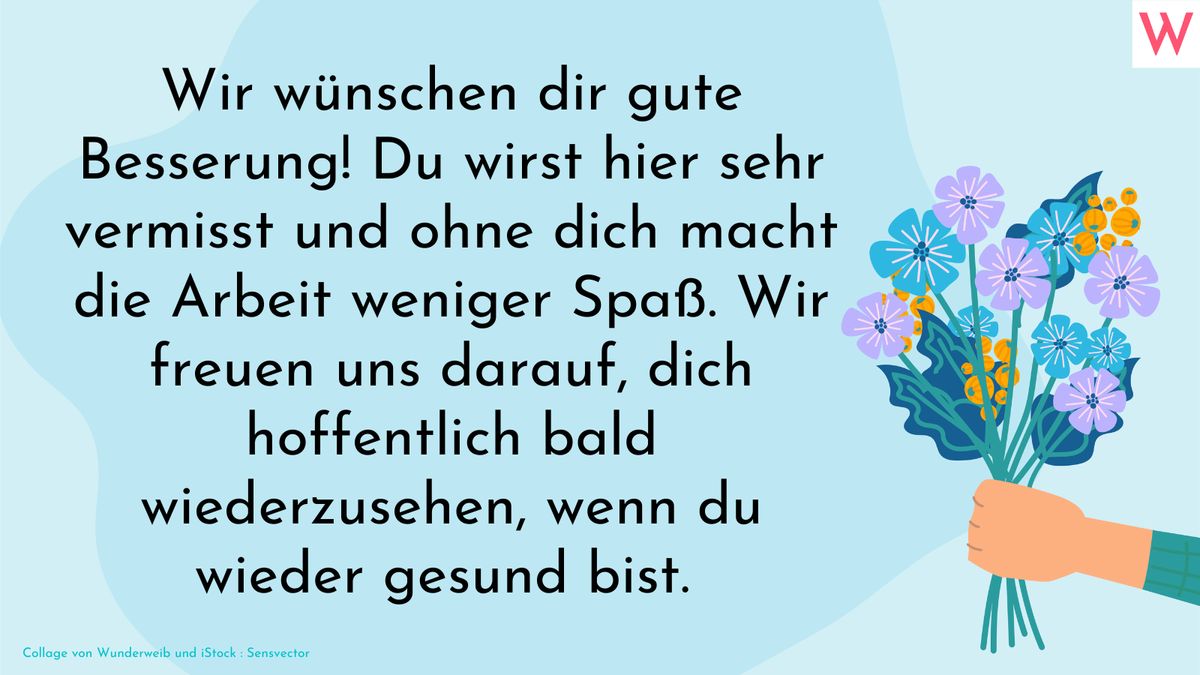
Hoffentlich Bist Du Bald Wieder Gesund

"Hoffentlich bist du bald wieder gesund" is a common German expression used to wish someone a quick recovery. Literally, it translates to "Hopefully you are soon healthy again." It's a heartfelt way of saying "Get well soon!" in German.
Breaking Down the Phrase
Let's dissect the phrase word by word:
- Hoffentlich: This word means "hopefully." It expresses a wish or expectation that something will happen in a positive way. Think of it as adding a touch of optimism to your well wishes. For example, you might say, "Hoffentlich scheint morgen die Sonne!" ("Hopefully, the sun will shine tomorrow!")
- Bist: This is the second-person singular form of the verb "sein" (to be). It's used when addressing someone informally, like a friend, family member, or colleague you're on familiar terms with. Remember, German has formal and informal "you" forms. "Bist" goes with "du."
- Du: This is the informal "you" in German. It's crucial to use "du" when appropriate to avoid sounding overly formal or even rude in certain situations. You wouldn't use "du" with your boss unless you have a very casual relationship.
- Bald: This simple word means "soon." It adds a sense of urgency and hope for a swift recovery. You're not just wishing them well, but hoping they're feeling better quickly.
- Wieder: This means "again." In this context, it implies a return to a previous state of health. You're wishing them back to their healthy self.
- Gesund: This word means "healthy." It's the desired state of being, the goal of your well wishes. You want them to be healthy again.
Putting it all together, "Hoffentlich bist du bald wieder gesund" paints a picture of wanting the person to quickly return to a state of good health. It's more than just a polite phrase; it conveys genuine concern and a positive expectation.
When to Use It
You can use this phrase in various situations when someone you know is feeling unwell. Here are a few examples:
- When a friend tells you they have a cold.
- When a family member is recovering from surgery.
- When a colleague is out sick with the flu.
- When you hear that someone you know has been injured.
It's a versatile phrase that can be used in both spoken and written communication. You can say it in person, over the phone, or write it in a card or email.
Alternatives and Similar Phrases
While "Hoffentlich bist du bald wieder gesund" is a great option, here are some other ways to express your well wishes in German:
- Gute Besserung!: This is a more general "Get well soon!" It's a very common and versatile phrase.
- Ich wünsche dir gute Besserung!: "I wish you a good recovery!" This is a slightly more formal version of "Gute Besserung!"
- Werde schnell wieder gesund!: "Get well soon!" (more direct). This sounds a bit more commanding, but is still friendly.
The best choice depends on your relationship with the person and the specific situation. "Hoffentlich bist du bald wieder gesund" is a warm and personal option that shows you care.
Formal vs. Informal
Remember the "du" (informal "you") versus "Sie" (formal "you") distinction in German. If you are speaking to someone you address formally, you would need to adjust the phrase. A formal equivalent would be: "Hoffentlich sind Sie bald wieder gesund". Note that "bist" changes to "sind". When in doubt, err on the side of caution and use "Sie."
So, next time you want to send positive vibes to someone feeling under the weather, remember "Hoffentlich bist du bald wieder gesund!" It's a simple yet powerful way to express your care and hope for their speedy recovery.