I Before The E Except After C
The saying "I before E, except after C" is a common rule for English spelling. It's meant to help you remember how to spell words with the ie or ei letter combination.
The Basic Rule: I Before E
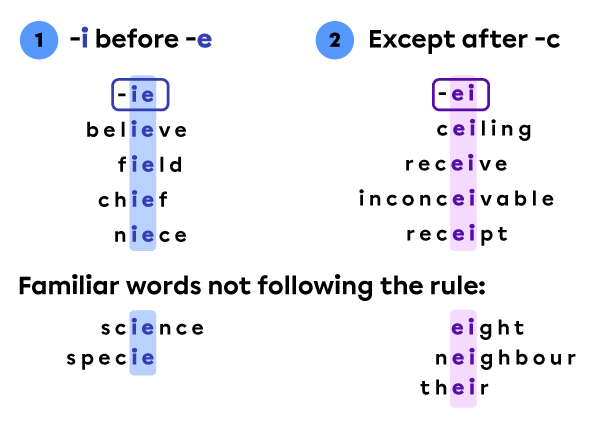
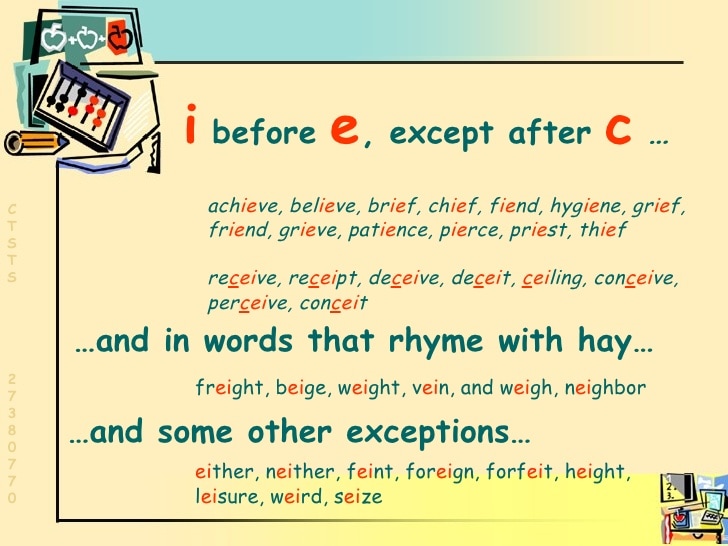
The first part, "I before E," means that when you hear the sound "ee" (like in "bee"), you usually write ie. Think of these examples:
- Piece (a slice of cake)
- Friend (someone you like)
- Believe (to think something is true)
- Chief (the leader)
In these words, the ie comes together to make that "ee" sound. This is the most straightforward part of the rule.
The Exception: Except After C
The second part, "except after C," tells you when to break the "I before E" rule. If the ie or ei follows the letter c, you usually write ei instead of ie.
Here are some examples where ei comes after c:
- Receive (to get something)
- Deceive (to trick someone)
- Conceive (to imagine or create)
- Perceive (to notice something)
Notice how in all these words, the ei follows directly after the letter c.
Why Does This Rule Exist?
This rule arose from the history of the English language. Different languages have influenced English spelling over time. The "I before E" rule comes from how certain sounds were written in older versions of English and other languages like French.
When the Rule Doesn't Work: Exceptions to the Exception
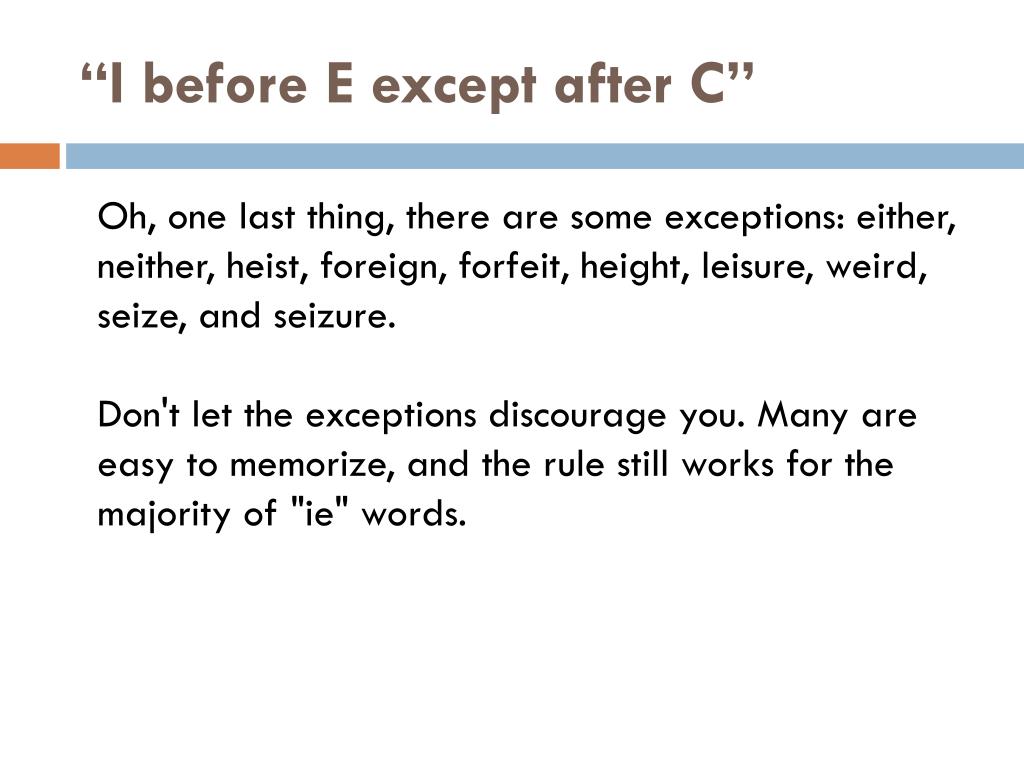
Unfortunately, the "I before E, except after C" rule is not perfect. There are many words where it doesn't apply. These exceptions can make spelling tricky.
Here are some common exceptions:
- Weird (strange)
- Seize (to grab quickly)
- Height (how tall something is)
- Neither (not one or the other)
- Leisure (free time)
- Science (the study of the natural world)
As you can see, these words use ei even though they don't follow a c. There are also words like efficient where the ie follows a c. Because of these exceptions, it's important to remember that the rule is just a guideline, not a hard-and-fast law.
Is the Rule Useful?
Despite its flaws, the "I before E, except after C" rule can still be helpful. It works for a good number of words, especially common ones. If you're unsure how to spell a word with the ie or ei combination, remembering this rule can be a good starting point.
A Helpful Tip
When in doubt, always check a dictionary. Knowing the rule can help, but it's not a substitute for careful proofreading and using reliable resources.
In Summary
The "I before E, except after C" rule is a helpful memory aid for English spelling. Remember the core principle, but be aware of the exceptions. The more you read and write, the better you'll become at spelling these tricky words. Don't rely solely on the rule; always double-check!