I Too Sing America Hughes
Understanding "I, Too, Sing America"
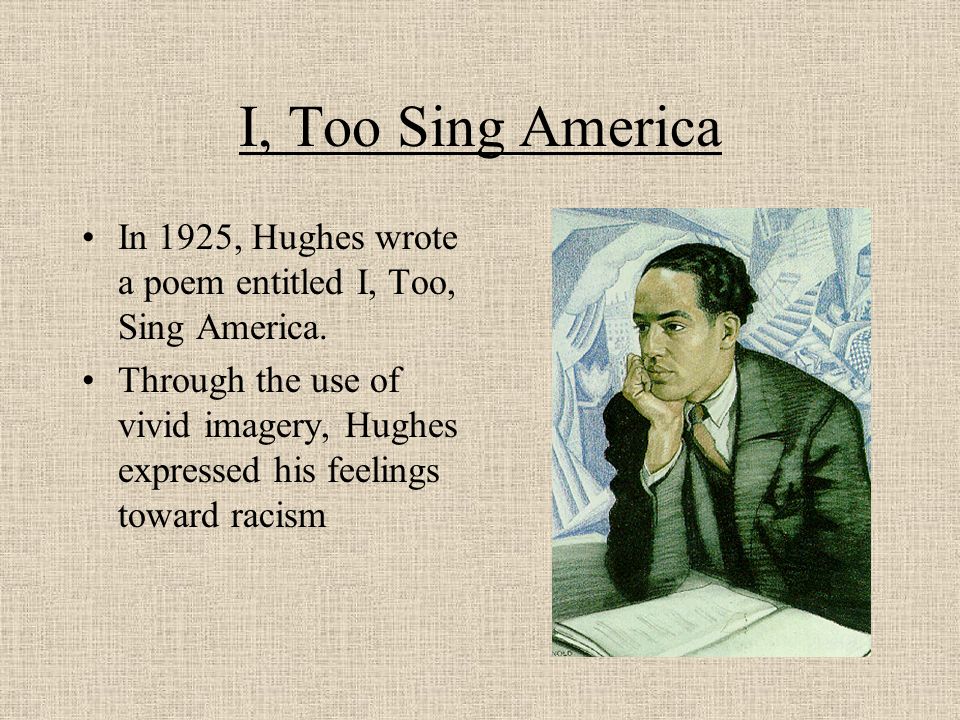
Let's explore Langston Hughes's powerful poem, "I, Too, Sing America." It's a short poem. But it packs a big punch. We will break down its meaning. We will discuss its historical context.
First, let's define some key terms. These terms will help us understand the poem better. Poetry is a form of literature. It uses rhythm, imagery, and figurative language. This is to express emotions and ideas. Symbolism is using objects or ideas. These objects or ideas represent something else.
Think of a dove. A dove often symbolizes peace. That's symbolism in action. Now let's understand the context surrounding Langston Hughes and the poem. This involves the Harlem Renaissance. This was a period of great artistic and cultural flourishing. It took place in the Harlem neighborhood of New York City. It was mostly made up of African Americans in the 1920s and 1930s.
The Historical Backdrop
Imagine a time of segregation in America. African Americans faced discrimination. They were often treated as second-class citizens. This was especially true in the South. Jim Crow laws enforced racial segregation. Langston Hughes lived through this era. He wrote about the Black experience in America.
The Harlem Renaissance was a response to this. It was a celebration of Black culture. It was a call for equality. Artists, writers, and musicians expressed their experiences. They fought for recognition and respect. They did this through their creative works. Langston Hughes was a leading voice in this movement. He used poetry to challenge the status quo.
“I, Too, Sing America” is a direct response. It responds to the pervasive racism. It responds to the exclusion of African Americans. The poem challenges the idea that only white Americans represent the nation. It asserts the belonging and contributions. It asserts the belonging and contributions of Black Americans.
Breaking Down the Poem
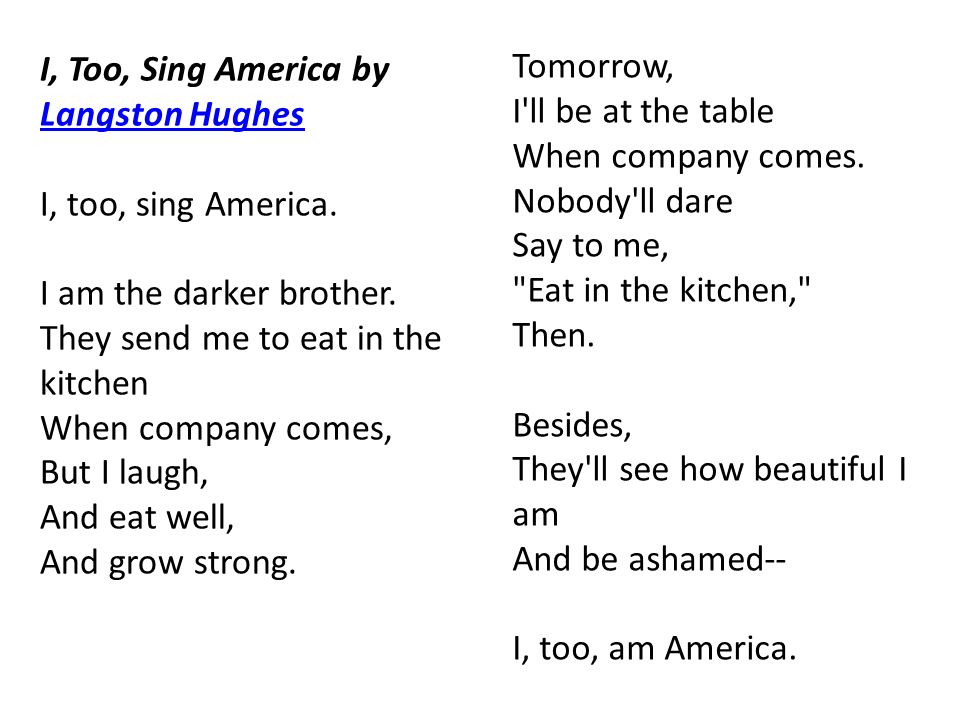
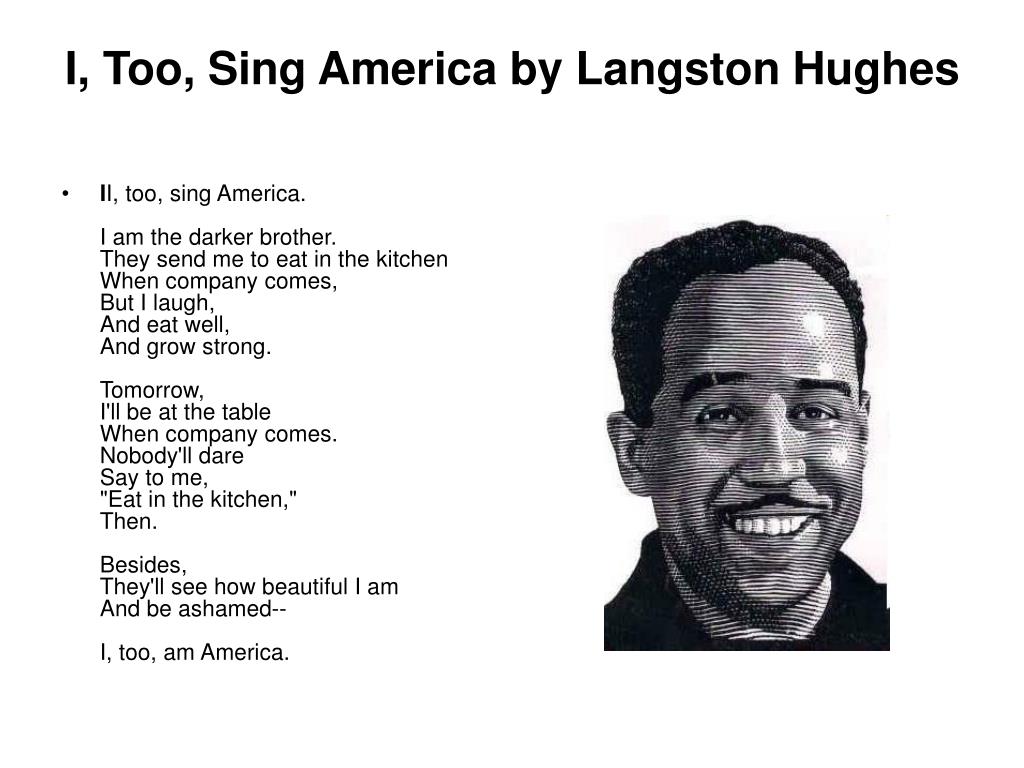
The poem begins with the line, "I, too, sing America." This is a powerful statement of inclusion. The speaker identifies as an American. They have a right to express their patriotism. The phrase "sing America" suggests celebrating the nation. It means contributing to its identity and culture.
The speaker then describes being sent to "eat in the kitchen." This happens when company comes. This symbolizes the segregation. It symbolizes the marginalization. It symbolizes the being hidden away. The speaker is treated as someone to be ashamed of. This represents the broader experience of African Americans at the time.
However, the speaker doesn't accept this treatment passively. They say, "But I laugh, / And eat well, / And grow strong." This shows resilience. This shows optimism. It shows a determination. The speaker finds joy and nourishment. They build strength in spite of discrimination.
The poem concludes with a vision of the future. "Tomorrow, / I’ll be at the table." This is when the company comes. "Nobody’ll dare / Say, ‘Eat in the kitchen,’ / Then." This signifies a future of equality. African Americans will be fully included. They will no longer be forced into the shadows.
The Poem's Message
The final lines emphasize the speaker's inherent Americanness. "Besides, / They’ll see how beautiful I am / And be ashamed—" The speaker possesses qualities. These qualities make them worthy of respect and recognition. The oppressors will be ashamed of their prejudice. They will be ashamed of their past actions.
Consider the phrase "how beautiful I am." This can refer to physical beauty. It can refer to inner strength. It can refer to cultural richness. The speaker's beauty challenges the racist stereotypes. They aim to invalidate negative views. It forces a re-evaluation of what it means to be American.
In essence, "I, Too, Sing America" is a poem about hope. It is a poem about resistance. It is a poem about claiming one's place in the nation. It is a demand for equality. It is a celebration of Black identity. The poem remains relevant today. It continues to inspire conversations. It inspires conversations about race, identity, and belonging. It also speaks about social justice in America.
Think about modern-day examples. Consider the ongoing fight for racial equality. Consider the Black Lives Matter movement. These are all connected to the themes in Hughes's poem. They demonstrate the continued struggle for recognition. They also demonstrate the continued struggle for equal treatment. Langston Hughes's words remain powerful. They resonate with those who seek a more just society.