I Was Or I Were Simple Past
+I+was+ill..jpg)
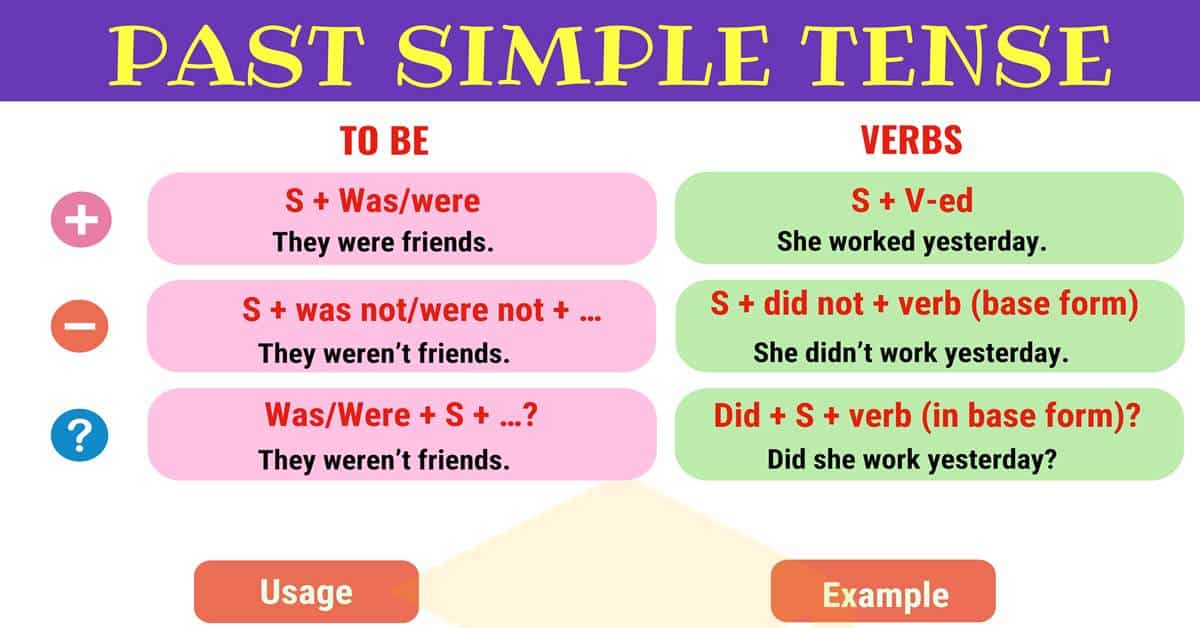
Okay, let's talk about "was" and "were" in the simple past tense. What are they? They are forms of the verb "to be" used to describe things that happened in the past. Think of them as past tense versions of "am," "is," and "are." They tell us about someone or something's state of being at a specific time in the past.
How does it work? It's all about knowing which pronoun to pair with each form. Here's the breakdown:
I was
He was
She was
It was
You were
We were
They were
See the pattern? "Was" is used with singular subjects (I, he, she, it). "Were" is used with plural subjects (we, they) and also with "you," whether you're talking to one person or a group. It's a quirk of English!
Let's look at some examples. "I was tired after the game." "She was happy to see her friends." "It was raining yesterday morning." These sentences describe a state of being in the past. Now, with "were": "You were amazing in the play!" "We were at the beach last weekend." "They were excited about the field trip." Notice how "were" paints a picture of a group or "you" in a certain condition in the past.
Sometimes, you might see "were" used in a special way in "if" clauses. This is called the subjunctive mood, and it expresses a hypothetical situation. For example: "If I were you, I would study harder." This doesn't mean you actually are the other person; it's just a thought experiment. This is a more advanced usage, but good to be aware of!
Why does it matter? Using "was" and "were" correctly is crucial for clear communication. Imagine saying "I were sad" instead of "I was sad." It just sounds wrong! Using the correct form ensures your sentences are grammatically correct and easily understood. Good grammar makes your writing and speaking more professional and polished.
Think of "was" and "were" as building blocks for constructing sentences about the past. Master these two forms, and you'll be well on your way to expressing yourself clearly and accurately when discussing past events. Practice makes perfect! Try writing your own sentences using "was" and "were" to solidify your understanding. Consider writing a short story about what *you were* doing last summer.