Ich Du Er Sie Es Wir Ihr Sie
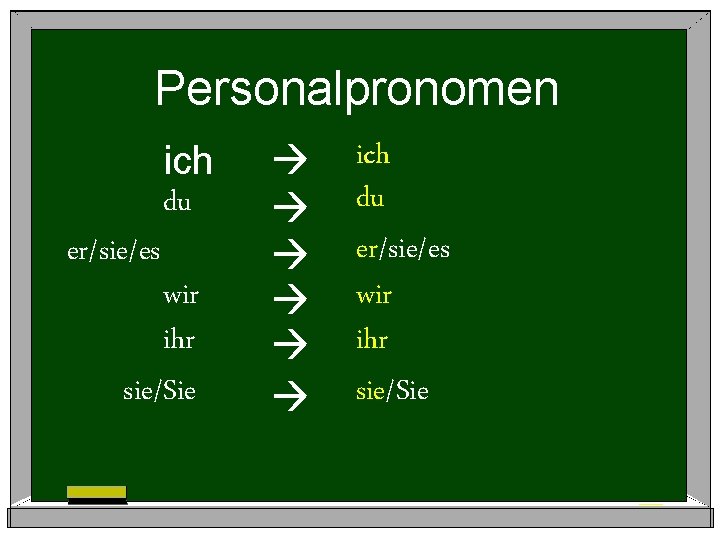
Let's learn about Ich, Du, Er, Sie, Es, Wir, Ihr, Sie – the German personal pronouns! Think of them as the building blocks for talking about *who* is doing something. They replace names and make sentences flow better. It’s easier than you think!
The Singular Pronouns
These pronouns are for talking about one person.
Ich: This means *I*. It's used when *you* are the one doing the action.
Example: Ich spiele Fußball. (I play soccer.)
Du: This means *you*. It's used when you're talking *to someone directly*. It's the informal "you."
Example: Du bist mein Freund. (You are my friend.)
Er: This means *he*. It refers to a male person.
Example: Er liest ein Buch. (He reads a book.)
Sie: This means *she*. It refers to a female person.
Example: Sie singt ein Lied. (She sings a song.)
Es: This means *it*. It refers to a neutral noun, like a thing or an animal whose gender isn't specified.
Example: Es ist kalt draußen. (It is cold outside.) Think of "das Wetter" (the weather) being replaced by "es".
The Plural Pronouns
These pronouns are for talking about groups of people.
Wir: This means *we*. It includes yourself and at least one other person.
Example: Wir gehen ins Kino. (We are going to the cinema.)
Ihr: This means *you* (plural, informal). It's used when addressing a group of people you know well.
Example: Ihr seid lustig. (You are funny. – addressing a group of friends)
Sie: This *can* mean *they*. It refers to a group of people.
Example: Sie wohnen in Berlin. (They live in Berlin.)
The Formal "Sie"
Now, here's where it gets a little tricky. Sie also means *you* (formal). This is *very important* in German culture. You use it to show respect to people you don't know well, or people in positions of authority (like teachers, bosses, or older adults). It is always capitalized.
Example: Wie geht Sie, Frau Schmidt? (How are you, Mrs. Schmidt?) Notice the capital "S" in Sie. Always use the formal "Sie" unless someone invites you to use "Du."
Putting It All Together
Let's see some examples that use multiple pronouns:
Ich und er sind Freunde. (I and he are friends.)
Du und sie lernen Deutsch. (You and she are learning German.)
Wir und ihr spielen zusammen. (We and you (plural) are playing together.)
Why is this important?
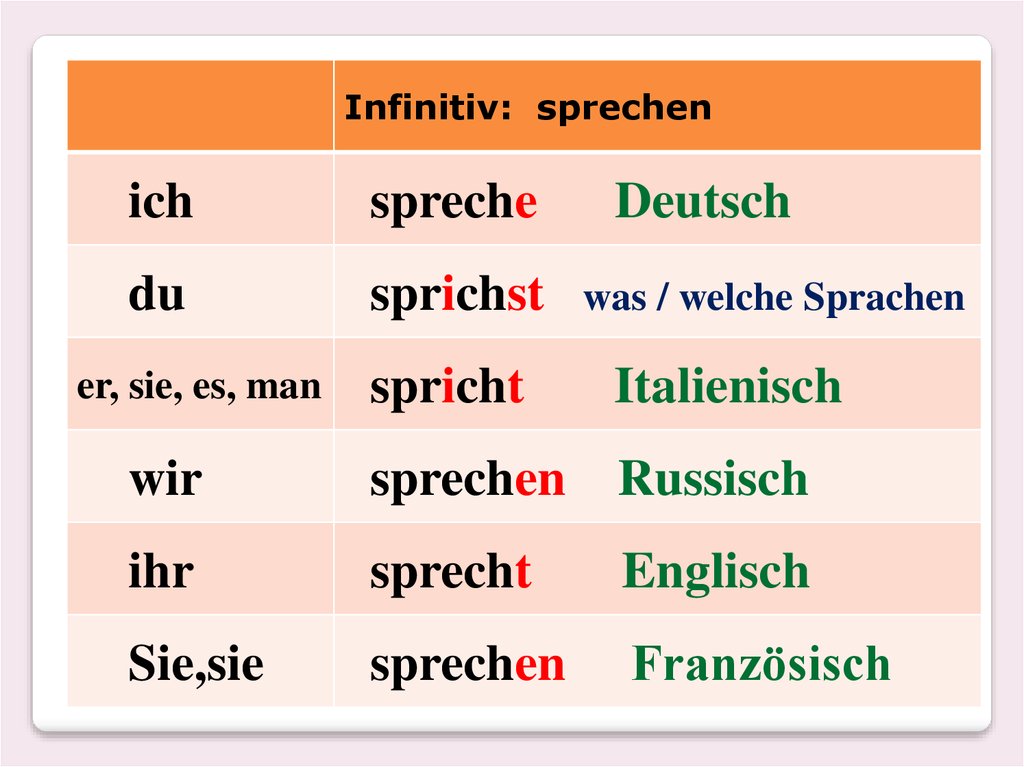
Using the correct pronoun is crucial for clear communication in German. It determines the verb conjugation (how the verb changes). For example, "Ich bin" (I am) is different from "Du bist" (You are). Getting the pronoun right is the first step to conjugating verbs correctly.
Key Takeaways
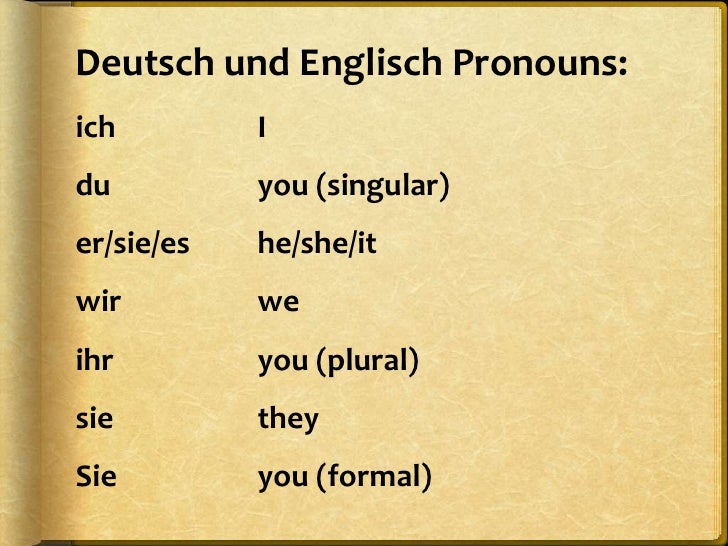
- Ich = I
- Du = You (informal, singular)
- Er = He
- Sie = She
- Es = It
- Wir = We
- Ihr = You (informal, plural)
- Sie = They / You (formal, singular and plural)
Remember to practice using these pronouns in sentences. The more you use them, the easier they'll become! Don't be afraid to make mistakes - that's how we learn! Good luck with your German studies!

+er%2C+sie%2C+es+(man)+wir+ihr+(Sie)+sie.jpg)