Ich Du Er Sie Es Wir Ihr

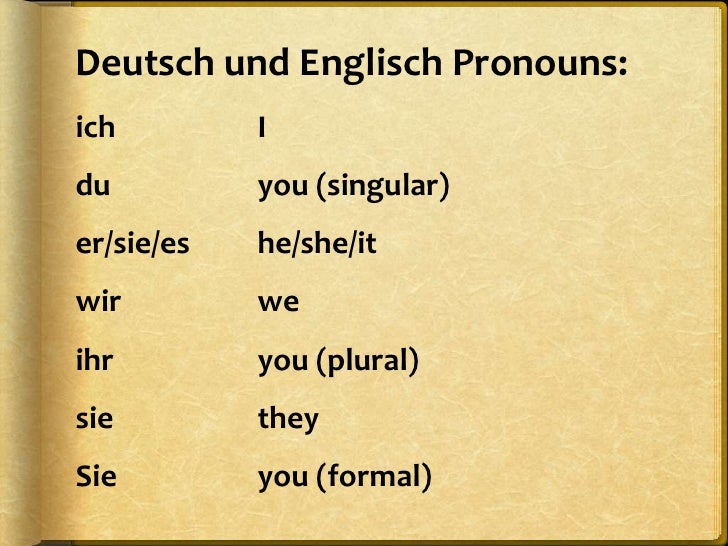
Ich, du, er, sie, es, wir, ihr. These are the personal pronouns in German. They are essential for constructing sentences and understanding who is performing an action.
Ich means "I" in English. It always refers to the speaker. Note that it is always capitalized in German. Learning the pronouns correctly is crucial.
Du means "you" (singular, informal). Use it with friends, family, and people you know well. The formal "you" is Sie (always capitalized), used with strangers and people you need to show respect to.
Er means "he." It refers to a male person. It is used when you have already mentioned that person or it is clear from the context who you are talking about. Er is a masculine pronoun.
Sie means "she." It refers to a female person. Like er, it requires context. This sie (she) is different from the formal "you" (Sie) by context within the sentence, not capitalization.
Es means "it." It refers to neuter nouns. German nouns have grammatical genders: masculine, feminine, and neuter. The gender is often arbitrary and must be memorized with the noun. The es pronoun is linked to these nouns.
Wir means "we." It refers to a group of people including the speaker. Wir represents a collective including yourself. Think of it as "I and others."
Ihr means "you" (plural, informal). It refers to a group of people you address directly. This is the plural version of "du." It's crucial to differentiate it from the singular formal "Sie."
Here are two simple examples:
Ich bin müde. (I am tired.)
Er spielt Fußball. (He plays soccer.)
Notice the capitalization of Ich and how it relates to the verb. Pronoun and verb conjugation go together. Understanding the personal pronouns is fundamental to forming correct sentences.
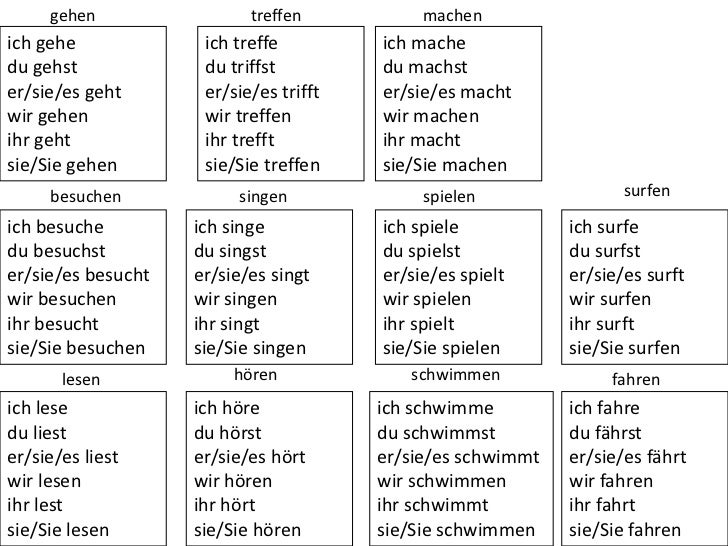
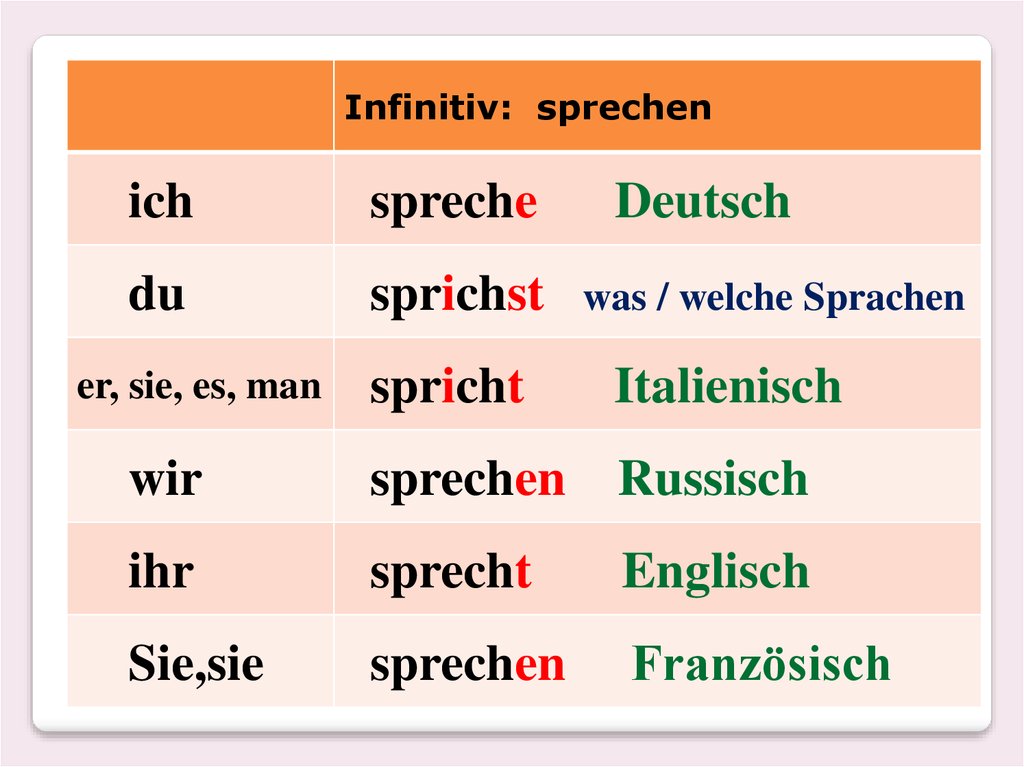
Understanding these pronouns is crucial for verb conjugation. Each pronoun corresponds to a specific verb ending. Incorrect pronoun usage leads to grammatical errors. This is a very common mistake among beginners, but very important to master.
The pronouns also influence sentence structure. German word order can be flexible. However, the pronoun usually stays in the subject position early in the sentence. Variations exist, but this rule is helpful for beginners.
In real-world applications, mastery of personal pronouns is essential for effective communication in German. Whether writing an email, having a conversation, or reading a book, pronouns help you understand the relationships between people and their actions.