Ich Du Er Sie Wir Ihr Sie

Let's learn about the core of German grammar: Ich, du, er, sie, es, wir, ihr, sie/Sie. These are the personal pronouns, the building blocks for constructing sentences and understanding who's doing what!
What are Personal Pronouns?
Think of personal pronouns as stand-ins for people or things. Instead of saying "Maria is happy," you can say "Sie is happy" (if 'Sie' refers to Maria). They help us avoid repetition and make our sentences smoother.
The List: One by One
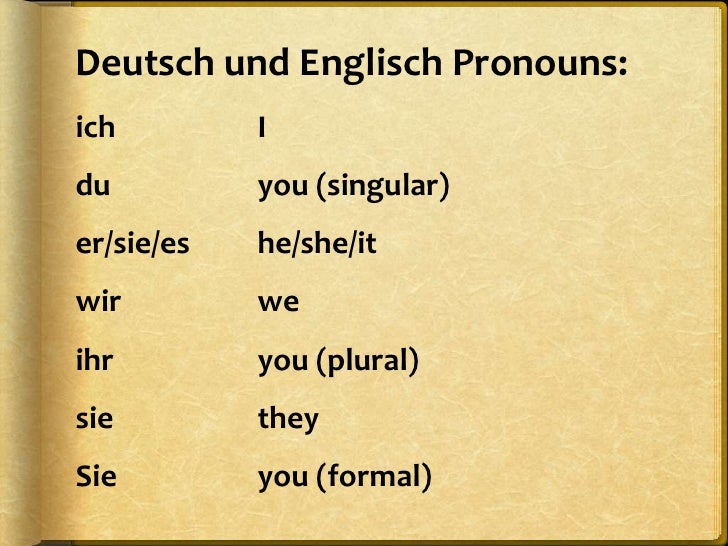
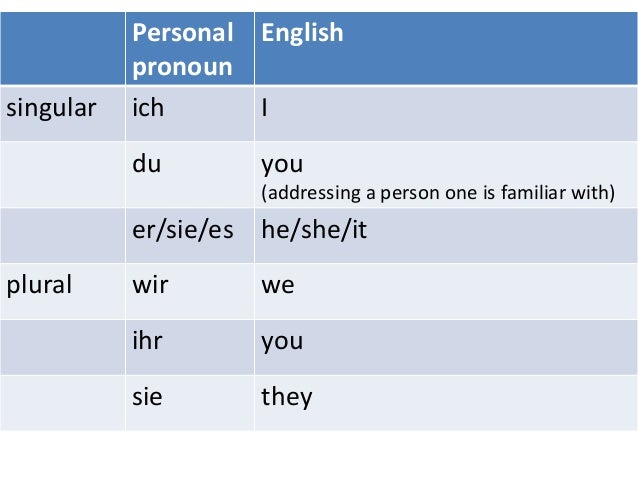
Here's the list with English translations:
- Ich: I
- Du: You (informal, singular)
- Er: He
- Sie: She
- Es: It
- Wir: We
- Ihr: You (informal, plural - addressing a group of people you know well)
- Sie: They
- Sie: You (formal, singular or plural)
Singular vs. Plural
Notice the difference between du and ihr, and the two different uses of Sie. Singular pronouns refer to one person, while plural pronouns refer to multiple people. Du is used for one person you know well, like a friend or family member. Ihr is used for a group of people you know well.
Example:
- Ich spiele Fußball. (I play soccer.)
- Du bist mein Freund. (You are my friend.)
- Er liest ein Buch. (He is reading a book.)
- Sie singt sehr schön. (She sings beautifully.)
- Es ist kalt heute. (It is cold today.)
"Es": The Tricky "It"
Es refers to a neuter noun. German nouns have genders: masculine, feminine, and neuter. You'll learn more about this later, but for now, just remember that es is for neuter nouns.
Example:
- Das Buch ist interessant. Es ist sehr spannend. (The book is interesting. It is very exciting.) ("Das Buch" is neuter)
Plural Pronouns: "Wir," "Ihr," and "Sie" (They)
These pronouns refer to groups of people.
Example:
- Wir gehen ins Kino. (We are going to the cinema.)
- Ihr seid meine Freunde. (You are my friends - speaking to a group.)
- Sie spielen im Park. (They are playing in the park.)
"Sie": Formal "You" - The Polite Option
This is where it gets a bit more complex! Sie (capitalized) is used for formal "you." It's used when addressing someone you don't know well, someone older than you, or someone in a position of authority. It can be singular or plural! The verb conjugation tells you if it is singular or plural.
Example:
- Sie sind sehr freundlich. (You are very friendly - formal, singular or plural).
Notice the capitalization! This is VERY important. A lowercase "sie" means "they," while a capitalized "Sie" means formal "you."
Why is this important?
Using the correct pronoun is crucial for clear communication and showing respect. Using "du" with someone you should address as "Sie" can be considered rude. Correct pronoun usage shows that you understand the nuances of German social customs and grammar.
Practice Makes Perfect!
The best way to master these pronouns is through practice. Try writing your own sentences using each pronoun. You can also listen to German conversations and pay attention to how native speakers use them. Don't be afraid to make mistakes – that's how you learn!
Ich, du, er, sie, es, wir, ihr, Sie/sie are fundamental to German grammar. Understanding them is the first step to becoming fluent! Viel Erfolg (Good luck)!