Ich Muss Leider Den Termin Absagen
"Ich muss leider den Termin absagen" translates directly to "I unfortunately have to cancel the appointment" in English. It's a common German phrase used in both formal and informal settings when you need to reschedule or completely scrap a pre-arranged meeting, event, or engagement. Understanding the nuances of this phrase and how to soften the blow is crucial for maintaining good professional and personal relationships in German-speaking countries.
Applications and When to Use It
This phrase isn't just for formal business meetings; it's a versatile tool for various situations:
- Business appointments: Client meetings, internal discussions, job interviews.
- Medical appointments: Doctor, dentist, therapist visits.
- Social gatherings: Dinner parties, coffee dates, birthdays.
- Personal services: Hair appointments, car repairs, home maintenance.
- Any situation where you've committed to a specific time and date.
The "leider" (unfortunately) is key. It conveys regret and politeness, signaling that you're not canceling lightly. Without it, the phrase can sound abrupt and rude. It's essential to provide context for *why* you're canceling and suggest alternatives whenever possible. Let's explore how to do this effectively.
A Phased Walkthrough to Canceling Appointments Politely
Here’s a breakdown of how to gracefully cancel an appointment in German, using "Ich muss leider den Termin absagen" as a starting point:
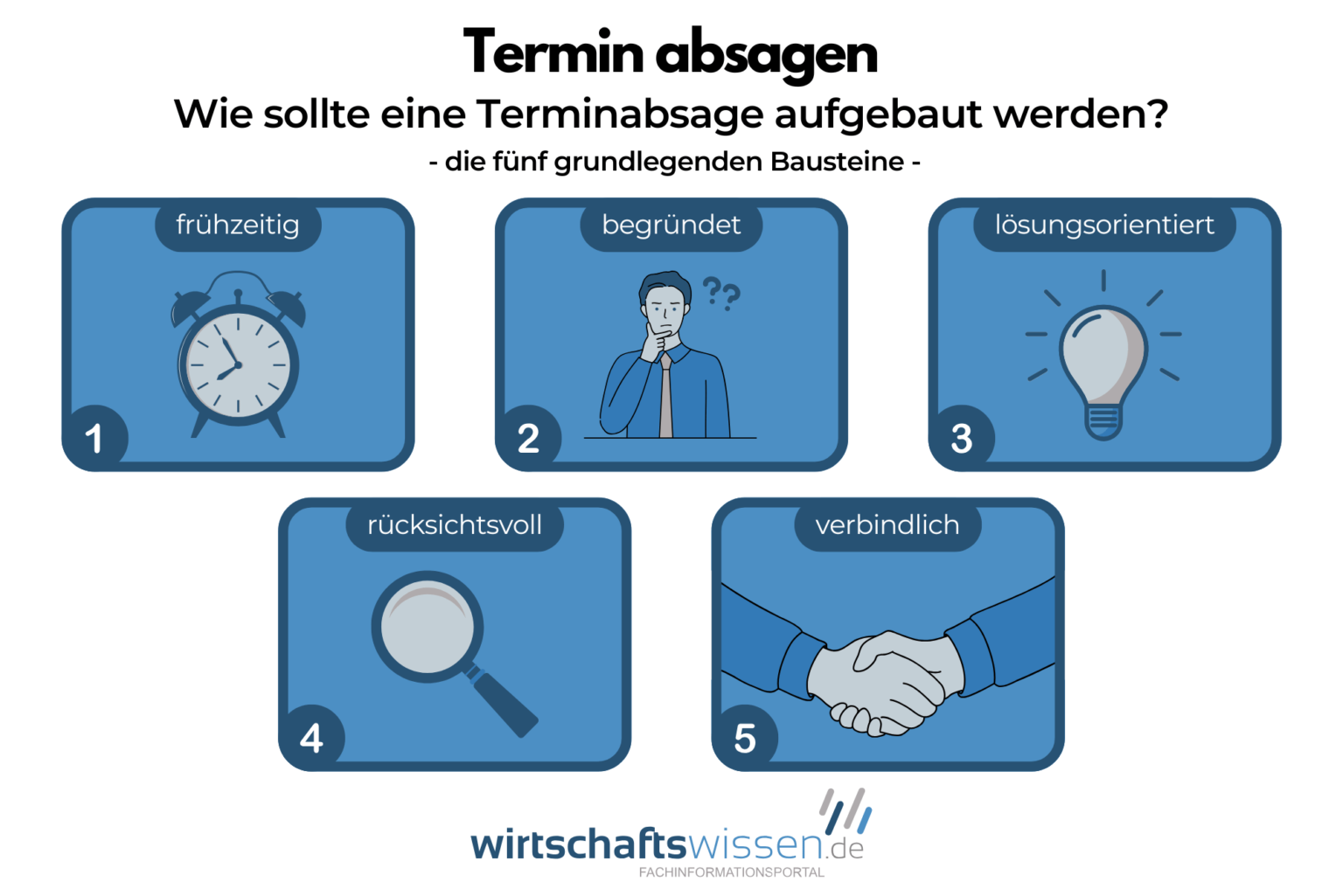
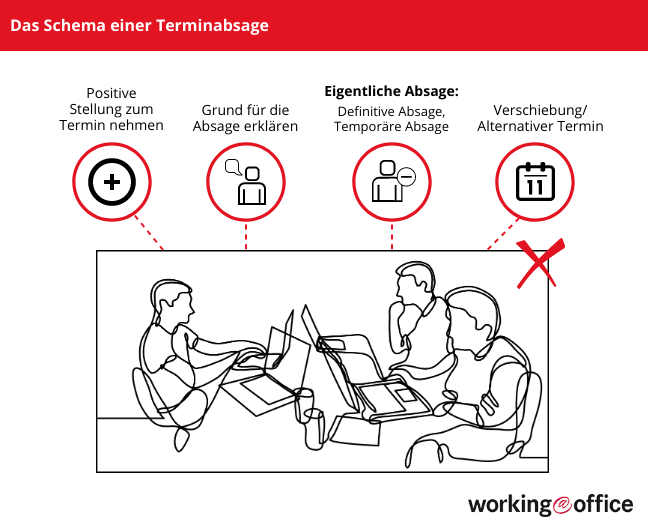
Phase 1: The Apology and Statement of Cancellation
- Start with a polite greeting:
- Formal: Sehr geehrte/r Herr/Frau [Name],
- Informal: Hallo [Name], or Liebe/r [Name],
- Express your regret and state the cancellation:
- Formal: Ich muss Ihnen leider mitteilen, dass ich unseren Termin am [Date] um [Time] absagen muss. (I unfortunately have to inform you that I have to cancel our appointment on [Date] at [Time].)
- Informal: Ich muss dir leider sagen, dass ich unseren Termin am [Date] um [Time] absagen muss. (I unfortunately have to tell you that I have to cancel our appointment on [Date] at [Time].) Or, more simply: Ich muss unseren Termin am [Date] leider absagen. (I unfortunately have to cancel our appointment on [Date].)
Important: Use "muss absagen" instead of just "absagen". It emphasizes the necessity of the cancellation.
Phase 2: Providing a Reason (Politely!)
- Be concise and honest (but not *too* detailed): A brief explanation goes a long way.
- Use impersonal constructions if you prefer not to share specifics:
- Formal: Aufgrund unvorhergesehener Umstände... (Due to unforeseen circumstances...)
- Formal: Aus dringenden persönlichen Gründen... (Due to urgent personal reasons...)
- Informal: Es ist etwas dazwischen gekommen... (Something came up...)
- If you're comfortable sharing, be specific (without oversharing):
- Ich bin leider krank geworden. (Unfortunately, I've become ill.)
- Es gab einen Notfall in der Familie. (There was a family emergency.)
- Ich habe einen wichtigen Termin dazwischen bekommen. (I had an important appointment come up.)
Phase 3: Offering an Alternative and Apologizing Again
- Propose a new time or date (if possible): This shows you're still interested.
- Use phrases like:
- Wäre es Ihnen/dir möglich, den Termin auf [Date] zu verschieben? (Would it be possible for you to reschedule the appointment to [Date]?)
- Könnten wir uns vielleicht nächste Woche treffen? (Could we perhaps meet next week?)
- Ich würde mich freuen, wenn wir den Termin bald nachholen könnten. (I would be happy if we could make up for the appointment soon.)
- End with a sincere apology: Reinforce your regret.
- Example: Es tut mir sehr leid für die Umstände. (I am very sorry for the inconvenience.) Or, more emphatically: Es tut mir wirklich sehr leid. (I'm really very sorry.)
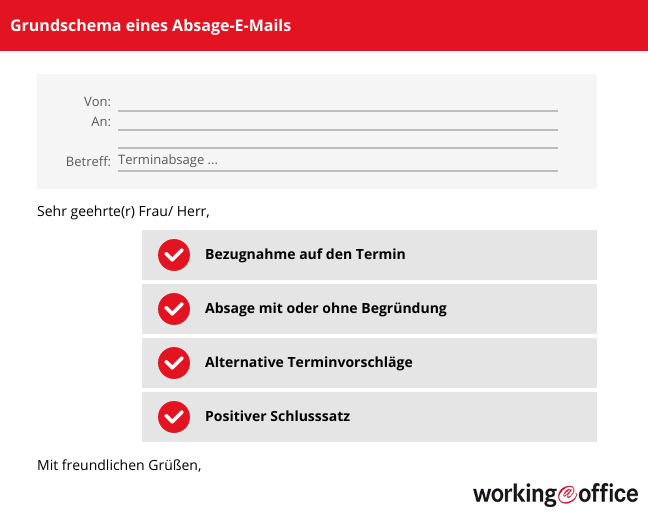
Putting it All Together - Examples
Formal Example (Business):
Sehr geehrte Frau Müller,
ich muss Ihnen leider mitteilen, dass ich unseren Termin am 15. November um 10 Uhr aufgrund unvorhergesehener Umstände absagen muss. Wäre es Ihnen möglich, den Termin auf den 18. November zur gleichen Zeit zu verschieben? Es tut mir sehr leid für die Umstände.
Mit freundlichen Grüßen,
[Your Name]
Informal Example (Friend):
Hallo Anna,
ich muss dir leider sagen, dass ich unseren Kaffee am Freitag absagen muss. Mir ist etwas dazwischen gekommen. Könnten wir uns vielleicht am Samstag treffen? Es tut mir wirklich sehr leid!
Liebe Grüße,
[Your Name]
By following these steps, you can navigate appointment cancellations in German with confidence and maintain positive relationships, even when plans change.