Ich Sehe Was Was Du Nicht Siehst Auf Englisch
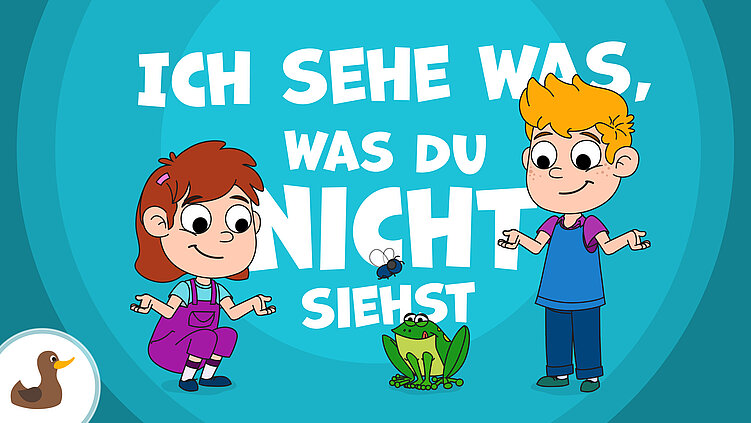
Ich sehe was, was du nicht siehst, or "I spy with my little eye," is a simple guessing game often played with children.
Definition: It's a game where one person secretly chooses an object, and others try to guess it based on clues, usually starting with the object's color.
How to Play: Step-by-Step
Step 1: The Chooser. One person is the "chooser." They look around the room and secretly pick an object.
Step 2: The Clue. The chooser gives the first clue. This is usually the color of the object. They say: "Ich sehe was, was du nicht siehst, und das ist... grün." (I spy with my little eye something that is... green.)
Step 3: The Guessers. The other players, the "guessers," take turns guessing what the object might be. For example, they might ask: "Is it the plant?" or "Is it the green book?"
Step 4: The Answer. The chooser can only answer "yes" or "no" to the guesses. If a guess is wrong, the next guesser gets a turn.
Step 5: Winning. When someone guesses the correct object, they become the new chooser, and the game starts again.
Breaking Down the German Phrase
Let's look at each part of the famous phrase:
- Ich: This means "I." It's the person who is doing the spying.
- sehe: This means "see." It's the verb, indicating the action of looking.
- was: This means "something" or "what." It refers to the object being spied.
- was du nicht siehst: This means "what you don't see." It emphasizes that the object is hidden from the other players' immediate view.
So, the whole phrase literally translates to "I see something that you don't see."
Simple Examples
Imagine you are in a living room.
- Chooser: "Ich sehe was, was du nicht siehst, und das ist... blau." (I spy with my little eye something that is... blue.)
- Guesser 1: "Is it the blue vase?"
- Chooser: "No."
- Guesser 2: "Is it the blue cushion?"
- Chooser: "Yes!"
Another example:
- Chooser: "Ich sehe was, was du nicht siehst, und das ist... rot." (I spy with my little eye something that is... red.)
- Guesser 1: "Is it the red car toy?"
- Chooser: "No."
- Guesser 2: "Is it the red book?"
- Chooser: "Yes!"
Why This Game is Great
Ich sehe was, was du nicht siehst is a fun and educational game for several reasons:
- Vocabulary. It helps children learn and practice colors and object names in German.
- Observation Skills. It encourages players to pay attention to their surroundings.
- Deductive Reasoning. Guessers must use logic and clues to figure out the object.
- Language Practice. It's excellent practice for speaking and listening in German.
You can adapt the clues beyond color. For example, you could say: "Ich sehe was, was du nicht siehst, und es ist aus Holz." (I spy with my little eye something that is made of wood.) This makes the game more challenging as the players get better.
So next time you want a simple, engaging game to play and want to brush up on your German, remember Ich sehe was, was du nicht siehst! It's a classic for a reason.
(7).jpg)