Ich Selbst Oder Ich Selber

Ich Selbst Oder Ich Selber? Let's Visualize It!
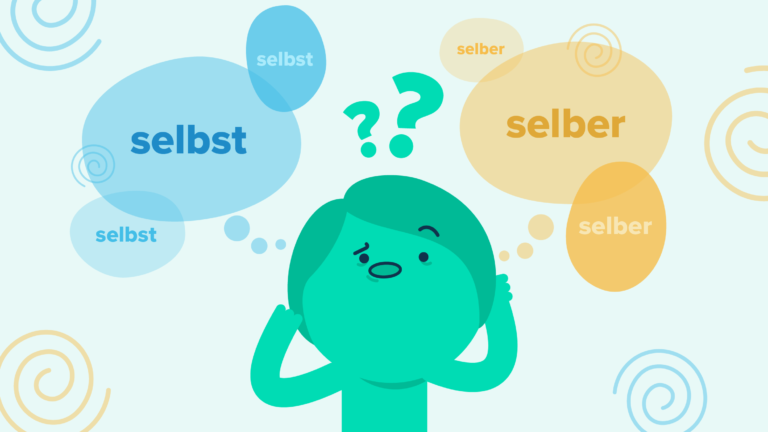
Have you ever stumbled upon "ich selbst" and "ich selber" and wondered if they're interchangeable? You're not alone! Many German learners find this a bit tricky. Think of it like this: they both mean "myself," but their usage has subtle differences. We'll break it down visually to make it crystal clear. Think of "selbst" as a spotlight.
Imagine a stage. On that stage is you, *ich*. The spotlight represents emphasis. If you want to really emphasize that *you* did something, you shine that spotlight. The spotlight can land on either "selbst" or "selber." Both shine brightly, but in slightly different contexts. It's about the nuance you're trying to convey. Like adding a different filter to the light.
Selbst: The Slightly More Formal Spotlight
“Selbst” is generally considered the more formal of the two. It's like using a professionally installed spotlight system. It conveys a sense of independence and sometimes surprise. Think of a scenario: you built a birdhouse all by yourself. You might say: "Ich habe das Vogelhaus selbst gebaut!"
Visualize this: you are standing proudly next to your freshly built birdhouse. The spotlight of accomplishment shines on you. It's like saying, "Yes, *I*, unaided, independently, built this!" It often carries a slight air of self-sufficiency. “Selbst” highlights the action you performed without help.
Another example: "Ich habe es selbst gesehen!" (I saw it myself!). Imagine seeing a shooting star. You want to emphasize that *you*, with your own eyes, witnessed this rare event. The “selbst” adds weight to your statement, emphasizing your direct experience.
Selber: The More Casual Spotlight
Now, let’s switch to “selber”. This word is more common in everyday conversation. Imagine a handheld spotlight, a bit less precise but still effective. It’s like saying, "Yeah, *I* did it." It's often used in spoken German and feels more relaxed.
Think about making a sandwich. A simple, everyday task. You might say: "Ich mache mein Sandwich selber." This implies that you regularly make your own sandwiches, without any particular emphasis on independence. You are simply stating a fact.
Another example: "Ich koche selber." (I cook myself). This suggests that you generally prefer to cook your own meals rather than ordering takeout. The spotlight is there, but it's a softer, less intense beam, highlighting a routine rather than a remarkable feat.
Visual Summary: Two Lights, Similar Effects
Think of it like this: both "selbst" and "selber" are spotlights pointing at *you*. "Selbst" is a powerful, focused beam, highlighting independence and surprise. "Selber" is a more diffused, everyday light, emphasizing routine and personal habit. In many cases, they are interchangeable, but the subtle nuances in formality and emphasis remain.
Let's put it in a table to see the similarities and differences. Imagine a simple 2x2 grid. The top row is *Formality*, with "Selbst" being *Formal* and "Selber" being *Informal*. The bottom row is *Emphasis*, with "Selbst" being *High Emphasis* and "Selber" being *Low Emphasis*. That's the key visual difference!
Don't Overthink It!
The most important thing to remember is that in many situations, "ich selbst" and "ich selber" can be used interchangeably. Don't get too hung up on the nuances, especially when starting out. Focus on understanding the general meaning: *I myself*. As you become more fluent, you'll naturally develop a feel for when one sounds more appropriate than the other. It's like learning to adjust the brightness of a lamp.
Practice using both in sentences. Listen to native speakers and pay attention to how they use these phrases. The more you expose yourself to the language, the more intuitive it will become. Soon, you'll be shining the spotlight on *yourself* with confidence!