Ich Wollte Dir Oder Dich Fragen

Let's tackle a common German grammar hurdle: choosing between dir and dich after "Ich wollte fragen." This boils down to understanding case – specifically, dative vs. accusative.
The Problem: Dir or Dich?
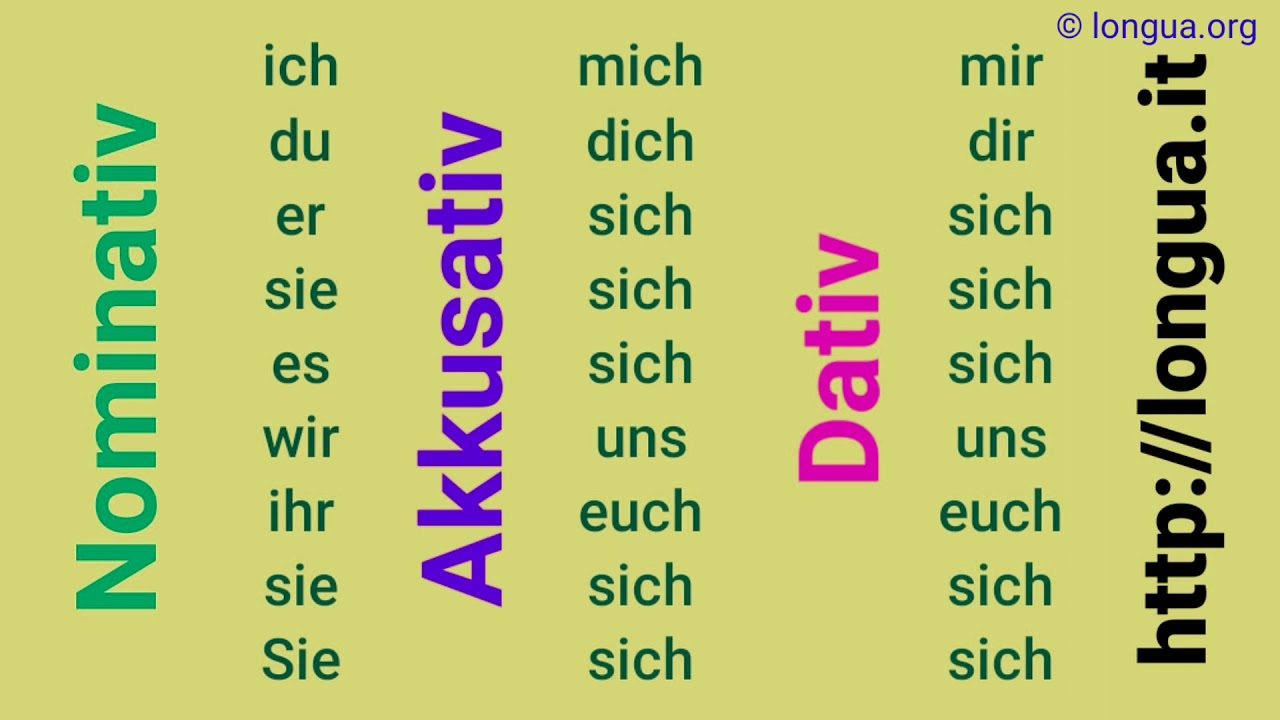
"Ich wollte dir oder dich fragen" translates to "I wanted to ask you." The confusion arises because "you" in German has multiple forms depending on its grammatical role in the sentence. We need to figure out whether "you" is the dative or accusative object of the verb "fragen" (to ask).
Step 1: Understanding Dative and Accusative
Think of it like this: Dative often indicates the indirect recipient of something, while accusative is often the direct recipient or the object directly affected by the verb's action.
* Dative: Answers "to whom?" or "for whom?" * Accusative: Answers "whom?" or "what?"For the pronoun "you" (informal, singular), the dative form is dir, and the accusative form is dich.
Step 2: Analyzing the Verb "Fragen"
The key to solving this dilemma lies in the verb fragen itself. "Fragen" typically takes an accusative object. This means you ask someone (accusative) a question (which can also be accusative, depending on the sentence structure).
Step 3: Applying the Rule to "Ich Wollte Fragen"
Since "fragen" takes an accusative object, the "you" in "Ich wollte dich fragen" is the direct object of the verb. Therefore, the correct form is dich.
Correct: Ich wollte dich fragen.
Incorrect: Ich wollte dir fragen.
Why "Dir" is Wrong (Usually)
While rare, there are specific sentence constructions where "dir" could theoretically be used with "fragen," but they involve adding more elements to the sentence to shift the grammatical focus. These scenarios are more complex and not the standard usage.
Example of a more complex scenario (avoid for now): *Ich wollte dir eine Frage stellen*, where "eine Frage" (a question) is the direct object, and "dir" is the dative, indicating the recipient of the question being asked.
Examples for Clarity
Let's look at more examples:
* "Ich möchte dich etwas fragen." (I want to ask you something.) – Accusative * "Kann ich dich kurz fragen?" (Can I ask you briefly?) – Accusative * "Sie wollte dich nach dem Weg fragen." (She wanted to ask you for directions.) – AccusativeRemember the Basics
The simplest way to remember this is that "fragen" almost always needs an accusative object when referring to the person being asked. Focus on that direct connection. "I am asking *you*." It's a direct action.
Practice Makes Perfect
Try creating your own sentences using "fragen" and make sure you're using dich for the person being asked! Don't be afraid to experiment and learn from mistakes.
Beyond "Du": Formal "Sie"
The same principle applies to the formal "you" (Sie). The accusative form is also Sie, while the dative form is Ihnen. Therefore, "Ich wollte Sie fragen" (I wanted to ask you) is correct.
Good luck mastering this aspect of German grammar! With practice and understanding the underlying principles, you'll be speaking confidently in no time.