Ich Wünsche Ein Frohes Neues Jahr
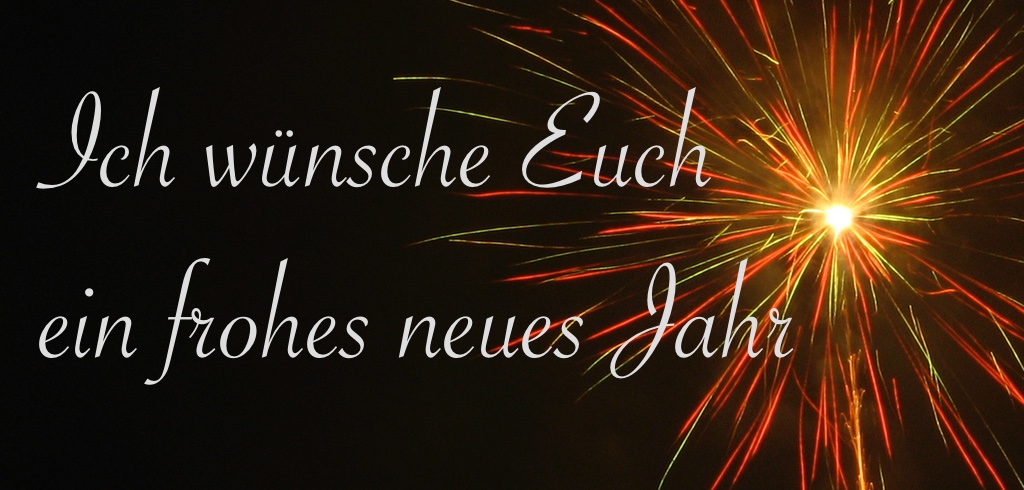
"Ich Wünsche Ein Frohes Neues Jahr" Explained
Let's explore the German phrase "Ich wünsche ein frohes neues Jahr." It's used to express New Year's greetings.
Breaking it down, "Ich wünsche" translates to "I wish." It's the verb "wünschen" (to wish) conjugated in the first-person singular (I). For example, "Ich wünsche dir alles Gute" means "I wish you all the best."
"Ein" is the indefinite article. It means "a" or "one." It precedes the noun it modifies. In this case, it's connected to "Jahr."
"Frohes" means "happy" or "merry." It's an adjective describing the noun "Jahr" (year). Note that adjectives in German change their endings based on grammatical gender, case, and number. Here, "frohes" is in the accusative neuter singular form.
"Neues" means "new." Like "frohes," it's an adjective modifying "Jahr." It's also in the accusative neuter singular form because "Jahr" (year) is neuter in German.
"Jahr" means "year." It's a neuter noun. Therefore, the phrase directly translates to "I wish a happy new year."
Putting It All Together
So, "Ich wünsche ein frohes neues Jahr" is the complete greeting. It’s a common way to wish someone a happy new year in German-speaking countries. You'll hear this phrase often around December 31st and January 1st.
There are slight variations you might encounter. For example, you might also hear: "Ich wünsche dir ein frohes neues Jahr!" The addition of "dir" means "you" (dative case) and makes the wish more personal: "I wish *you* a happy new year!"
Another popular variation is: "Frohes neues Jahr!" This is a shorter, more direct way to say "Happy New Year!" The "Ich wünsche" part is implied.
Formal vs. Informal
The phrase is generally appropriate for both formal and informal situations. It is versatile. You can use it with family, friends, colleagues, or acquaintances.
However, in more formal settings, you might add titles. For instance, you could say: "Herr Schmidt, ich wünsche Ihnen ein frohes neues Jahr!" (Mr. Schmidt, I wish you a happy new year!). Using "Ihnen" (formal "you") shows respect.
In contrast, with close friends and family, you might use the informal "dir": "Ich wünsche dir ein frohes neues Jahr!"
Beyond the Literal Translation
While the direct translation is "I wish a happy new year," the phrase carries a deeper meaning. It implies hope for a prosperous and joyful year ahead. It expresses good will towards the recipient.
It is also common to accompany the phrase with a handshake or a hug (depending on your relationship with the person). Sometimes people might raise a glass to toast the new year.
You might also hear wishes for good health and success in the new year. These might be added to the basic greeting. For example: "Ich wünsche dir ein frohes neues Jahr und viel Glück und Gesundheit!" (I wish you a happy new year and much luck and health!).
Practical Application
Imagine you are at a New Year's Eve party in Germany. As the clock strikes midnight, you can turn to your friends and say, "Ich wünsche euch ein frohes neues Jahr!" (I wish you all a happy new year!). "Euch" is the dative plural form of "you," used informally when addressing a group of people.
Or, perhaps you are sending a New Year's card to a business partner. You could write: "Sehr geehrte Frau Müller, ich wünsche Ihnen ein frohes neues Jahr und ein erfolgreiches Jahr 2024!" (Dear Mrs. Müller, I wish you a happy new year and a successful year 2024!). This demonstrates professionalism and respect.
Learning to say "Ich wünsche ein frohes neues Jahr" is a great way to connect with German speakers during the holiday season. It shows that you appreciate their culture and are making an effort to communicate in their language. It’s a simple phrase that can bring a lot of joy.