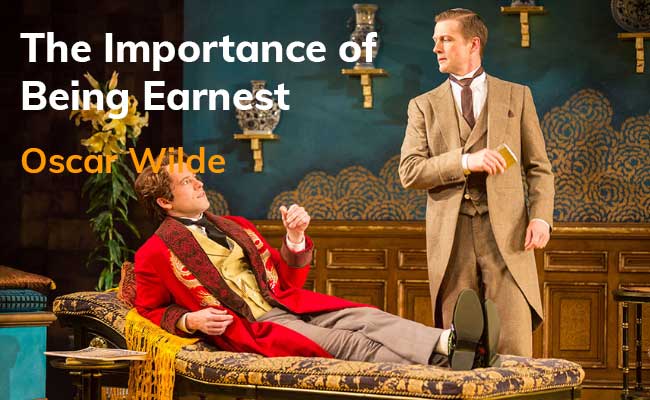
Importance Of Being Earnest Oscar Wilde
The Importance of Being Earnest by Oscar Wilde is more than just a funny play. It cleverly explores Victorian society and its values. Let's break down why this play remains important and engaging today.
1. Satire of Victorian Society
Wilde uses humor to criticize the superficiality and hypocrisy of Victorian England. He pokes fun at their obsession with:
- Appearance: People cared more about how things looked than how they really were. For example, the characters prioritize marrying into a wealthy family over genuine love.
- Social Class: Your place in society mattered more than your personality. Lady Bracknell is obsessed with Jack's social status and family background.
- Morality: People pretended to be virtuous, but often acted selfishly. "Earnestness" itself becomes a joke, as the characters create fictional identities to escape social expectations.
Example: Lady Bracknell's interrogation of Jack about his origins is a perfect example of Wilde satirizing the Victorian obsession with social standing. She dismisses him because he was found in a handbag at a train station, regardless of his good qualities.
2. The Importance of Language and Wit
Wilde's play is full of clever wordplay and witty remarks. Language is used not to convey truth, but to create humorous situations and reveal character flaws.
- Puns: Wilde uses words with multiple meanings for comedic effect. The title itself, The Importance of Being Earnest, is a pun, playing on the name "Ernest" and the quality of "earnestness."
- Epigrams: Short, witty statements that often contradict common sense. Lady Bracknell is famous for her epigrams, such as "To lose one parent, Mr. Worthing, may be regarded as a misfortune; to lose both looks like carelessness."
- Irony: Saying one thing but meaning another. Characters often make grand pronouncements that are clearly insincere.
Example: Algernon's constant quips and witty pronouncements demonstrate Wilde's masterful use of language for comedic effect. His remarks are often absurd but undeniably funny.
3. The Theme of Identity
The characters in the play struggle with their identities. Both Jack and Algernon create fictional personas ("Ernest") to escape social expectations and pursue romantic interests.
- Double Lives: The characters live double lives, pretending to be someone they are not. This highlights the artificiality of Victorian society.
- Finding True Identity: Ultimately, the play questions what it means to be "Earnest" in both name and character. Jack's true identity is revealed at the end, bringing a sense of order and resolution.
Example: Jack invents a fictional brother named Ernest to justify his trips to London. This allows him to escape his responsibilities as a guardian and indulge in a more carefree lifestyle.
4. Social Commentary on Marriage
Marriage is presented as a social institution driven by wealth and status rather than genuine love and affection. The play critiques the Victorian obsession with marrying well.
- Arranged Marriages (implied): While not explicitly arranged, the characters' focus on wealth and social standing suggests a pragmatic approach to marriage.
- Superficial Relationships: The relationships in the play are often based on superficial qualities, such as appearance and social status.
Example: Lady Bracknell's meticulous questioning of Jack's suitability as a husband for Gwendolen highlights the Victorian obsession with marrying into a suitable social class. She acts as a gatekeeper, ensuring that Gwendolen marries someone who meets her high standards.
5. Enduring Relevance
While set in Victorian England, The Importance of Being Earnest remains relevant today because it explores timeless themes such as:
- Social Hypocrisy: The play's critique of superficiality and hypocrisy resonates in modern society.
- The Search for Identity: The characters' struggle to find their true selves is a universal experience.
- The Power of Language: Wilde's witty dialogue continues to entertain and challenge audiences.
In conclusion, The Importance of Being Earnest is a brilliant comedy that cleverly critiques Victorian society. Its witty dialogue, memorable characters, and exploration of timeless themes make it a play that continues to be enjoyed and studied today. Understanding these key aspects helps us appreciate the play's lasting significance.