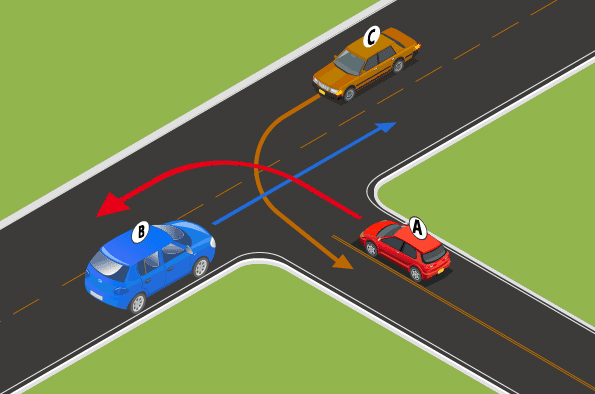
In Which Order May The Vehicles Proceed

Vorfahrtsregeln, or right-of-way rules, dictate in which order vehicles may proceed at intersections, especially when traffic signals are absent or malfunctioning. These rules are essential for maintaining traffic flow and preventing accidents. Understanding and applying them correctly is crucial for all drivers. Failure to adhere to these rules can result in collisions, fines, and even legal consequences.
Understanding the Fundamentals
The core principles underpinning Vorfahrtsregeln involve determining who has the right-of-way in various scenarios. This often boils down to two primary considerations: whether a driver is on a Vorfahrtsstraße (right-of-way street) and the 'right before left' rule.
- Vorfahrtsstraße (Right-of-Way Street): A Vorfahrtsstraße is indicated by a yellow diamond-shaped sign. Vehicles on this street have priority over vehicles approaching from side streets without a traffic signal or specific sign granting them priority. You must still exercise caution even on a Vorfahrtsstraße, as others may make mistakes.
- Rechts vor Links (Right Before Left): This is the most fundamental rule. At an intersection where there are no traffic signals, traffic signs, or police officers directing traffic, vehicles must yield to traffic approaching from their right. This rule applies to cars, motorcycles, bicycles – basically anything with wheels!
A Phased Walkthrough with Examples
Let's break down the decision-making process when approaching an uncontrolled intersection.
Phase 1: Identifying Vorfahrtsstraßen
- Scenario: You're approaching an intersection. Look for the yellow diamond sign.
- If Present (Facing Traffic): You are on a Vorfahrtsstraße. Maintain your speed (within legal limits) and proceed, but always remain vigilant. You still need to be aware of other vehicles, cyclists, and pedestrians.
- If Absent (Facing Traffic): You are not on a Vorfahrtsstraße. Proceed to Phase 2.
- Example: You see the yellow diamond sign. You can confidently proceed through the intersection (assuming it is safe to do so).
Phase 2: Applying Rechts vor Links
- Scenario: You've determined you're not on a Vorfahrtsstraße or there are no other signs or signals.
- Assess Traffic: Look to your right. Is there a vehicle approaching?
- Yes: You must yield to the vehicle approaching from your right. Wait for it to pass before proceeding.
- No: Proceed cautiously. Look to your left to ensure no one is disregarding your right-of-way or proceeding from a position where they should yield to you.
- Example: You approach an intersection with no signs. A car is approaching from your right. You must stop and let them go first.
- Assess Traffic: Look to your right. Is there a vehicle approaching?
Phase 3: Special Cases & Considerations
- Turning: Even on a Vorfahrtsstraße, turning drivers must yield to oncoming traffic and pedestrians crossing the street into which they are turning.
- Traffic Signals & Signs: Traffic signals and specific road signs (like 'Yield' or 'Stop' signs) always override the Rechts vor Links rule. Obey the signals and signs first.
- Emergency Vehicles: Always yield to emergency vehicles with sirens and flashing lights, regardless of the normal right-of-way rules.
- Roundabouts: Vehicles already inside a roundabout have the right-of-way. You must yield to traffic already circulating within the roundabout before entering.
- Example: You are on a Vorfahrtsstraße and turning left. An oncoming car is approaching straight ahead. You must yield to the oncoming car before turning, even though you are on the Vorfahrtsstraße.
Key Takeaways for Problem Solvers
- Prioritize Observation: Constantly scan the environment for signs, signals, and other vehicles.
- Know Your Signs: Familiarize yourself with German traffic signs, especially those related to right-of-way.
- Practice Makes Perfect: Apply these rules consistently while driving to develop good habits.
- Be Predictable: Signal your intentions clearly and drive in a predictable manner.
- When in Doubt, Yield: If you're unsure who has the right-of-way, err on the side of caution and yield. It's better to be safe than sorry.
Mastering Vorfahrtsregeln is vital for safe and responsible driving. By understanding the principles, practicing the rules, and remaining vigilant, you can navigate German roads with confidence and avoid accidents.