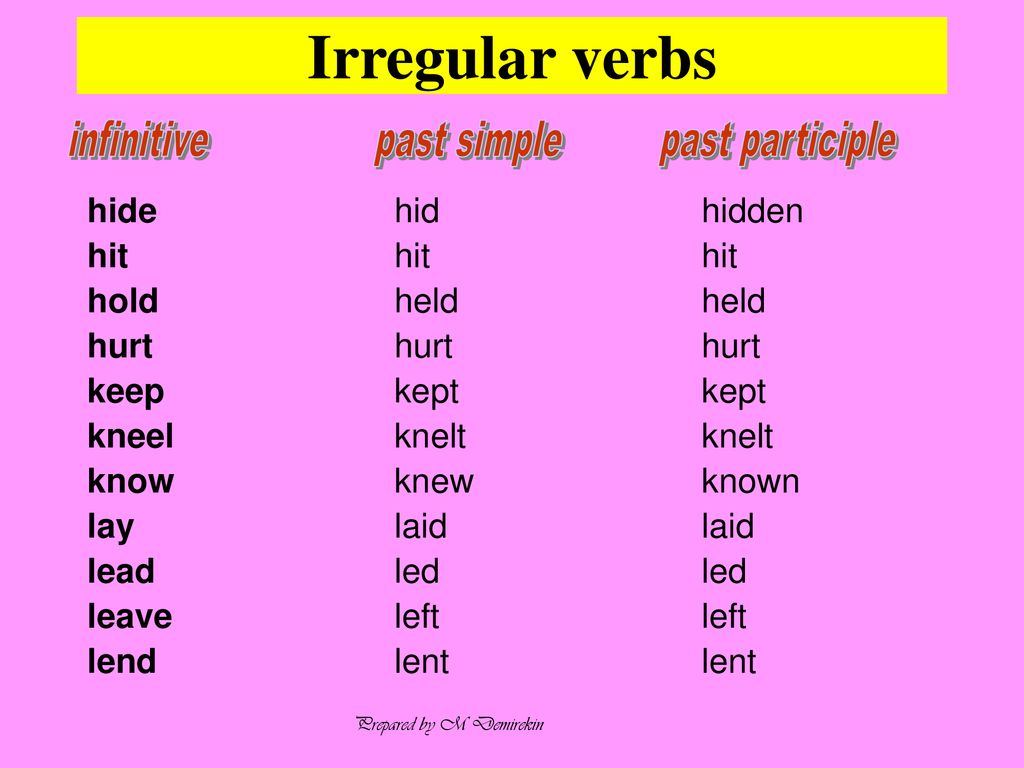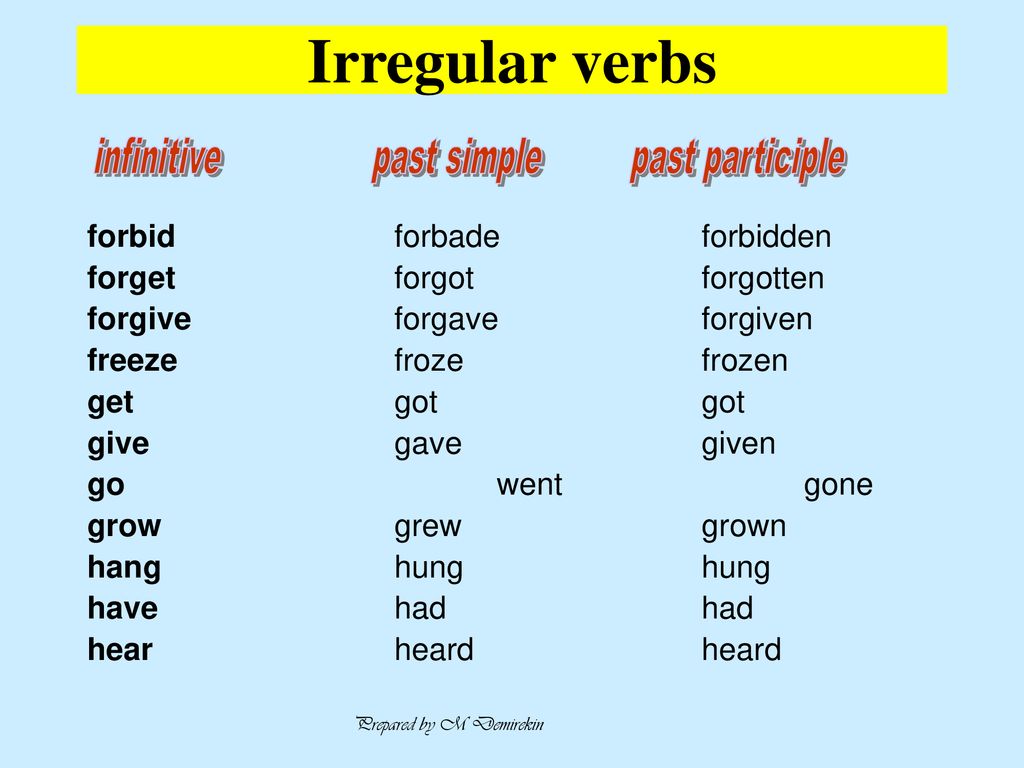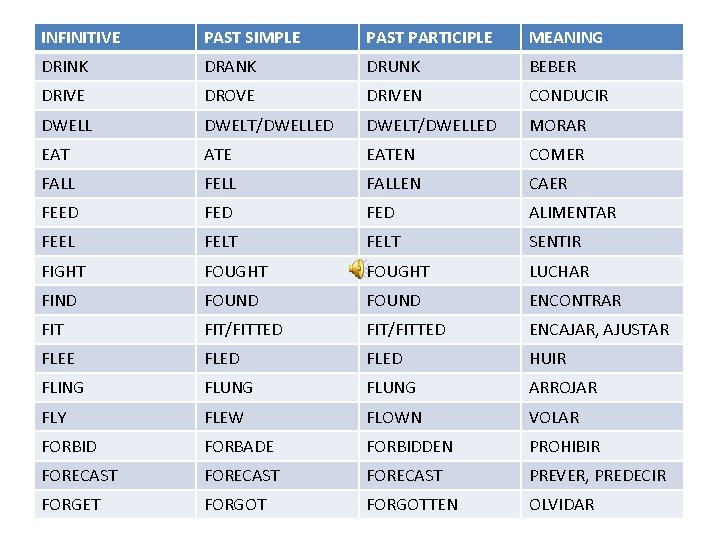
Infinitive Past Simple Past Participle
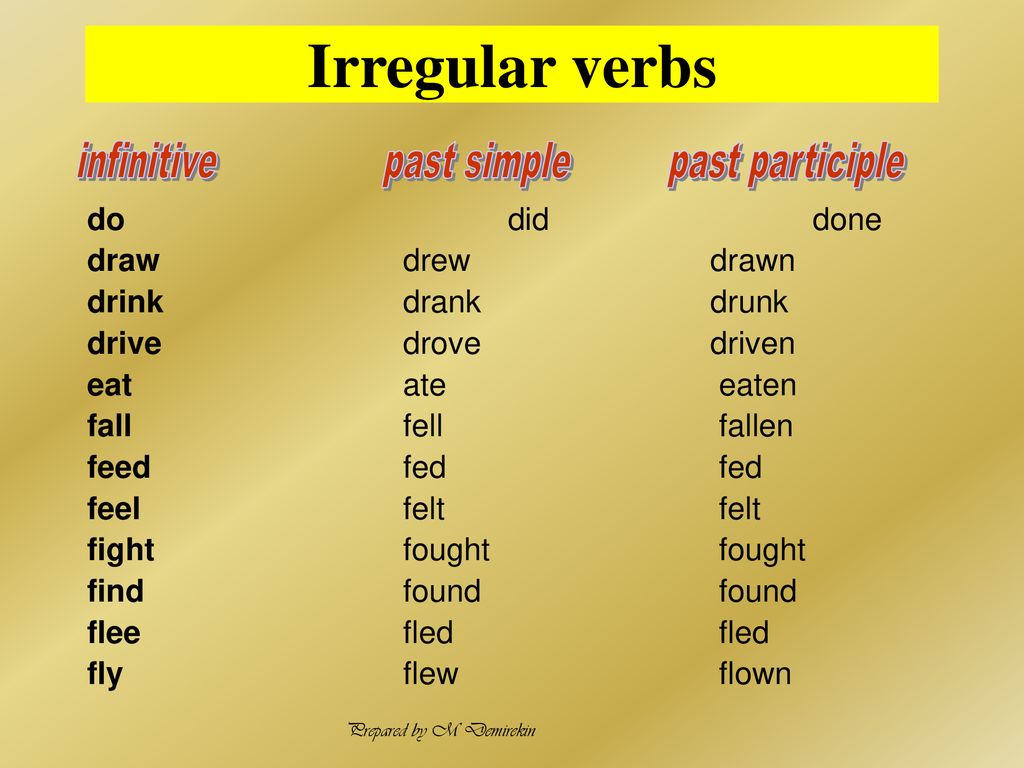
The Infinitive, Past Simple, and Past Participle are three essential forms of a verb in English. They show us how a verb changes across different times (tenses).
Understanding the Infinitive
The infinitive is the basic, unconjugated form of a verb. It usually appears with "to" in front of it. Think of it as the verb in its most raw state.
Definition: The infinitive is the base form of a verb, often preceded by "to."
Example:
- To walk
- To eat
- To sing
- To study
The infinitive is used in many ways. For example, "I want to eat." Here, "to eat" is the infinitive and acts as the object of the verb "want".
Understanding the Past Simple
The Past Simple is used to describe completed actions in the past. It tells us that something happened and finished at a specific time before now.
Definition: The past simple describes completed actions in the past.
Formation: For regular verbs, we usually add "-ed" to the infinitive. Irregular verbs have unique past simple forms that must be memorized.
Examples:
- Walk - Walked
- Eat - Ate
- Sing - Sang
- Study - Studied
Usage: "I walked to school yesterday." "She ate an apple." "They sang a song." "He studied hard for the exam." These sentences clearly describe actions that finished in the past.
Understanding the Past Participle
The Past Participle is used in perfect tenses (like present perfect, past perfect, future perfect) and in passive voice sentences. It doesn't describe a simple past action like the Past Simple.
Definition: The past participle is used in perfect tenses and passive voice constructions.
Formation: For regular verbs, the past participle is the same as the past simple (usually ending in "-ed"). Irregular verbs often have different past participle forms.
Examples:
- Walk - Walked
- Eat - Eaten
- Sing - Sung
- Study - Studied
Usage:
- Present Perfect: "I have walked to school many times." (Action started in the past and continues to the present, or the result is important now)
- Past Perfect: "She had eaten before I arrived." (Action completed before another action in the past)
- Passive Voice: "The song was sung by the choir." (The subject receives the action)
- Perfect Infinitive: "He seems to have studied hard." (Refers to an action completed before the time of the main verb.)
Putting It All Together
Here's a table summarizing the verb forms for a few examples:
| Infinitive | Past Simple | Past Participle |
|---|---|---|
| To walk | Walked | Walked |
| To eat | Ate | Eaten |
| To sing | Sang | Sung |
| To study | Studied | Studied |
| To go | Went | Gone |
Knowing these three forms of a verb is crucial for forming different tenses and sentence structures. Pay close attention to irregular verbs, as their forms don't follow the simple "-ed" rule. Regular practice and memorization are key to mastering them.