Können Sie Mir Bitte Weiterhelfen

"Können Sie Mir Bitte Weiterhelfen": Navigating Politeness in the German Classroom
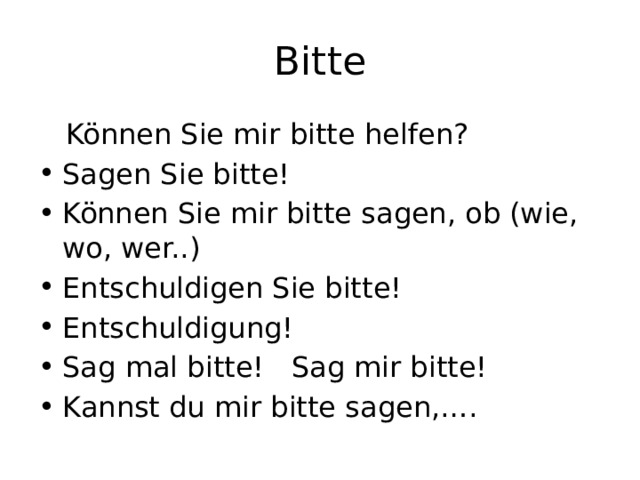
The phrase "Können Sie mir bitte weiterhelfen?" is vital.
It means "Can you please help me?" It's a cornerstone of polite interaction. Mastery improves classroom interactions.
Teachers can successfully incorporate this phrase. This builds a positive and respectful learning environment.
Breaking Down the Phrase
"Können" is a form of the modal verb "können" (can). It indicates ability or possibility.
"Sie" is the formal "you." This is crucial in many German social situations. Using "du" with a teacher is generally inappropriate. Exceptions are when a teacher explicitly allows "du".
"Mir" is the dative form of "ich" (I). It indicates the indirect object – the recipient of the help.
"Bitte" means "please." It is essential for politeness. It softens the request and shows respect.
"Weiterhelfen" is a separable verb meaning "to help further." In this context, it means "to help out" or "to assist."
Classroom Application: Practical Tips for Educators
Begin by introducing the individual components of the phrase. Explain each word's meaning and grammatical function.
Then, assemble them into the complete phrase. Emphasize the importance of formal address ("Sie"). Explain why it's preferred in the classroom setting.
Role-playing is incredibly effective. Students practice asking each other for help. Simulate classroom scenarios, such as needing assistance with an assignment.
“'Übung macht den Meister', meaning 'practice makes perfect.' The more students practice, the more comfortable they become.”
Provide sentence starters. This helps students formulate their requests. Examples include: "Können Sie mir bitte erklären…?" (Can you please explain…?) or "Können Sie mir bitte zeigen…?" (Can you please show me…?).
Correct pronunciation is key. Pay attention to the sounds of "ö" and "ch." Practice these sounds frequently.
Integrate the phrase into daily classroom routines. Encourage students to use it whenever they need assistance. This reinforces its usage and builds confidence.
Addressing Common Misconceptions
One common misconception is using "du" instead of "Sie." Stress the difference between formal and informal address. Explain cultural context.
Students may also forget "bitte." Remind them that politeness is essential. It is a sign of respect. A simple reminder often suffices.
Some may confuse "mir" and "mich." Explain the difference between dative and accusative cases. Use visual aids and examples.
Another common mistake is incorrect verb conjugation. Regularly review verb conjugations. This ensures students use "können" correctly.
Making it Engaging: Activities and Games
Create a "Help Desk" scenario. Students take turns being the teacher. They help each other with problems. Using the phrase is required.
Play a game of "Simon Says" using German instructions. Students must use "Können Sie mir bitte sagen…?" to clarify instructions they don't understand.
Use flashcards with pictures of different classroom objects. Students ask for help using the correct phrase when they can't identify the object.
Incorporate the phrase into a classroom scavenger hunt. Students must ask for clues using "Können Sie mir bitte weiterhelfen?"
Beyond the Classroom: Real-World Relevance
Emphasize that politeness extends beyond the classroom. Explain how this phrase will be useful. Explain how it will be useful in real-world situations, such as asking for directions or assistance in a store.
Show videos of native speakers using the phrase in different contexts. This provides students with authentic examples of usage. Show how "Können Sie mir bitte weiterhelfen?" can lead to effective communication and positive interactions.
Encourage students to use the phrase when interacting with German speakers online or in person. This provides valuable practice and reinforces their learning.
By incorporating these strategies, educators can effectively teach the phrase "Können Sie mir bitte weiterhelfen?" This empowers students with the language skills. Skills help students communicate respectfully and confidently in German-speaking environments.