Mit Freundlichen Grüßen E Mail
Mit freundlichen Grüßen (MfG) is a German phrase. It is used as a standard email closing. Think of it as the German equivalent of "Sincerely" or "Best regards."
Understanding "Mit freundlichen Grüßen"
Let's break down the phrase:
- Mit: This means "with."
- freundlichen: This is the adjective "freundlich" (friendly) in the dative case.
- Grüßen: This is the noun "Gruß" (greeting) in the plural and dative case.
Therefore, the phrase literally translates to "with friendly greetings."
When to Use MfG
Mit freundlichen Grüßen is a generally safe and appropriate closing. You can use it in most professional and semi-formal emails. It is suitable for:
- Emails to colleagues.
- Emails to clients.
- Emails to service providers.
- Job applications.
- Any email where you want to sound polite and professional.
Alternatives to MfG
While Mit freundlichen Grüßen is very common, there are other options:
More Formal Alternatives
- Mit freundlichem Gruß: This is the singular form. While grammatically correct, it's less common than the plural form.
- Hochachtungsvoll: This means "Respectfully" or "Yours respectfully." It is very formal. Use it in official correspondence or when addressing someone of high rank.
Less Formal Alternatives
- Viele Grüße: This means "Many greetings." It's slightly less formal than Mit freundlichen Grüßen.
- Liebe Grüße: This means "Dear greetings" or "Kind regards." Use this only with people you know well.
- Beste Grüße: This translates to "Best greetings" or "Best regards." It's a fairly common and safe alternative.
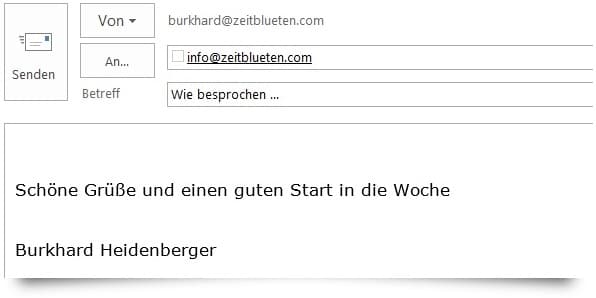
- Schöne Grüße: This means "Nice greetings" or "Kind greetings." Similar in formality to "Beste Grüße."
Informal Alternatives (Use with Caution!)
These are only appropriate for close friends and family:
- Gruß: Simply "Greetings."
- Ciao: Italian for "Goodbye," but commonly used in German-speaking regions.
Common Mistakes
Here are some things to avoid:
- Using "Mfg" without periods: It should always be "MfG."
- Forgetting the comma after the closing: Place a comma after "Mit freundlichen Grüßen," just like you would with "Sincerely," in English.
- Using overly formal closings in informal situations: "Hochachtungsvoll" to a friend would be strange.
- Using informal closings in professional situations: "Gruß" to your boss is generally not a good idea.
Example Email with MfG
Here's a short example:
Sehr geehrte Frau Müller,
vielen Dank für Ihre schnelle Antwort. Ich freue mich auf unsere Zusammenarbeit.
Mit freundlichen Grüßen,
Max Schmidt
Key Takeaways
Mit freundlichen Grüßen is a standard, polite, and professional email closing in German. Use it in most situations. Be mindful of the level of formality and choose an alternative when appropriate. Remember the comma after the closing!