Months Of Year In German
In German, the months of the year are called Monate. They are similar to the English months, but with different names. Learning them is a great step in expanding your German vocabulary. This will help you to understand dates, plan events, and simply communicate more effectively.
Here's a breakdown of each month in German, along with pronunciation tips.
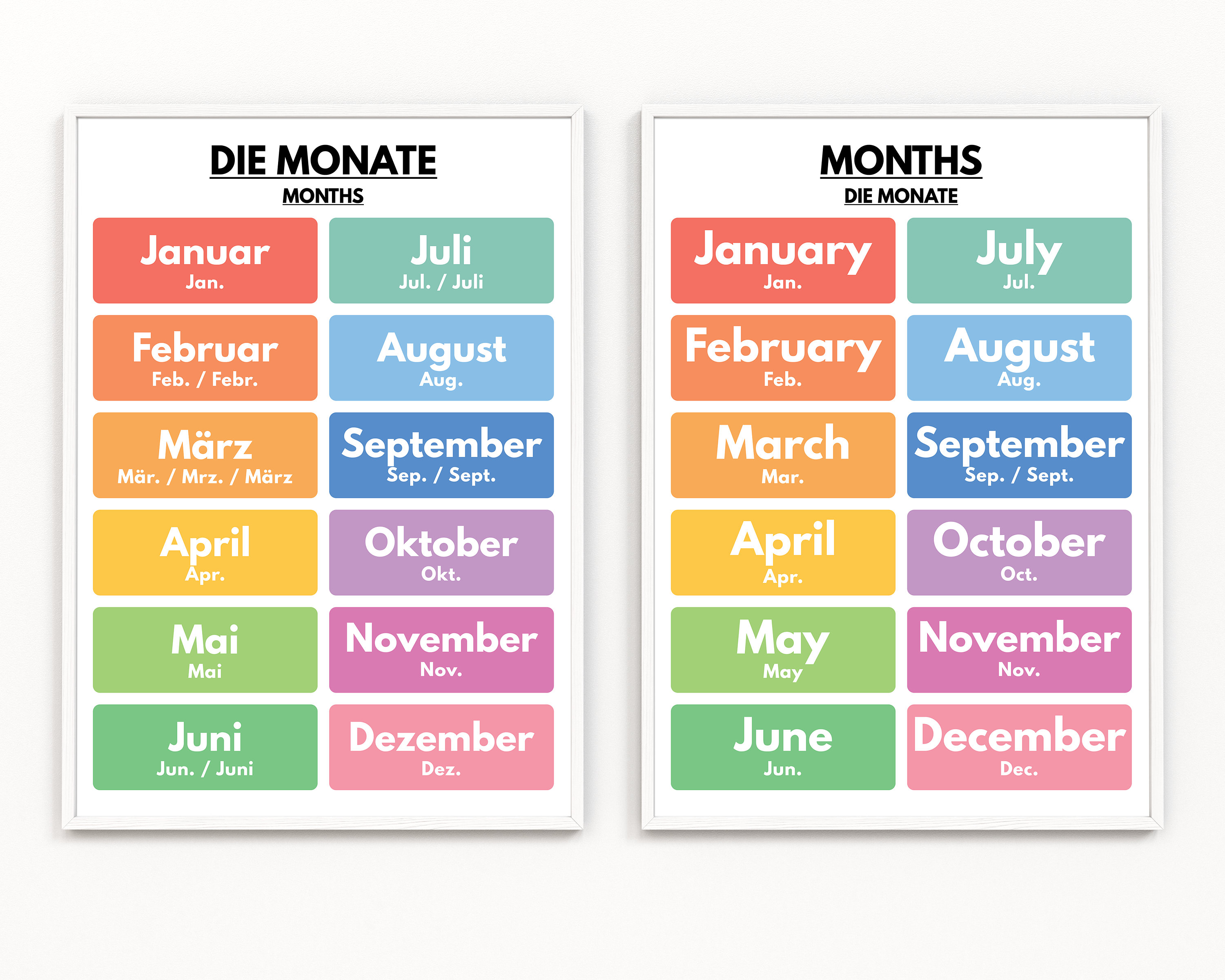
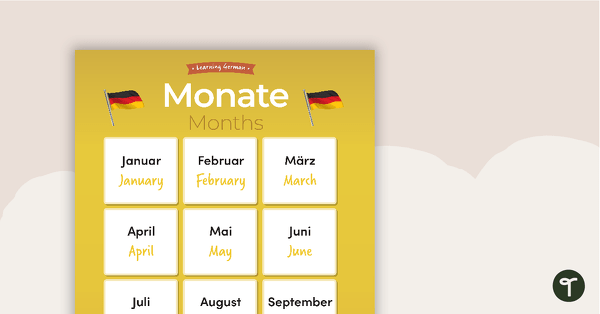
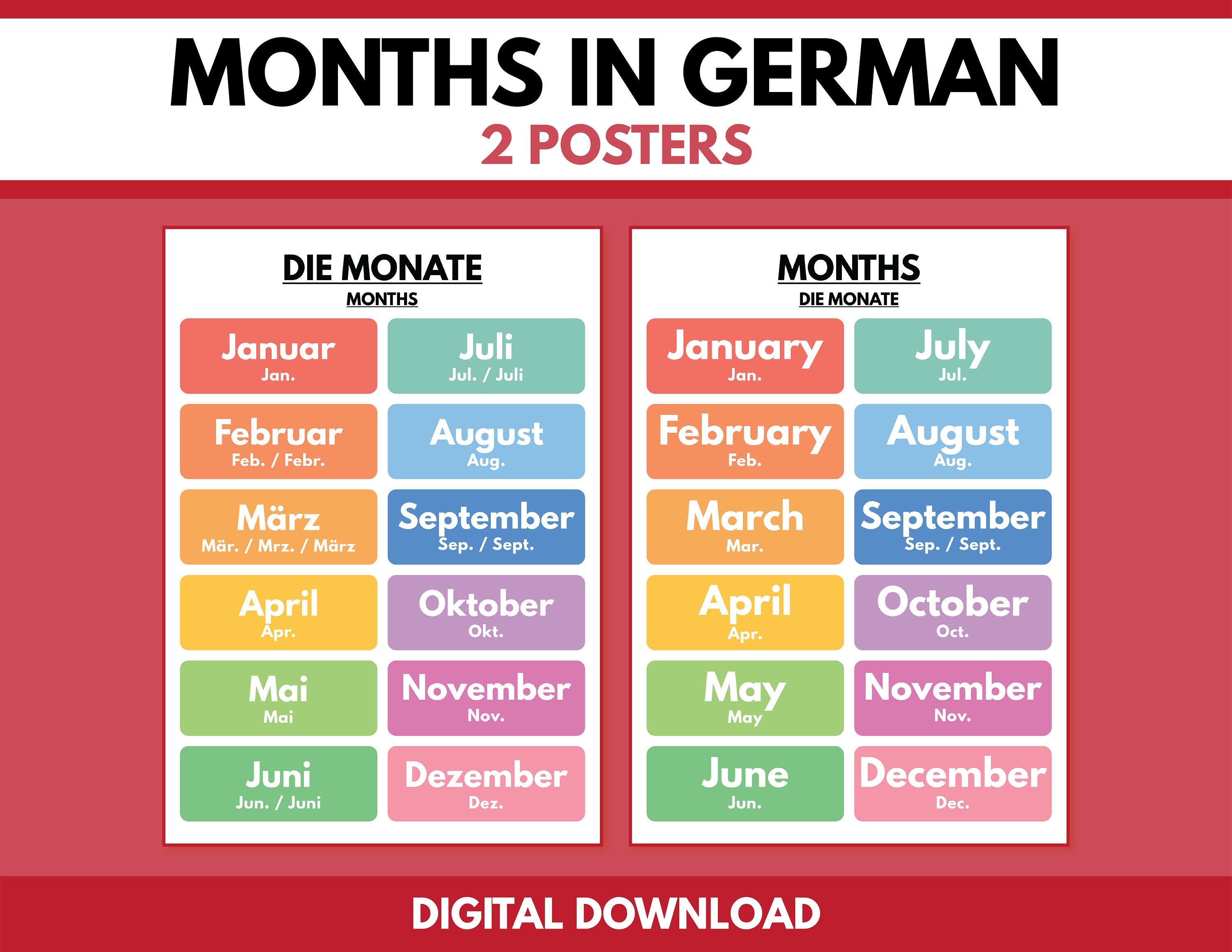
Januar (January) - Pronounced "yah-noo-ahr"
Februar (February) - Pronounced "fay-broo-ahr"
März (March) - Pronounced "mertz"
April (April) - Pronounced "ah-pril"
Mai (May) - Pronounced "mai"
Juni (June) - Pronounced "yoo-nee"
Juli (July) - Pronounced "yoo-lee"
August (August) - Pronounced "ow-goost"
September (September) - Pronounced "zep-tem-ber"
Oktober (October) - Pronounced "ok-to-ber"
November (November) - Pronounced "no-vem-ber"
Dezember (December) - Pronounced "day-zem-ber"
Notice that several months are very similar to their English counterparts. This makes them easier to remember. September, Oktober, November, and Dezember only have slight pronunciation differences.
Let's explore some common ways to use the months in sentences. When talking about a specific date, you'll often use the preposition im (in). For example, "Ich habe im Januar Geburtstag." This translates to "I have my birthday in January." This is because "im" is a contraction of "in dem," and you are generally referring to "in the month".
Another example: "Wir fahren im August nach Deutschland." This means "We are going to Germany in August." Remember to capitalize the months. They are nouns in German.
To say "on the first of January," you would say "am ersten Januar." "Am" is a contraction of "an dem," and you are talking about "on the day." Dates in German are written day.month.year. So, January 1st, 2024 would be written as 01.01.2024.
Here are some more example sentences to help you practice:
* "Der Film kommt im Februar heraus." (The movie comes out in February.) * "Die Blumen blühen im März." (The flowers bloom in March.) * "Ich liebe den Mai." (I love May.) * "Weihnachten ist im Dezember." (Christmas is in December.)
Mastering the months of the year in German is crucial. It allows you to understand dates, make appointments, and discuss events. With a little practice, you'll be using them confidently in no time. Don't be afraid to repeat the words aloud. The more you practice, the easier it will become.
A helpful tip is to create flashcards. Write the English month on one side and the German month on the other. You can also try incorporating the months into your daily conversations. Even if you're speaking English, try using the German word for the month. This will help solidify your knowledge and make the learning process more enjoyable. You will be fluently speaking in no time!