Parts Of Body In German
Hallo! Learning new languages can feel overwhelming, especially when it comes to memorizing vocabulary. Think about it: you need to know the words for everyday objects, actions, and even... yourself! Learning the parts of the body in German might seem like a basic topic, but it's absolutely essential for everything from describing an injury to understanding medical instructions, or even just understanding song lyrics. So, let's dive in and make this manageable, step by step.
Imagine you're traveling in Germany and need to explain to a doctor where you're feeling pain. Simply pointing might not be enough. Knowing the right words could be the difference between a clear diagnosis and a confusing situation. Or, picture yourself reading a fascinating article about health and wellness - wouldn't it be helpful to understand the terminology used to describe the human body?
Some might argue that in today's world, with translation apps and readily available dictionaries, memorizing body parts is unnecessary. However, relying solely on technology can be risky. What if your phone battery dies? What if the internet connection is poor? Having this knowledge stored in your brain gives you autonomy and confidence in real-world situations.
Let's start with the basics. We'll begin with the head, then move down the body, covering the major parts you're likely to encounter.
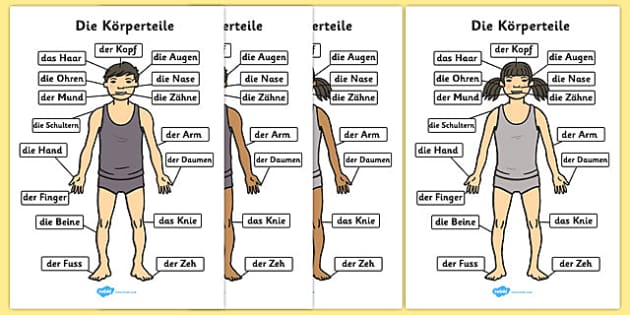
Der Kopf (The Head)
The German word for "the head" is der Kopf. It's a masculine noun, so it uses the article "der."
Die Haare (The Hair)
Die Haare is the plural form of "hair." German often uses the plural form when referring to hair in general. Think of it as "the hairs" instead of "the hair mass."
Das Gesicht (The Face)
The word for "the face" is das Gesicht. This is a neuter noun, hence the article "das."
Die Stirn (The Forehead)
Die Stirn means "the forehead." It's a feminine noun.
Das Auge (The Eye) / Die Augen (The Eyes)
For "the eye," we have das Auge (neuter). The plural, "the eyes," is die Augen. Notice how the plural form changes the noun!
Die Nase (The Nose)
"The nose" is die Nase (feminine).
Der Mund (The Mouth)
Der Mund is "the mouth" (masculine).
Die Lippe (The Lip) / Die Lippen (The Lips)
"The lip" is die Lippe (feminine), and "the lips" are die Lippen.
Die Wange (The Cheek) / Die Wangen (The Cheeks)
"The cheek" is die Wange (feminine), and "the cheeks" are die Wangen.
Das Ohr (The Ear) / Die Ohren (The Ears)
"The ear" is das Ohr (neuter), and "the ears" are die Ohren.
Das Kinn (The Chin)
Das Kinn is "the chin" (neuter).
Der Hals (The Neck)
Moving down from the head, we have der Hals, which means "the neck." It's a masculine noun.
Der Rumpf (The Torso)
The torso, or trunk, is called der Rumpf (masculine).
Die Schulter (The Shoulder) / Die Schultern (The Shoulders)
"The shoulder" is die Schulter (feminine), and "the shoulders" are die Schultern.
Die Brust (The Chest)
Die Brust means "the chest" (feminine). It can also refer to the breast.
Der Bauch (The Stomach)
For "the stomach," we use der Bauch (masculine). Sometimes, "der Magen" is also used, but "der Bauch" is more common for the external part.
Der Rücken (The Back)
Der Rücken is "the back" (masculine).
Die Taille (The Waist)
Die Taille means "the waist" (feminine).
Die Arme (The Arms)
We'll discuss the arms next. Notice that we're using the plural form, die Arme (the arms). To specify *one* arm, you'd say *der Arm* (masculine). However, we'll consider both arms together, as they're often referred to that way.
Der Oberarm (The Upper Arm)
Der Oberarm is "the upper arm" (masculine).
Der Unterarm (The Forearm)
Der Unterarm means "the forearm" (masculine).
Der Ellbogen (The Elbow) / Die Ellbogen (The Elbows)
"The elbow" is der Ellbogen (masculine), and "the elbows" are die Ellbogen.
Die Hand (The Hand) / Die Hände (The Hands)
For "the hand," we have die Hand (feminine). "The hands" are die Hände.
Der Finger (The Finger) / Die Finger (The Fingers)
"The finger" is der Finger (masculine), and "the fingers" are die Finger.
Let's name a few fingers. These are less frequently used but still useful to know!
- Der Daumen (The Thumb)
- Der Zeigefinger (The Index Finger)
- Der Mittelfinger (The Middle Finger)
- Der Ringfinger (The Ring Finger)
- Der Kleine Finger (The Little Finger)
Die Beine (The Legs)
Now, let's move on to the legs. Similar to "arms," we often use the plural form die Beine (the legs). To say *one* leg, use *das Bein* (neuter).
Der Oberschenkel (The Thigh)
Der Oberschenkel means "the thigh" (masculine).
Das Knie (The Knee) / Die Knie (The Knees)
"The knee" is das Knie (neuter), and "the knees" are die Knie.
Die Wade (The Calf) / Die Waden (The Calves)
"The calf" is die Wade (feminine), and "the calves" are die Waden.
Der Unterschenkel (The Lower Leg)
Der Unterschenkel means "the lower leg" (masculine).
Der Knöchel (The Ankle) / Die Knöchel (The Ankles)
"The ankle" is der Knöchel (masculine), and "the ankles" are die Knöchel.
Der Fuß (The Foot) / Die Füße (The Feet)
For "the foot," we use der Fuß (masculine). "The feet" are die Füße. Note the Umlaut! This changes the pronunciation.
Die Zehe (The Toe) / Die Zehen (The Toes)
"The toe" is die Zehe (feminine), and "the toes" are die Zehen.
Internal Organs (Innere Organe)
While knowing external body parts is crucial, a basic understanding of internal organs can also be incredibly useful, especially in a medical context.
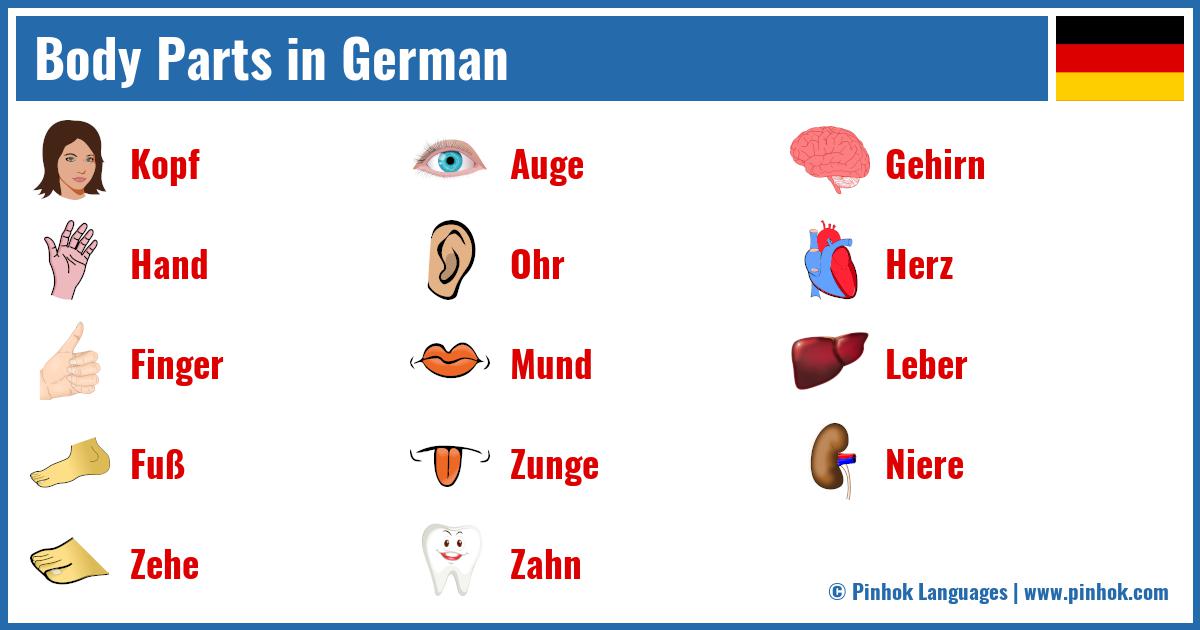
Das Herz (The Heart)
Das Herz is "the heart" (neuter).
Das Gehirn (The Brain)
Das Gehirn means "the brain" (neuter).
Die Lunge (The Lung) / Die Lungen (The Lungs)
"The lung" is die Lunge (feminine), and "the lungs" are die Lungen.
Die Leber (The Liver)
Die Leber is "the liver" (feminine).
Die Niere (The Kidney) / Die Nieren (The Kidneys)
"The kidney" is die Niere (feminine), and "the kidneys" are die Nieren.
Der Magen (The Stomach)
As mentioned earlier, der Magen can also mean "the stomach" (masculine), though "der Bauch" is more common for the external part of the abdomen.
Der Darm (The Intestine) / Die Därme (The Intestines)
"The intestine" is der Darm (masculine), and "the intestines" are die Därme (notice the Umlaut!).
Important Considerations for Memorization
Memorizing vocabulary, especially with grammatical genders (der, die, das), can be tricky. Here are a few tips to help you along the way:
- Use Flashcards: Write the German word on one side and the English translation on the other. Include a small picture for visual association.
- Create Sentences: Don't just memorize isolated words. Use them in sentences to understand their context. For example: "Ich habe Schmerzen im Rücken." (I have pain in my back.)
- Label Objects: If possible, label parts of your own body with sticky notes in German. This constant visual reminder will reinforce your learning.
- Use Mnemonics: Create memorable associations to link the word with its meaning. For example, to remember "der Bauch" (the stomach), you could imagine someone bouncing (Bauch sounds a bit like bounce) a ball on their stomach.
- Practice Regularly: Even short, frequent practice sessions are more effective than long, infrequent ones. Spend a few minutes each day reviewing the vocabulary.
- Sing Songs or Watch Videos: There are many German songs and videos online that focus on body parts. These can make learning fun and engaging.
- Use Online Resources: Websites and apps like Duolingo, Memrise, and Quizlet offer interactive exercises and games to help you memorize vocabulary.
Remember that consistency is key. Don't get discouraged if you don't remember everything immediately. Keep practicing, and you'll gradually build your vocabulary.
Mastering the parts of the body in German is a valuable skill that can empower you in various situations. Whether you're discussing health issues, describing physical characteristics, or simply expanding your vocabulary, this knowledge will significantly enhance your communication skills.
What part of the body in German are you going to learn first, and how will you incorporate it into your daily practice?