Passt Es Dir Um 10 Uhr

"Passt es Dir um 10 Uhr?": Decoding the German Question
Let's break down the German phrase "Passt es Dir um 10 Uhr?". Think of it as a mini-puzzle. Each piece has a specific role, and together they form a complete picture, a polite way to ask about availability.
The core is the verb "passen". Imagine a key fitting into a lock. "Passen" means "to fit" or "to suit." It's about compatibility, whether something works with something else. In our phrase, we're checking if a time fits into someone's schedule, if it's compatible with their plans.
The "es" Factor
Now, what about the little word "es"? "Es" is a pronoun. Often, pronouns refer to some previously mentioned word. However, in our case, "es" is a bit different. It's an "impersonal pronoun." Think of it like the English "it" in the sentence "It is raining." The "it" doesn't refer to anything specific; it's just there as a grammatical placeholder. That makes "es" a little tricky.
Here, "es" refers to the proposed time, 10 o'clock. It's the unspoken subject of whether the time is suitable. Try replacing "es" with "die Zeit um 10 Uhr" (the time at 10 o'clock). It becomes: "Passt die Zeit um 10 Uhr Dir?". The meaning is identical, but a little clumsy.
Introducing "Dir"
"Dir" is the dative form of the pronoun "du," meaning "you." Remember that in German, pronouns change depending on their role in the sentence. Think of it like different tools for different jobs. You wouldn't use a hammer to screw in a screw, would you? Similarly, you change a pronoun's form to fit a grammatical function. "Dir" indicates the person to whom something is fitting.
To really understand this, consider the sentence "Ich gebe dir ein Buch." (I give you a book). "Dir" tells us who is receiving the book. The book fits to you, in a sense. In "Passt es dir um 10 Uhr?", the time has to fit to you.
"Um 10 Uhr": Pinpointing the Time
Finally, we have "um 10 Uhr". This is the easiest part. "Um" means "at" or "around". "10 Uhr" means "10 o'clock". So, "um 10 Uhr" simply specifies the time in question: 10 AM or 10 PM, depending on the context.
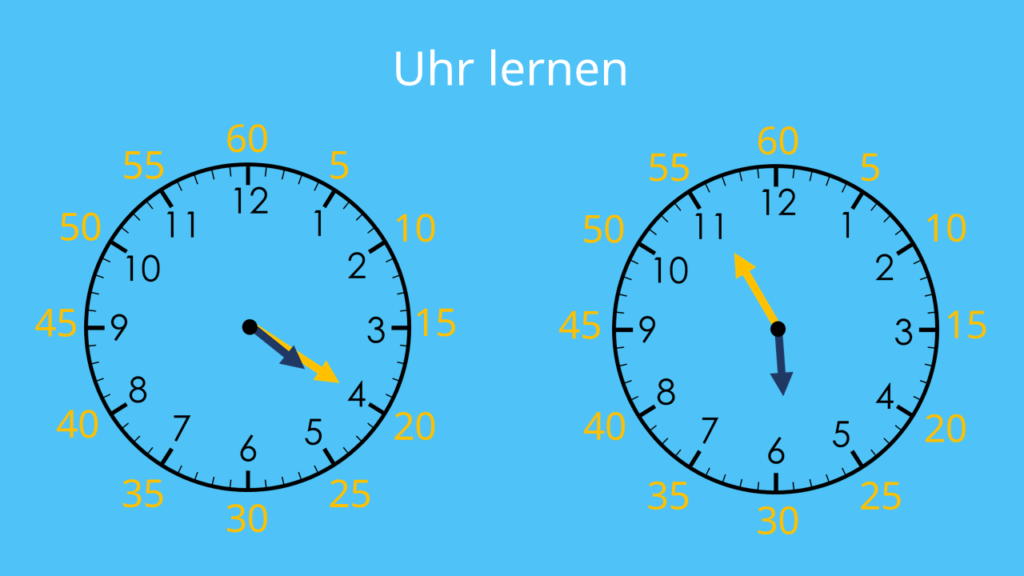
Imagine a clock. "Um 10 Uhr" points directly to that specific time. It clarifies exactly what time is being proposed. It's like putting a marker on a timeline, defining the moment for the meeting.
Putting It All Together: A Visual Analogy
Think of "Passt es Dir um 10 Uhr?" as a jigsaw puzzle. The puzzle is "asking about availability."
The pieces are:
- "Passt" (the key that needs to fit)
- "es" (the time as the unseen subject)
- "Dir" (the person whose schedule we're checking)
- "um 10 Uhr" (the specific time being proposed).
When all the pieces connect correctly, you get the complete picture: "Does 10 o'clock work for you?". It's a direct and polite question.
Beyond the Literal: Nuance and Context
While "Passt es Dir um 10 Uhr?" translates directly to "Does 10 o'clock work for you?", remember that language is rarely so straightforward. The tone of voice and context matter. A rising intonation at the end makes it a clear question.
Also, consider the relationship between the speakers. With close friends, you might be more informal: "Geht's bei dir um 10?" (Does it go with you at 10?). But "Passt es Dir um 10 Uhr?" is generally suitable for most situations. It's a safe and respectful way to inquire about someone's availability.
Now you have a thorough understanding of "Passt es Dir um 10 Uhr?". Go forth and schedule meetings with confidence! You've unlocked another piece of the German language puzzle.