Past Simple And Past Participle
Past Simple and Past Participle: A Simple Guide
The Past Simple and Past Participle are two important verb forms in English, especially when talking about the past. They describe actions that happened before now, but they have different uses and forms.
What is the Past Simple?
The Past Simple describes a completed action in the past. Think of it as something that started and finished at a specific time or within a defined period in the past.
Formation:
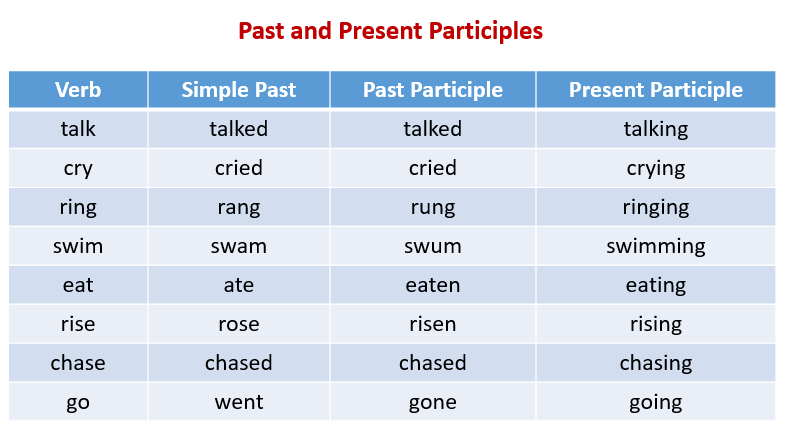
- Regular verbs: Add "-ed" to the base form of the verb (e.g., walk -> walked, play -> played).
- Irregular verbs: These have unique forms that you need to memorize (e.g., go -> went, eat -> ate).
Examples:
- I walked to school yesterday. (Regular verb)
- She ate pizza for lunch. (Irregular verb)
- They watched a movie last night. (Regular verb)
Notice how each sentence describes a finished action in the past. The Past Simple tells us *when* something happened. We often use time expressions like "yesterday," "last night," "ago," or specific dates with the Past Simple.
What is the Past Participle?
The Past Participle is another verb form, but it doesn't directly describe a simple past action like the Past Simple. Instead, it's used in combination with auxiliary verbs (helping verbs) like "have," "has," and "had" to form different tenses.
Formation:
- Regular verbs: The Past Participle is usually the same as the Past Simple (add "-ed").
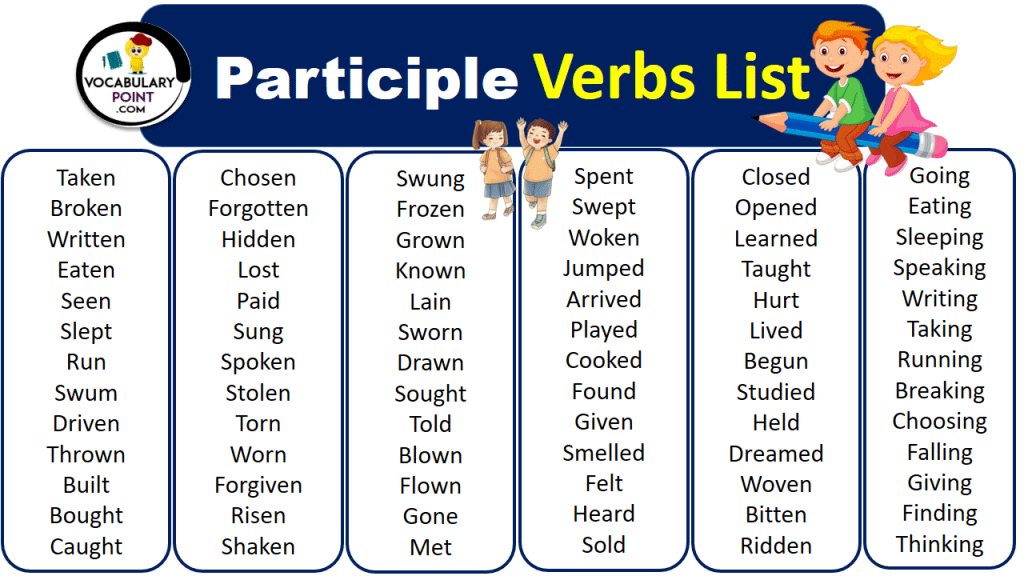
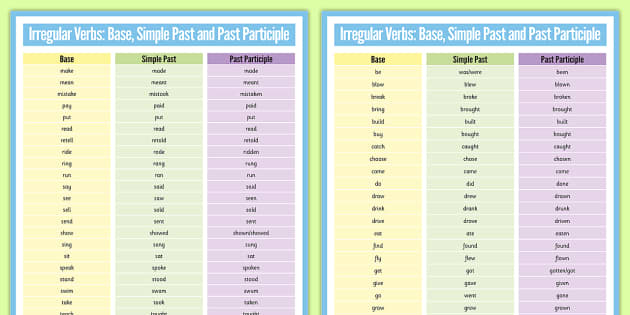
- Irregular verbs: These often have a different form than the Past Simple. This form needs to be memorized.
Examples:
- Regular: walked (Past Simple & Past Participle)
- Irregular: eaten (Past Participle of "eat," Past Simple is "ate")
- Irregular: gone (Past Participle of "go," Past Simple is "went")
How is the Past Participle Used?
The Past Participle is essential for forming perfect tenses and the passive voice.
- Perfect Tenses: These tenses connect the past to the present.
- Present Perfect: "have/has + Past Participle" (e.g., I have eaten lunch. She has walked to the store.)
- Past Perfect: "had + Past Participle" (e.g., I had finished my work before you arrived.)
- Future Perfect: "will have + Past Participle" (e.g., I will have finished the book by tomorrow.)
- Passive Voice: The Past Participle is used with forms of "be" (is, am, are, was, were, been) to show that the subject of the sentence receives the action.
- (e.g., The cake was eaten by the children. The house is cleaned every week.)
Key Differences
The main difference is their use. The Past Simple is a simple past tense describing a completed action. The Past Participle is a verb form used with auxiliary verbs to create more complex tenses (perfect tenses) and the passive voice.
Remember that regular verbs have the same form for both the Past Simple and the Past Participle, but irregular verbs often have different forms. Memorizing the irregular verb forms is crucial for correct usage.
In short: Past Simple = finished action. Past Participle = helper for other tenses and passive voice.