Past Tense And Past Perfect Tense Examples
Let's explore the past tense and past perfect tense in a clear and simple way. Understanding these tenses is crucial for expressing events that happened at different times in the past. So, let's dive in!
The past tense is used to describe actions or events that started and finished in the past. This is perhaps the most commonly used past tense. It's relatively straightforward to understand and use.
For regular verbs, the past tense is usually formed by adding "-ed" to the base form. For example: walk becomes walked, play becomes played, and talk becomes talked. Irregular verbs have different forms that you'll need to memorize, like go becoming went, see becoming saw, and eat becoming ate. Knowing whether the verb is regular or irregular is important for correct usage.
Here are some past tense examples:
I walked to the store yesterday.
She played the piano beautifully at the concert.
We ate pizza for dinner last night.
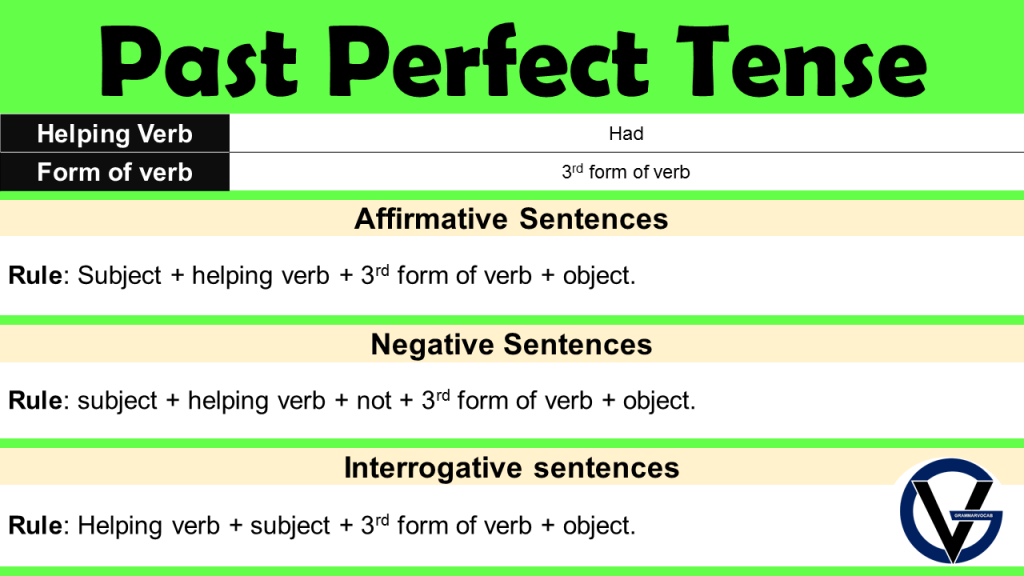
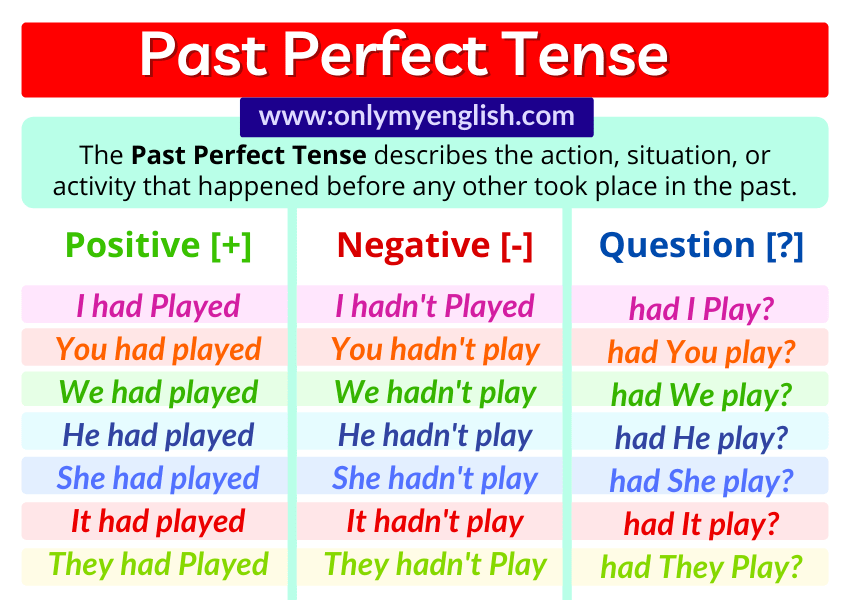
Now, let's move on to the past perfect tense. This tense is used to show that an action was completed before another action in the past. It helps to establish a sequence of events. Think of it as the "past of the past."
The past perfect tense is formed using "had" + the past participle of the verb. The past participle is often the same as the past tense form for regular verbs, but it can be different for irregular verbs. For example: had walked, had seen, had eaten.
Here are some past perfect tense examples:
I had finished my homework before my friends arrived. (Finishing homework happened before the arrival.)
She had never seen snow before she visited Canada. (Never seeing snow happened before the visit.)
They had already left when I got to the party. (Leaving happened before my arrival.)
The key to using the past perfect tense correctly is identifying the order of events. Which action happened first? That's the one that should be in the past perfect tense. Which action happened second? That should be in the simple past tense. This helps clearly explain the order of events.
Here's a practical application: Imagine you're telling a story about your vacation. You could say, "We arrived at the hotel, but we had forgotten our luggage at the airport." This sequence clarifies that forgetting the luggage happened before arriving at the hotel.
Another application is in explaining cause and effect. "Because it had rained all night, the streets were flooded." The past perfect tense emphasizes that the rain occurred before the flooding and caused it.
Understanding and using the past tense and past perfect tense correctly will improve your writing and speaking skills, making your communication more precise and effective. Practice using these tenses in your everyday conversations and writing to master them.