Present Progressive Vs Simple Present
Hallo! Today, we're diving into two important tenses in English: the Present Progressive and the Simple Present. Understanding the difference is key to speaking and writing English accurately. Let's make it easy!
What are they?
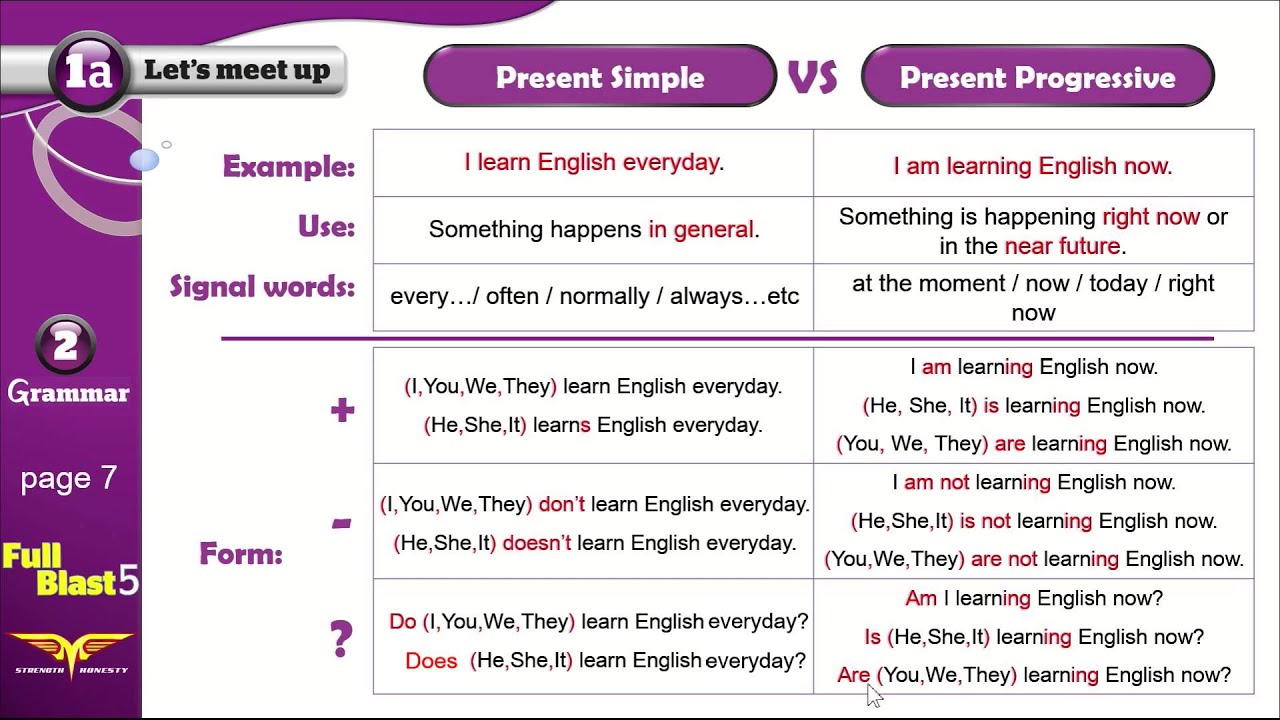
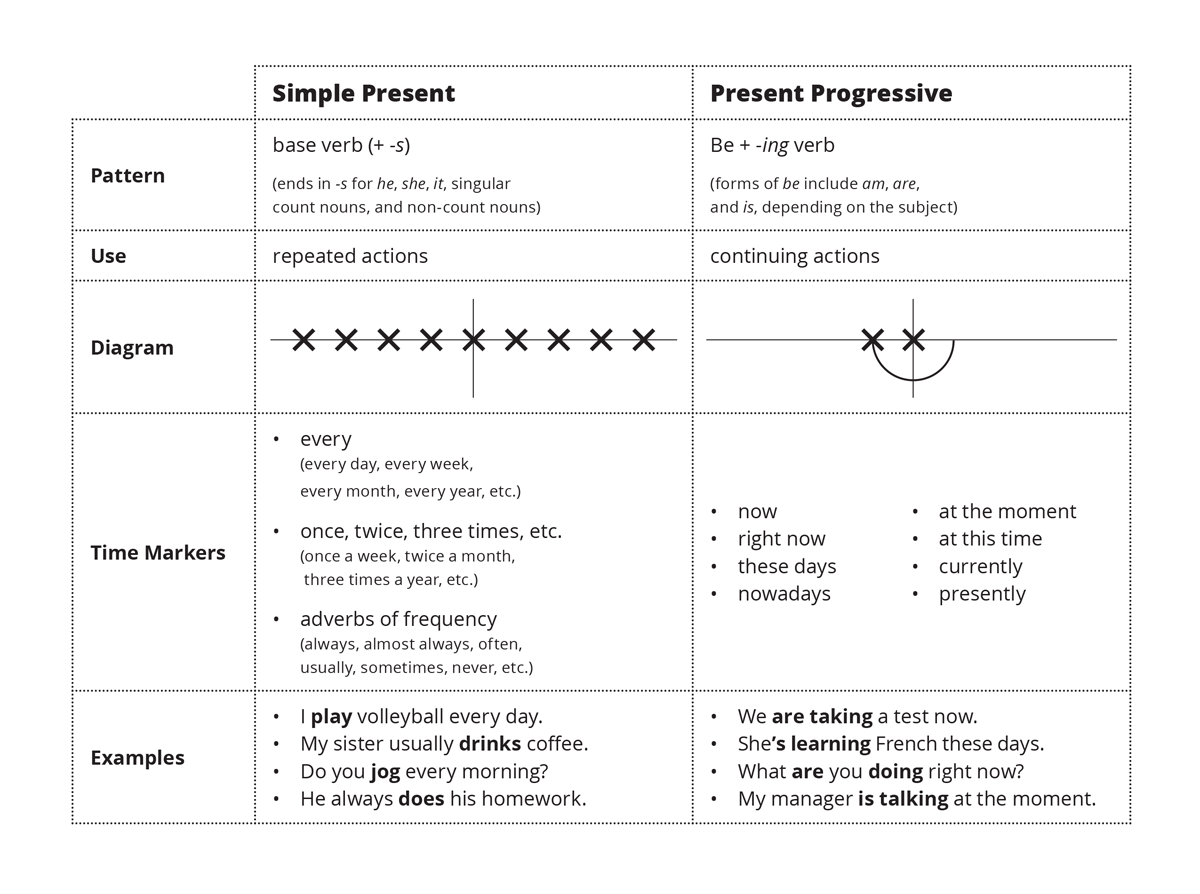
Simple Present: This tense describes habits, facts, and routines. Think of things that happen regularly or are generally true.
Present Progressive: Also known as Present Continuous, this tense describes actions that are happening right now or are temporary situations.
How do we build them?
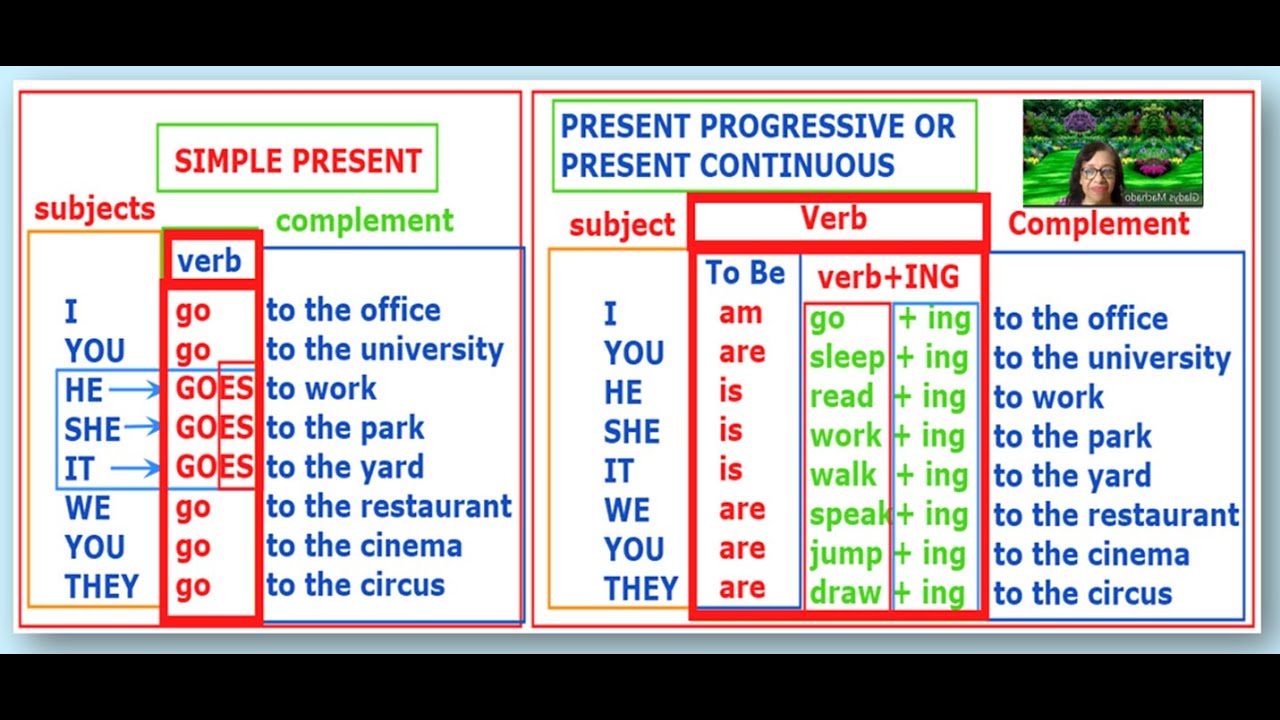
Simple Present: It's mostly the base form of the verb. For he/she/it, we add "-s" or "-es".
Example: I eat breakfast every morning. She eats cereal.
Present Progressive: We use "am," "is," or "are" (the verb "to be") + the verb ending in "-ing".
Example: I am eating breakfast right now. She is eating cereal at this moment.
Key Differences Explained
Let's break it down with simple examples:
Simple Present (Habit): I drink coffee every day.
Meaning: It's my daily habit.
Present Progressive (Right Now): I am drinking coffee right now.
Meaning: I'm in the process of drinking it at this very moment.
Simple Present (Fact): The sun rises in the east.
Meaning: This is a general truth.
Present Progressive (Temporary Situation): The sun is shining brightly today.
Meaning: It's sunny today, but it might not be tomorrow.
Signal Words: Clues for Choosing the Right Tense
Certain words can help you identify which tense to use:
Simple Present:
- Always
- Usually
- Often
- Sometimes
- Never
- Every day/week/month/year
Example: I always brush my teeth before bed.
Present Progressive:
- Now
- Right now
- At the moment
- Currently
- Today
Example: She is working on her computer right now.
Beware of Stative Verbs!
Some verbs, called stative verbs, usually aren't used in the Present Progressive. These verbs describe states, not actions. Common stative verbs include:
- To be
- To have (when it means possession)
- To know
- To believe
- To understand
- To like
- To love
- To hate
- To want
- To need
Correct: I know the answer. (Simple Present)
Incorrect: I am knowing the answer.
However, some stative verbs *can* be used in the Present Progressive, but their meaning changes slightly. For example:
Simple Present: I have a car. (Possession)
Present Progressive: I am having a good time. (Experiencing something)
Practice Time!
Let's test your understanding. Choose the correct tense:
1. She (watch) TV every evening. (watches)
2. He (play) the guitar right now. (is playing)
3. They (go) to the beach every summer. (go)
4. We (study) for our exam at the moment. (are studying)
In Summary
Remember:
- Simple Present is for habits, facts, and routines.
- Present Progressive is for actions happening now or temporary situations.
- Pay attention to signal words.
- Be mindful of stative verbs.
Keep practicing, and you'll master these tenses in no time! Good luck!