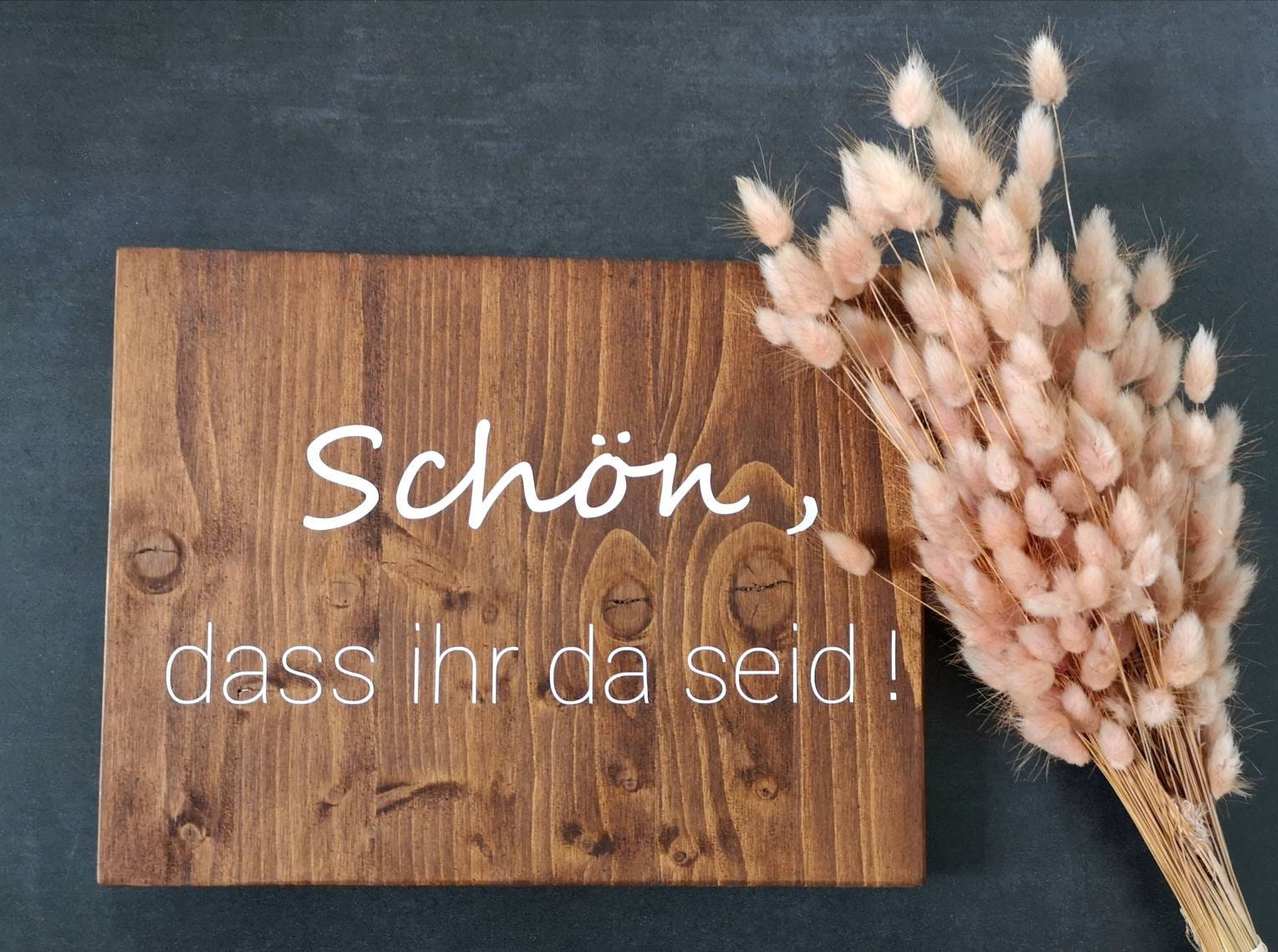
Schön Das Ihr Wieder Da Seid
Schön, dass ihr wieder da seid: What does it mean?
Let's break down the German phrase "Schön, dass ihr wieder da seid." It's a common and friendly expression you'll hear in German-speaking countries. We'll explain it step by step. That way you can use it yourself!
First, let's look at each word separately. "Schön" translates to "nice," "beautiful," or "good." It expresses a positive feeling.
Next, "dass" means "that." It connects two parts of a sentence. Think of it as similar to "that" in English, like in the sentence: "It's good *that* you are here."
"Ihr" is the plural form of "you." It's used when addressing multiple people. Imagine you're talking to a group of friends. "Ihr" is the correct pronoun to use.
"Wieder" means "again." It indicates something is happening a second time, or repeatedly. Like when you see a friend after a long break, and they are "again" in your presence.
"Da" means "there" or "here." In this context, it implies being present or available. Think of it as being in a certain place or situation.
"Seid" is the conjugated form of the verb "sein," which means "to be." It's the form used with "ihr." Think of it as the "are" when you are talking with multiple people.
Putting it all together
Now, let's combine all these words. "Schön, dass ihr wieder da seid" translates to "Nice that you are here again," or "Good to have you back." It is a friendly and welcome greeting.
It's used when welcoming a group of people who have been away. Maybe they were on vacation, or maybe they've simply been absent for a while. Either way, it expresses your happiness at their return.
Imagine a scenario. Your classmates, Sarah and Tom, were sick for a week. When they finally return to school, you could say, "Schön, dass ihr wieder da seid!" This would be a warm and welcoming thing to say.
Another example: your soccer team, Die Mannschaft, went abroad for training. When they get back, their fans might greet them with "Schön, dass ihr wieder da seid!"
Variations and Alternatives
While "Schön, dass ihr wieder da seid" is common, there are other ways to express a similar sentiment. Knowing these helps you understand the nuances of the German language.
You can say "Willkommen zurück!" which means "Welcome back!" This is shorter and more direct. This phrase may be used when a team return or after a concert.
Another option is "Es ist schön, euch wiederzusehen!" meaning "It's nice to see you again!" Here, "euch" is the accusative form of "ihr," and "wiederzusehen" means "to see again."
You could also say "Freut mich, dass ihr wieder da seid!" This translates to "I'm happy that you are back!" Using "freut mich" expresses a personal feeling of joy.
There is a slight difference between the phrases. "Schön, dass ihr wieder da seid" focuses on their presence. While "Es ist schön, euch wiederzusehen!" emphasizes the act of seeing them again. The key verb changes the tone.
Formal vs. Informal
Note that "Schön, dass ihr wieder da seid" uses "ihr," the informal plural "you." If you're addressing someone formally, or if you are unsure, use the formal "Sie." The phrase would become "Schön, dass Sie wieder da sind." The word "sind" is the conjugated form of "sein" used with "Sie."
Think of addressing your professor, Professor Schmidt, after his sabbatical. You would use the formal "Schön, dass Sie wieder da sind, Herr Professor Schmidt!" This shows respect and formality.
Understanding the difference between "ihr" and "Sie" is crucial in German. It helps you communicate appropriately in different social situations. Choose the correct form of "you" carefully. That way you avoid awkward situations. Using du, ihr or Sie always depends on who you are talking to!
Conclusion
"Schön, dass ihr wieder da seid" is a warm and welcoming German phrase. It means "Nice to have you back." You can use it when greeting a group of people after their absence. Remember to use the correct form of "you" depending on the context. Now you're ready to greet your friends in German!