Simple Greek Words And Phrases

Guten Tag! Let's explore some simple Greek words and phrases. Our focus is on easy-to-learn vocabulary that you can use in everyday conversations or to understand basic Greek culture. We'll break it down step-by-step, making it super accessible!
Step 1: Basic Greetings
Greeting someone is the first step in any conversation. Here are a few fundamental Greek greetings:
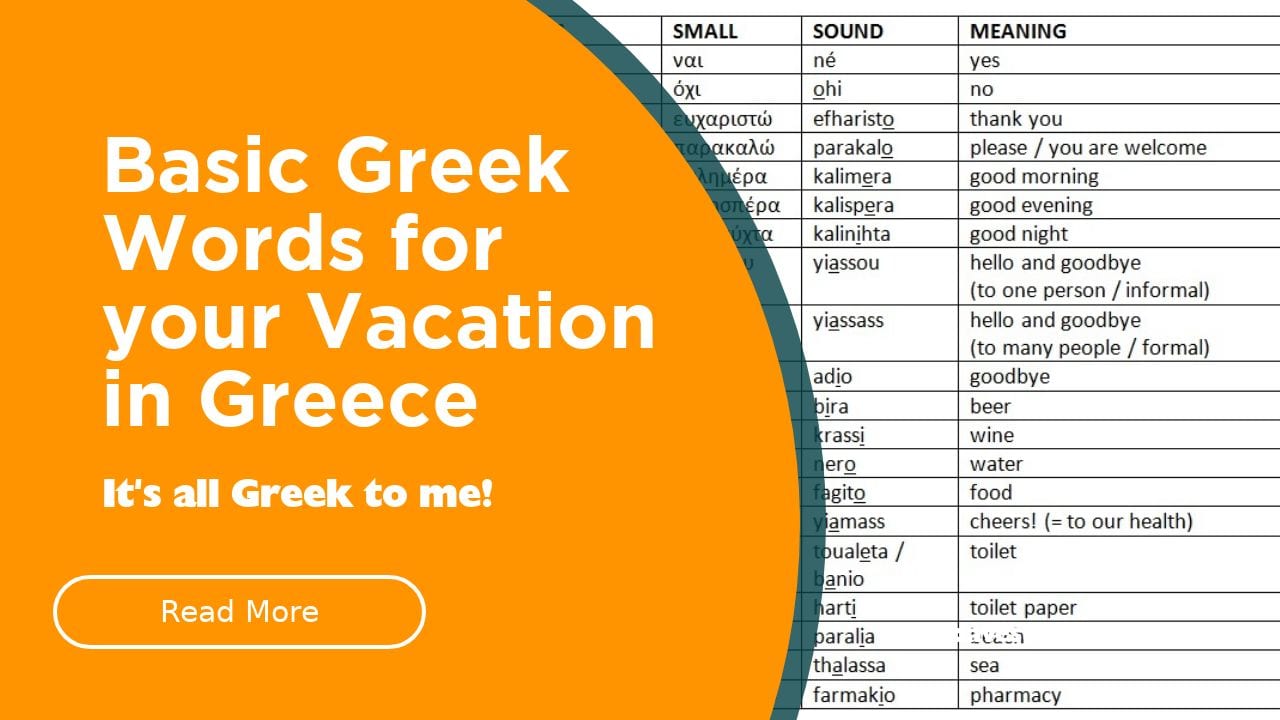
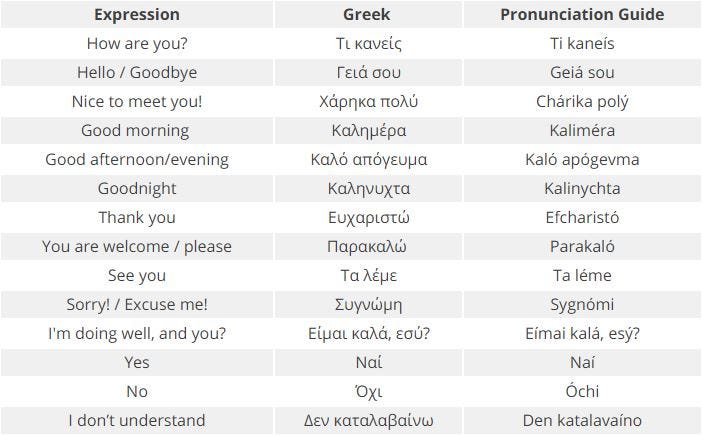
- Γεια σου (Ya sou): This means "Hello" or "Hi" when addressing one person. Think of it as the informal greeting. Pronounce it like "Yah soo."
- Γεια σας (Ya sas): This also means "Hello" but is used for formal situations or when addressing multiple people. It's like saying "Hello to all of you." Pronounce it like "Yah sas."
- Καλημέρα (Kalimera): This means "Good morning" or "Good day." Use it from sunrise until noon. Pronounce it like "Kah-lee-MEH-rah."
- Καλησπέρα (Kalispera): This means "Good evening" or "Good afternoon." Use it from noon onwards. Pronounce it like "Kah-lee-SPER-ah."
- Καληνύχτα (Kalinychta): This means "Good night." Use it when saying goodbye at night. Pronounce it like "Kah-lee-NEEKH-tah."
Example: You meet a friend in the morning. You would say, "Καλημέρα! Γεια σου!" (Good morning! Hi!).
Step 2: Polite Phrases
Showing politeness is essential. Here are some useful phrases to learn:
- Παρακαλώ (Parakalo): This has multiple meanings: "Please," "You're welcome," or even "Excuse me." It's a versatile word! Pronounce it like "Pah-rah-kah-LOH."
- Ευχαριστώ (Efharisto): This means "Thank you." A very important word! Pronounce it like "Eff-ha-ree-STOH."
- Δεν καταλαβαίνω (Den katalaveno): This means "I don't understand." Very useful when learning. Pronounce it like "Then kah-tah-lah-VEH-noh."
- Συγγνώμη (Sygnomi): This means "Sorry" or "Excuse me." Pronounce it like "Seegh-NOH-mee."
Example: Someone helps you. You say, "Ευχαριστώ! Παρακαλώ!" (Thank you! You're welcome!). If you don't understand, say "Δεν καταλαβαίνω."
Step 3: Basic Questions
Asking questions is key to communication. Here are a few basic questions:
- Πώς είσαι; (Pos eisai?): This means "How are you?" (informal). Pronounce it like "Pose EE-seh?"
- Πώς είστε; (Pos eiste?): This means "How are you?" (formal). Pronounce it like "Pose EE-steh?"
- Τι κάνεις; (Ti kanis?): This means "What are you doing?" or "How are you?" (informal). Pronounce it like "Tee KAH-nees?"
- Πόσο κάνει; (Poso kani?): This means "How much does it cost?" Pronounce it like "POH-soh KAH-nee?"
- Πού είναι...? (Pou einai...?): This means "Where is...?" Pronounce it like "Poo EE-neh...?"
Example: You meet someone you know. You ask, "Πώς είσαι; Τι κάνεις;" (How are you? What are you doing?). At a store, you ask, "Πόσο κάνει;" (How much does it cost?).
Step 4: Simple Responses
Now, let's learn some simple responses to the questions above:
- Καλά (Kala): This means "Good" or "Well." Pronounce it like "Kah-LAH."
- Πολύ καλά (Poly kala): This means "Very good." Pronounce it like "Po-LEE Kah-LAH."
- Έτσι κι έτσι (Etsi ki etsi): This means "So-so." Pronounce it like "Et-see ke Et-see."
- Είμαι καλά (Eimai kala): This means "I am good." Pronounce it like "EE-meh Kah-LAH."
Example: Someone asks "Πώς είσαι;" You can respond with "Είμαι καλά" (I am good) or simply "Καλά" (Good).
Step 5: Useful Words
Finally, here are a few extra helpful words:
- Ναι (Ne): This means "Yes." Pronounce it like "Neh."
- Όχι (Ochi): This means "No." Pronounce it like "OH-hee."
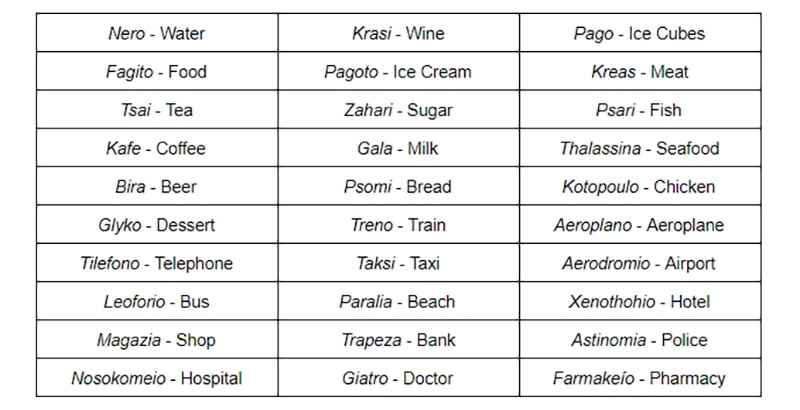
- Νερό (Nero): This means "Water." Pronounce it like "Neh-ROH."
- Ψωμί (Psomi): This means "Bread." Pronounce it like "Psoh-MEE."
- Καφές (Kafes): This means "Coffee." Pronounce it like "Kah-FESS."
Remember practice makes perfect! Don't be afraid to use these simple Greek words and phrases. Καλή τύχη! (Good luck!).