Simple Past And Past Perfect Tense
Let's dive into the Simple Past and Past Perfect tenses! Understanding these tenses will significantly improve your ability to express actions in the past with clarity and precision.
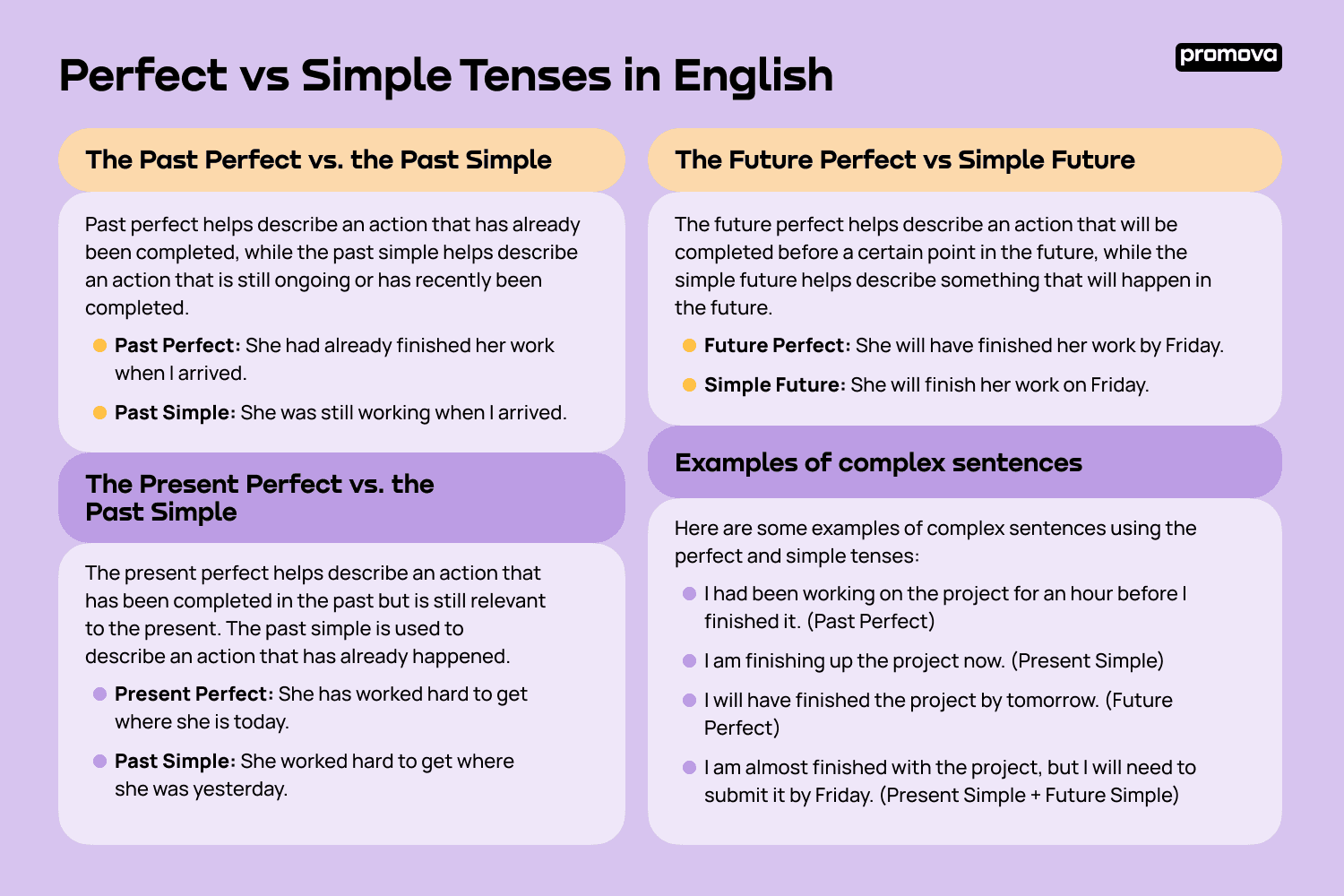
The Simple Past tense describes actions that started and finished at a specific time in the past. It's like taking a snapshot of a completed event. Think of it as a single, self-contained action.
Example: I watched a movie last night. She visited her grandmother yesterday. They played football on Saturday.
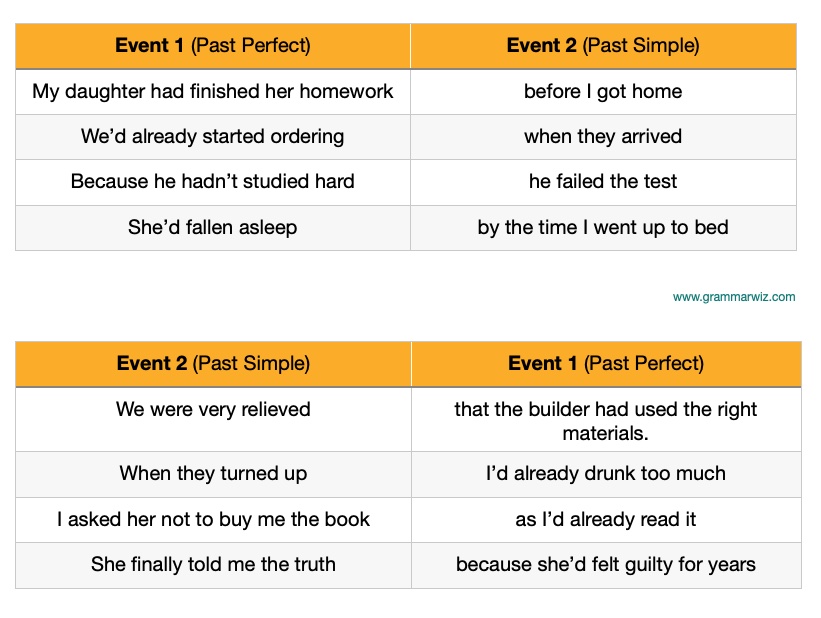
The Past Perfect tense, on the other hand, describes an action that was completed before another action in the past. It shows us which event happened earlier. It's crucial for showing a sequence of events.
Example: I had finished my homework before my friends arrived. She had eaten dinner when I called. They had already left when we got to the party.
Now, let's look at how these tenses are formed.
For the Simple Past, you usually add "-ed" to the base form of regular verbs. Irregular verbs have unique past tense forms that you'll need to memorize. Remember to check irregular verbs and their past tense forms.
Example: Walk becomes walked. Play becomes played. However, go becomes went. See becomes saw.
The Past Perfect is formed using "had" + the past participle of the verb. The past participle is often the same as the past tense form for regular verbs (the form that ends with -ed). For irregular verbs, you'll need to learn the past participle form. This is why knowledge of verbs is so important.
Example: Had walked. Had played. Had gone. Had seen.
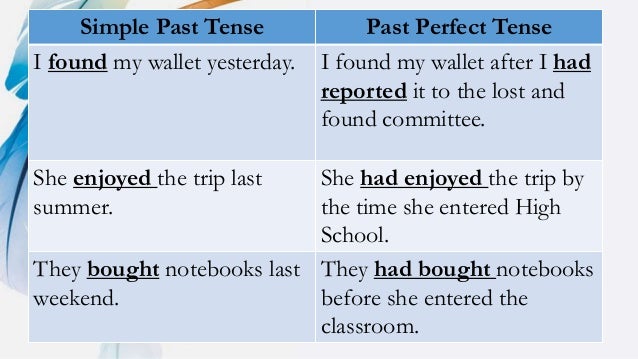
Let's compare the two tenses side-by-side to solidify your understanding.
Simple Past: I arrived at the station.
Past Perfect: I had arrived at the station before the train left. (The arrival happened before the train left.)
In the second sentence, "had arrived" (Past Perfect) tells us that arriving at the station happened *before* the train leaving. The order of events is much clearer with the Past Perfect.
Here are some more examples showing both tenses in context:
When I got to the theater, the movie had already started. (The movie started before I arrived.)
She failed the test because she hadn't studied. (Not studying happened before failing the test.)
Now, let's think about how you can use these tenses in your everyday life.
When telling a story, use the Simple Past to describe the main events. Use the Past Perfect to provide background information or explain why something happened.
Imagine you're explaining why you were late: "I was late because I had missed the bus." (Missing the bus happened before being late).
You can also use these tenses when writing emails or reports to clearly explain the sequence of past actions. This helps your reader understand the context and relationship between different events. Being able to master the Simple Past and Past Perfect tenses will improve your storytelling and communication skills!