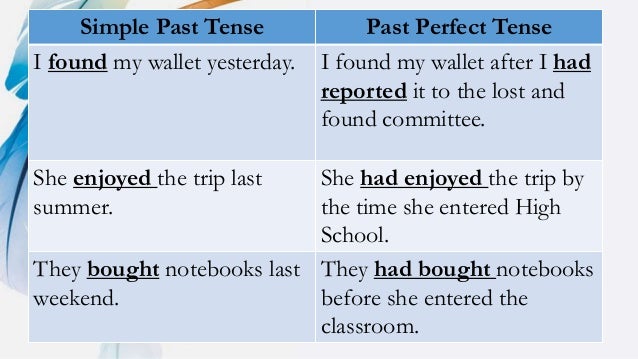
Simple Past Vs Past Perfect

Let's explore the difference between the Simple Past and the Past Perfect. The most important thing to remember is the definition.
The Simple Past describes actions that started and finished at a specific time in the past. It's used for events that happened one after another, or stand-alone past actions.
The Past Perfect, on the other hand, describes an action that was completed before another action in the past. It helps to establish a sequence of past events, showing which action happened first.
Here's the main difference: The Past Perfect emphasizes that something happened before something else.
Let's look at some examples. These will show you how they're used.
Simple Past: I watched a movie last night. This tells us about a completed action at a defined time.
Past Perfect: I had watched the movie before you recommended it. This tells us that the act of watching the movie happened before the act of recommending it.
Notice the structure. The Simple Past uses the past form of the verb (e.g., watched, went, ate). The Past Perfect uses "had" + the past participle of the verb (e.g., had watched, had gone, had eaten).
Think of it this way: The Past Perfect is like saying, "First this happened, then that happened (in the past)." It helps clarify the timeline of events.
Here's another example illustrating the difference. Two sentences using simple past can be combined into one with past perfect.
Simple Past: John arrived at the party. Everyone else ate all the pizza.
Past Perfect: When John arrived at the party, everyone had eaten all the pizza. Now you know why John didn't get any Pizza.
Key indicators for using the Past Perfect include words like "before," "after," "by the time," "until," and "already." These words often signal that you need to show the order of past events.
For example: By the time we got to the station, the train had left. The train left first.
Understanding the difference between the Simple Past and the Past Perfect will significantly improve your writing and speaking. You'll be able to express complex ideas about past events with clarity and precision.
How can you use this in everyday life? Think about telling stories. Use the Past Perfect to provide background information or explain events that led to the main action in your story. It adds depth and context.
Another practical application is writing reports or summaries. If you need to describe a sequence of events, the Past Perfect is essential for showing which action came first. It provides a clear and logical timeline.
For example, "The company announced record profits after it had implemented a new marketing strategy." This explains why the company had record profits. It wasn't random luck.
Finally, pay attention when you're reading or listening to English. Notice how native speakers use the Past Perfect to create nuanced and informative narratives. Train your ear and eye for this grammatical structure.
By practicing with examples and paying attention to context, you'll master the difference between the Simple Past and the Past Perfect in no time!