Text Schneewittchen Und Die Sieben Zwerge
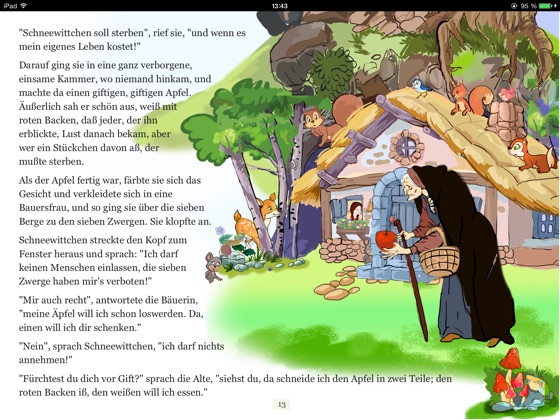
Schneewittchen und die sieben Zwerge (Snow White and the Seven Dwarfs) is a famous German fairy tale collected by the Brothers Grimm. It tells the story of a beautiful princess, her jealous stepmother, and her escape into the forest where she finds refuge with seven dwarfs.
Die Hauptfiguren (The Main Characters)
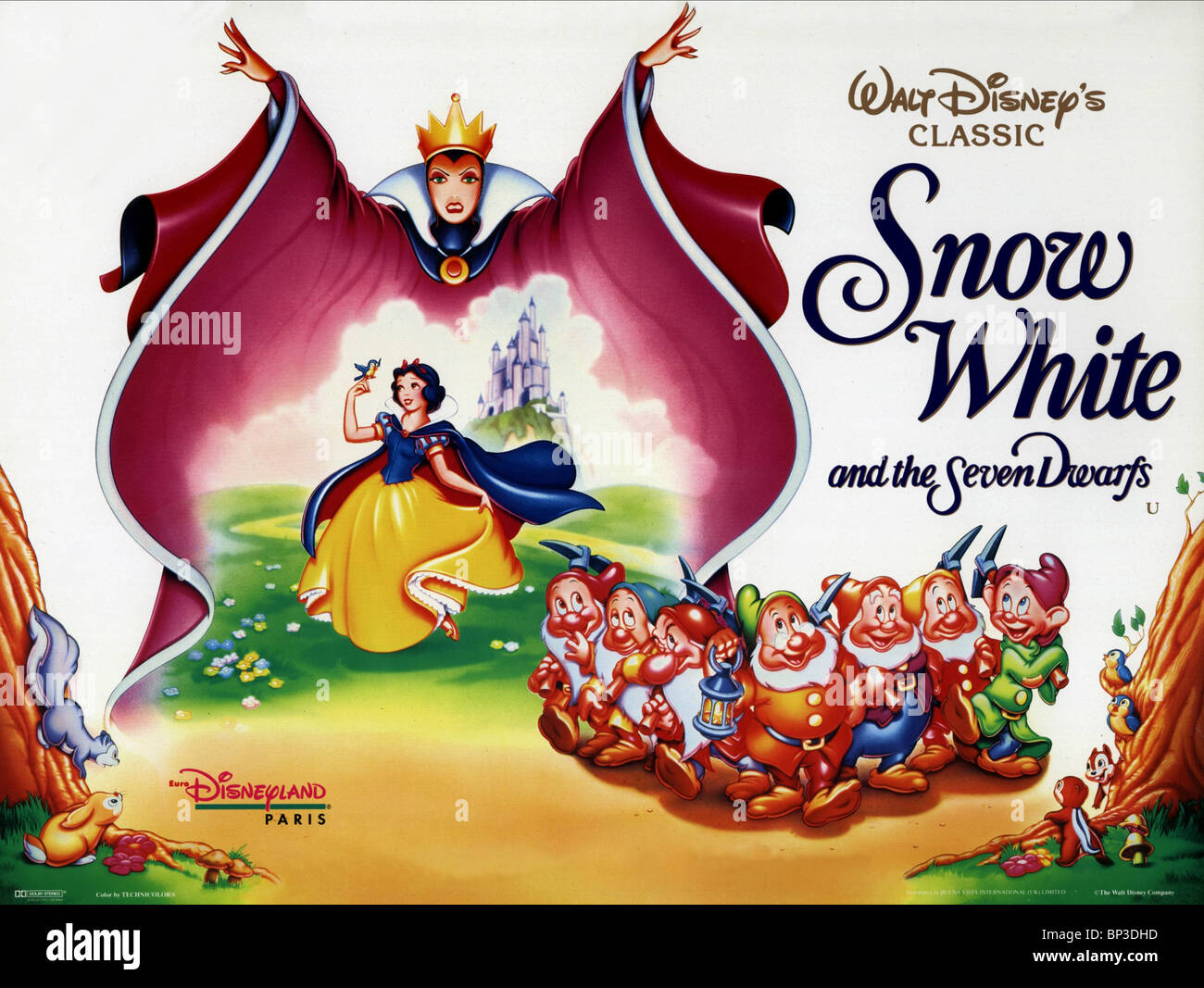
Schneewittchen (Snow White): She is the protagonist, known for her beauty – skin as white as snow, lips as red as blood, and hair as black as ebony. Her beauty is both her blessing and her curse.
Die böse Königin (The Evil Queen): Schneewittchen’s stepmother, driven by envy and vanity. She wants to be the "fairest of them all" and will stop at nothing to eliminate Schneewittchen.
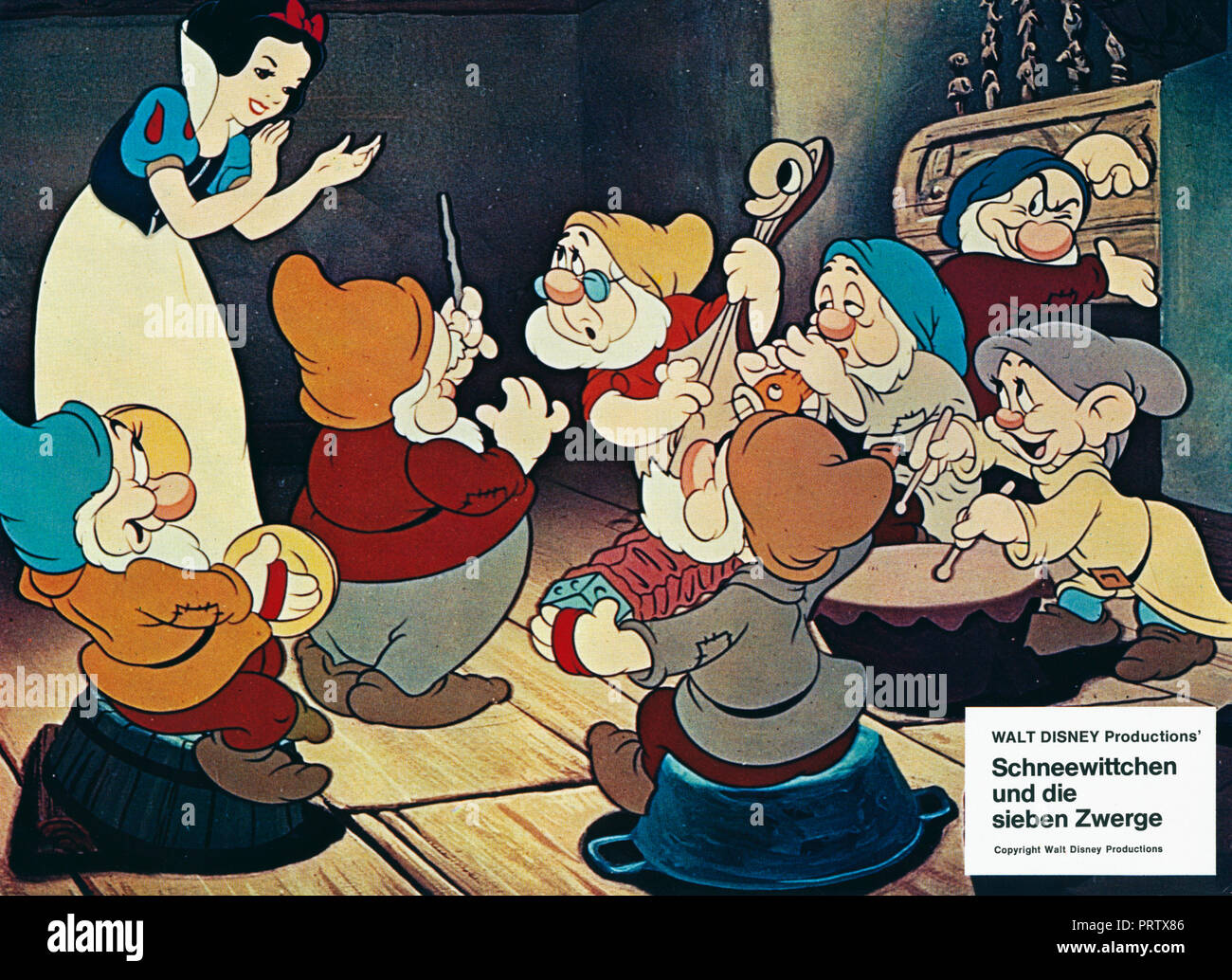
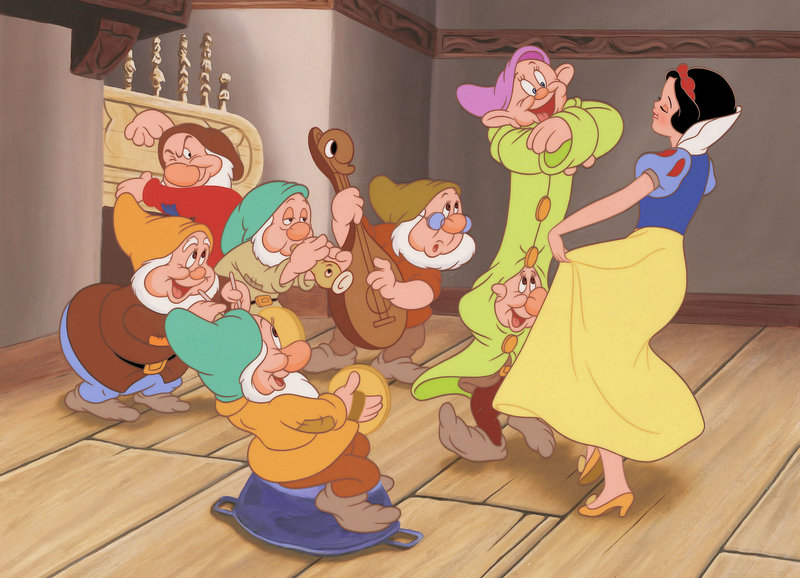
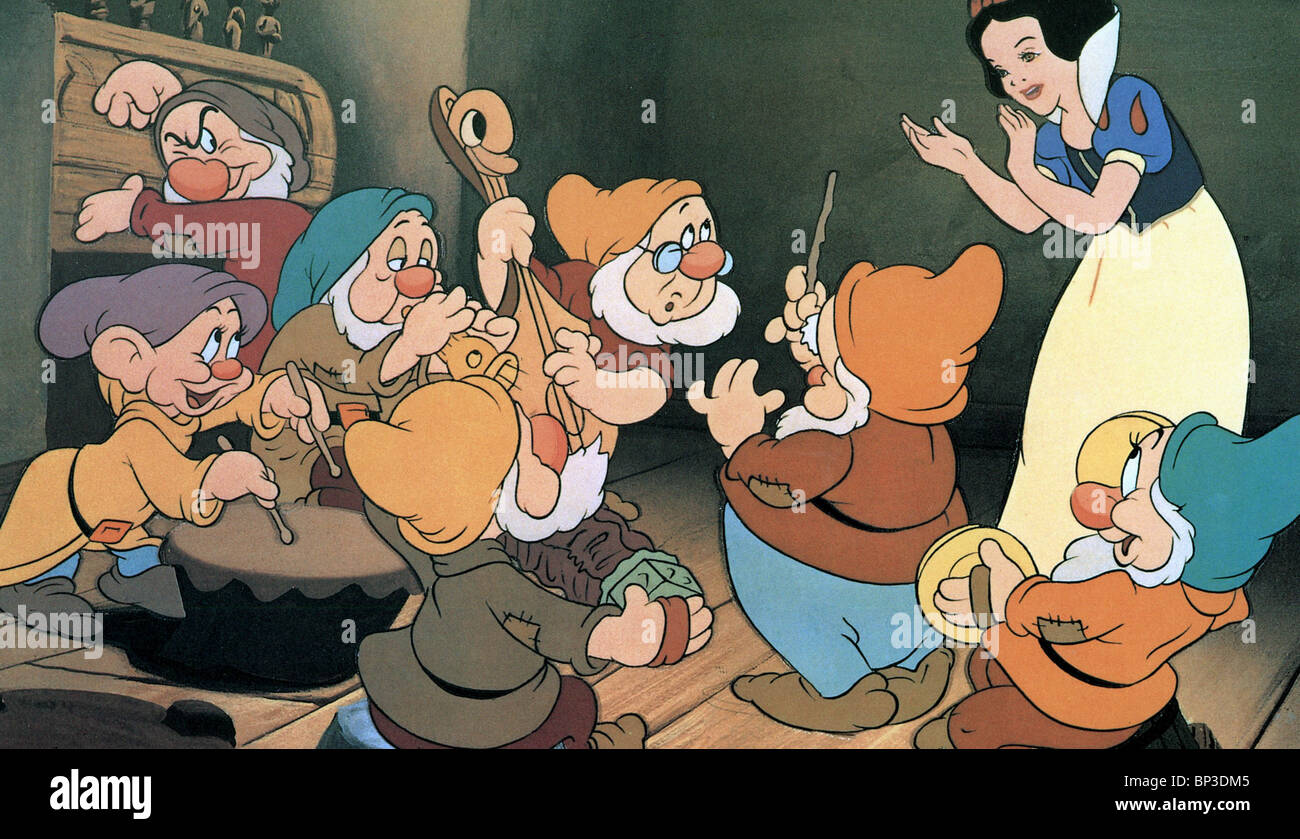
Die sieben Zwerge (The Seven Dwarfs): They are small, working men who live in a cottage in the forest. They are kind and helpful, offering Schneewittchen shelter and protection. Each dwarf often has a distinct personality or trait reflecting their name, although the names vary across different versions of the tale.
Der Prinz (The Prince): He is the romantic interest who eventually rescues Schneewittchen. He is often depicted as brave and handsome.
Die Handlung (The Plot)
The story begins with the Queen's magic mirror declaring Schneewittchen the fairest in the land. Overcome with jealousy, the Queen orders a huntsman to take Schneewittchen into the forest and kill her. She demands her lungs and liver as proof.
The huntsman, unable to kill the innocent Schneewittchen, sets her free in the forest and brings the Queen the lungs and liver of a wild boar instead.
Lost and frightened, Schneewittchen stumbles upon a small cottage belonging to the seven dwarfs. They agree to let her stay with them, as long as she keeps the house tidy and cooks for them.
The magic mirror reveals to the Queen that Schneewittchen is still alive and living with the dwarfs. The Queen, disguising herself as an old peddler woman, attempts to kill Schneewittchen three times.
First, she offers Schneewittchen lace so tight it suffocates her. The dwarfs revive her. Second, she offers Schneewittchen a poisoned comb. Again, the dwarfs revive her. Finally, she offers Schneewittchen a poisoned apple. This time, the poison is too strong, and Schneewittchen falls into a deep, death-like sleep.
The dwarfs, believing Schneewittchen to be dead, place her in a glass coffin. A prince discovers her, and moved by her beauty, asks to take the coffin away. As the dwarfs are moving the coffin, a jolt dislodges the piece of poisoned apple from Schneewittchen’s throat.
Schneewittchen awakens. The prince declares his love for her, and they plan their wedding. The Evil Queen is invited to the wedding and forced to dance in red-hot iron shoes until she dies, as punishment for her wickedness.
Wichtige Themen (Important Themes)
Schönheit (Beauty): The story explores the destructive nature of vanity and envy driven by an obsession with physical beauty.
Gut gegen Böse (Good vs. Evil): Schneewittchen represents innocence and goodness, while the Queen embodies evil and jealousy. The story highlights the triumph of good over evil.
Eifersucht (Jealousy): The Queen's jealousy is the driving force behind her actions. It illustrates the dangers of unchecked envy.
Naivität (Naivety): Schneewittchen’s naivety and trust make her vulnerable to the Queen’s schemes.
Die Bedeutung (The Meaning)
Schneewittchen und die sieben Zwerge is more than just a fairy tale; it's a cautionary tale about the dangers of vanity, jealousy, and the importance of inner beauty. It also reinforces the idea that good will ultimately triumph over evil.