The New Colossus Poem Analysis
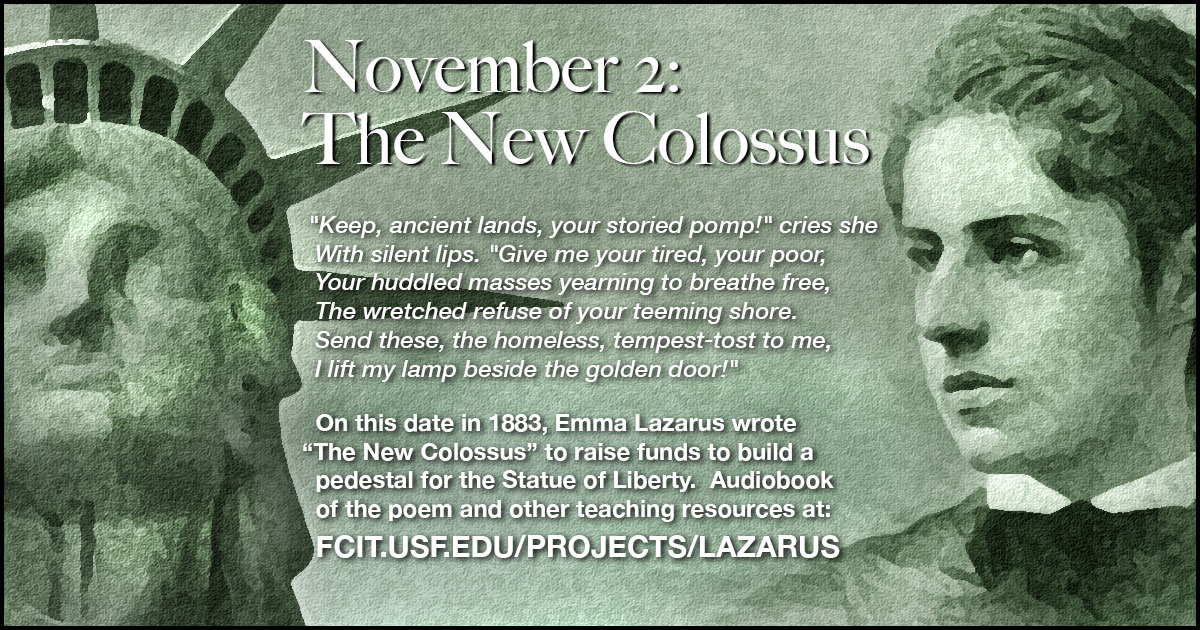
"The New Colossus" is a sonnet (a 14-line poem) written by Emma Lazarus in 1883. It's famous for its lines inscribed on the Statue of Liberty's base. The poem redefines the statue's meaning, shifting it from a symbol of political liberty to a beacon of welcome for immigrants.
Understanding the Poem's Core Meaning
The poem's central idea contrasts the "brazen giant of Greek fame" (the Colossus of Rhodes) with the Statue of Liberty. The old Colossus represented military power and conquest. The "New Colossus" (Liberty) embodies compassion and acceptance. She is a mother figure offering refuge, not a warrior claiming territory.
Line-by-Line Breakdown
Let's examine key lines:
- "Not like the brazen giant of Greek fame...": This immediately sets up the contrast. The poem emphasizes that Liberty is different, *better*, than the ancient symbol of power.
- "With conquering limbs astride from land to land...": This describes the Colossus of Rhodes. It was a statue with its legs spread across a harbor, symbolizing dominance. Think of a powerful king standing over his conquered lands.
- "Here at our sea-washed, sunset gates shall stand A mighty woman with a torch, whose flame Is the imprisoned lightning, and her name Mother of Exiles.": This introduces the Statue of Liberty. The "sea-washed, sunset gates" are the shores of America. The torch represents enlightenment and hope. The "imprisoned lightning" suggests power restrained and used for good. "Mother of Exiles" is a crucial image, portraying Liberty as a nurturing figure for those forced to leave their homes.
- "From her beacon-hand Glows world-wide welcome...": This emphasizes the welcoming nature of America. The light from the statue's torch is not just for Americans, but for everyone in the world.
- "her mild eyes command The air-bridged harbor that twin cities frame.": Her gaze encompasses New York harbor. "Mild eyes" suggest gentleness and care, not harsh judgment.
- "'Keep, ancient lands, your storied pomp!' cries she With silent lips. 'Give me your tired, your poor, Your huddled masses yearning to breathe free, The wretched refuse of your teeming shore. Send these, the homeless, tempest-tost to me, I lift my lamp beside the golden door!'": This is the most famous section. Liberty "cries" (though silently) that other nations can keep their wealth and power. She wants the desperate: "tired," "poor," "huddled masses." "Wretched refuse" is a powerful, though controversial, phrase highlighting that these are people others have rejected. "Tempest-tost" describes their suffering. The "golden door" represents opportunity in America.
Key Themes
The poem explores several important themes:
- Immigration: The poem directly addresses the immigrant experience and America's role as a haven.
- Hope: The Statue of Liberty represents hope for a better life.
- Compassion: Liberty embodies compassion for the suffering.
- American Identity: The poem redefines American identity as being welcoming and inclusive.
- Contrast between old and new power: Shifting from conquest to compassion.
Why is it Important?
"The New Colossus" transformed the Statue of Liberty into a powerful symbol of immigration and acceptance. It continues to resonate today, reminding us of America's ideals and the importance of welcoming those seeking refuge. While the poem's vision may not always reflect reality, it serves as a powerful aspiration for what America *should* be.
Understanding the poem's language and historical context allows us to appreciate its enduring message of hope and inclusion.