
Timed Up And Go Tug Test

What is the Timed Up and Go (TUG) Test?
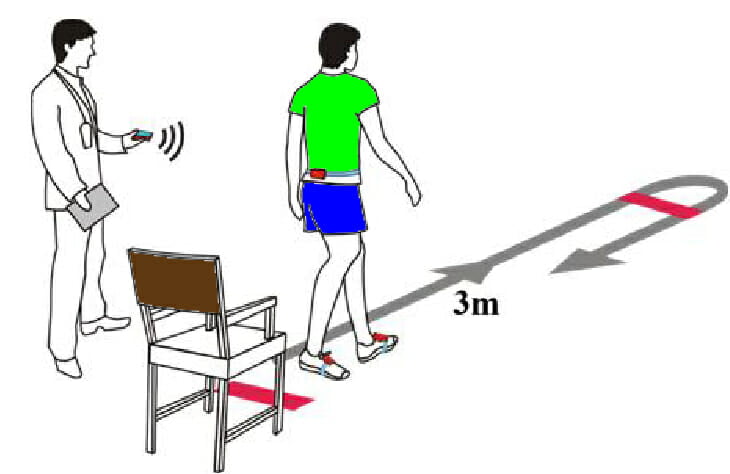
The Timed Up and Go, often shortened to TUG, is a simple test. It measures how long it takes someone to stand up from a chair, walk a short distance, turn around, walk back to the chair, and sit down again. It's like a mini-obstacle course, but designed to be safe and easy to do.
Think of it like this: you’re sitting at your desk studying. Your friend calls you from the kitchen. You get up, walk to the kitchen, chat for a moment, and then return to your desk. The TUG test basically times that action but with more specific directions.
Breaking Down the TUG Test
The TUG test has a few key parts. Understanding these parts helps you grasp what the test is all about. We will explore these key parts below.
The Setup
First, you need a standard armchair. It should be about 17-18 inches high. Make sure it has a back and armrests for support. You also need a clear, flat walking path that is 3 meters (about 10 feet) long.
Mark the start and end points of the walking path clearly. A piece of tape on the floor will work. Finally, you need a stopwatch or timer to accurately measure the time.
The Instructions
The person taking the test sits comfortably in the chair. When the tester says "Go!", the person stands up. They walk at their normal pace to the 3-meter mark. Then they turn around, walk back to the chair, and sit down again.
It’s important to walk at a comfortable, safe speed. No running or rushing! The timer starts when the person's back leaves the chair and stops when they are sitting back in the chair.
What is Being Measured?
The main thing measured is the total time it takes to complete the test. This time, measured in seconds, provides information. This information helps health professionals assess a person's mobility, balance, and overall functional ability.
Think about it: Someone who has good balance and strength will likely complete the test faster than someone who struggles with these things. The time reflects their ability to perform these basic movements.
Important Terms Defined
Let’s clarify some important terms related to the TUG test. These terms appear in related documents and discussions.
Mobility
Mobility refers to the ability to move freely and easily. Walking, bending, and getting in and out of chairs are all examples of mobility. Good mobility is essential for everyday activities.
Balance
Balance is the ability to maintain your center of gravity within your base of support. It prevents you from falling. Good balance is important for standing, walking, and turning.
Functional Ability
Functional ability refers to a person’s ability to perform everyday tasks. This includes activities like dressing, bathing, and preparing meals. The TUG test helps assess how well someone can perform these tasks that involve mobility and balance.
The TUG Test in Everyday Life
While the TUG test is often used in healthcare settings, it can relate to everyday situations. Consider this: You are carrying groceries from your car to your house. You need to walk, turn, and step over a threshold.
The TUG test simulates some of these movements. It helps show how well someone can perform these actions safely and efficiently. Also consider navigating a crowded hallway at school.
Quickly changing direction without bumping into others relies on balance and mobility. The TUG test measures the core skills you need for these tasks. It is used to ensure people can perform activities safely and independently.
Key Takeaways About the TUG Test
The TUG test is a practical assessment. It helps understand how well someone can move and maintain balance. It is a safe and quick way to measure mobility skills.
Remember, the TUG test assesses more than just walking speed. It looks at how well someone can stand up, turn, and sit down. It is about the coordinated movements needed for everyday living.
So next time you hear about the Timed Up and Go test, you’ll know it’s not just about walking. It is about functional ability and the ability to perform tasks safely and independently.

.jpg)
