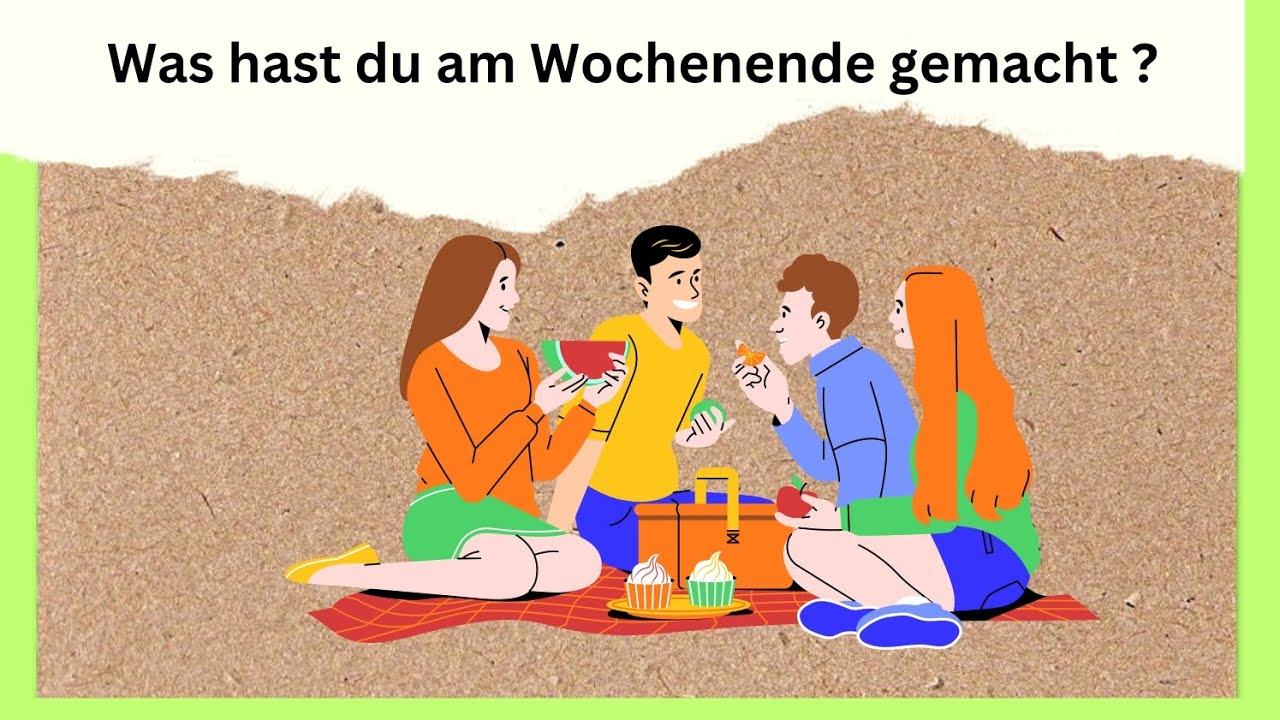
Und Was Machst Du Am Wochenende

"Und Was Machst Du Am Wochenende?" - Let's Break it Down!
Hey everyone! Ever heard someone say "Und was machst du am Wochenende?" If you're learning German, this is a super common question. Let's unpack this phrase piece by piece. We will make sure you understand exactly what it means and how to respond.
Understanding the Words
First, let's look at the individual words. This will help us build a solid foundation. "Und" is a simple word. It means "and." Think of it like saying "A and B" in English.
"Was" is another essential word. It translates to "what." So, we are starting with "and what..." Easy, right? Now, consider a simple example: "Was ist das?" meaning "What is that?"
Next comes "machst." This is where things get a little more grammatical. It's the verb "machen" (to do/make) conjugated for the "du" (you) form. Imagine "machen" as the action of doing something. "Machst" is therefore how you say "do" when speaking to someone directly as in "you do."
Finally, we have "am Wochenende." "Am" is a contraction of "an dem," meaning "on the." "Wochenende" is a noun. It means "weekend." So "am Wochenende" simply translates to "on the weekend." This is a crucial phrase to remember.
Putting It All Together
Now let's assemble the pieces. "Und was machst du am Wochenende?" becomes "And what do you do on the weekend?" This is a very common and polite question. It's basically asking about your weekend plans.
Think of it like this: someone is making conversation. They've probably already said hello or asked how you are. "Und was machst du am Wochenende?" is a natural follow-up. It shows they are interested in your life. It invites you to share your plans.
Grammar Note: "Du" vs. "Sie"
Notice the use of "du." "Du" is the informal "you" in German. Use it with friends, family, and people you know well. If you're talking to someone you don't know well, or someone older or in a position of authority, use the formal "Sie." The question would then become: "Und was machen Sie am Wochenende?"
The conjugation of the verb also changes with "Sie." "Machst" becomes "machen." This is a key aspect of German grammar. Pay attention to who you're talking to. Adjust your language accordingly.
Everyday Examples
Imagine you're at school. You are chatting with a classmate on Friday afternoon. They might ask: "Und was machst du am Wochenende?" They want to know what you have planned. Perhaps you are going to a party, seeing a movie, or just relaxing at home.
Another example: you're talking to a friend on the phone. You are catching up after a long week. After discussing your week, they ask: "Und was machst du am Wochenende?" It's a natural way to continue the conversation. It can also lead to an invitation to join their activities.
How to Respond
So, how do you answer this question? There are many ways! A simple answer could be "Ich gehe ins Kino" (I'm going to the cinema). Or "Ich bleibe zu Hause" (I'm staying at home). Or you could say, "Ich treffe meine Freunde" (I'm meeting my friends).
You can also give more detail. For instance, "Ich gehe am Samstag ins Kino und am Sonntag lerne ich für eine Prüfung." (I'm going to the cinema on Saturday and on Sunday I'm studying for an exam.) The more detail you provide, the more you engage in conversation.
Key Takeaways
In conclusion, "Und was machst du am Wochenende?" is a simple but important phrase. It means "And what do you do on the weekend?" It's a common way to make conversation. It is also used to show interest in someone's life. Remember to use "du" with people you know well. Use "Sie" for more formal situations. Learning phrases like these will greatly improve your German conversational skills. Viel Glück! (Good luck!).