
Vacca Et Capella Ovis Et Leo
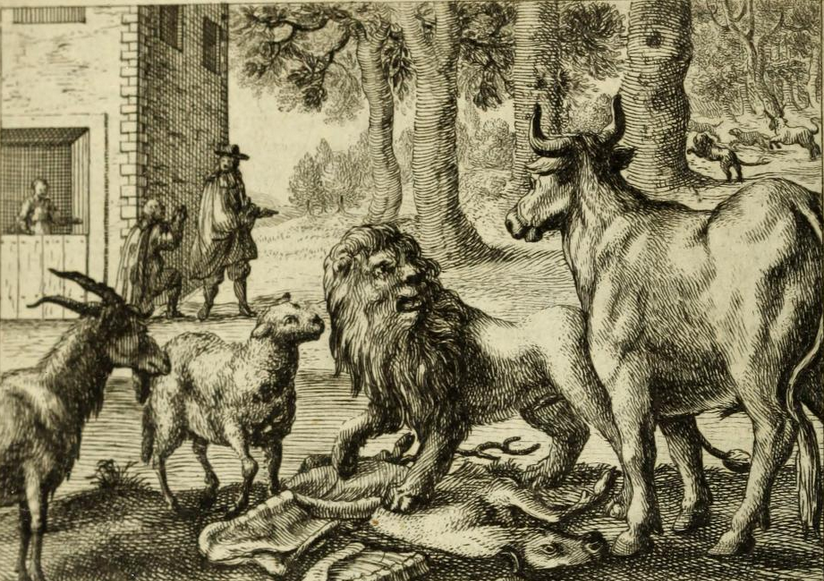
Vacca et Capella Ovis et Leo, or "The Cow, the Goat, the Sheep, and the Lion," is a classic fable by Phaedrus that illustrates the dangers of unequal partnerships, specifically where one party holds significantly more power. It's a cautionary tale about how greed and opportunism can lead to exploitation and loss for the weaker members of a group. The principle applies to various situations, from business collaborations to political alliances, where power dynamics aren't properly addressed, and the stronger party can exploit the weaker ones for personal gain. The moral of the story is that joining forces with a powerful entity without adequate protection or a fair agreement is a recipe for disaster. The fable is often used to warn against naivety and the importance of carefully considering the implications of entering into any partnership.
Understanding the Fable's Application
The fable of the Vacca et Capella Ovis et Leo isn't just a story; it's a powerful analogy. Its application stretches far beyond simple animal narratives. We can use its principles to analyze:
- Business partnerships: Assessing the equity distribution, decision-making power, and exit strategies to ensure fairness and prevent one partner from dominating the others.
- Political alliances: Evaluating the potential benefits and risks of aligning with a powerful nation or political group, considering potential exploitation or loss of sovereignty.
- Negotiations: Recognizing power imbalances in negotiations and seeking ways to level the playing field, such as seeking legal advice or forming coalitions.
- Social dynamics: Identifying situations where individuals are being taken advantage of in personal relationships or group settings and advocating for fair treatment.
A Phased Walkthrough: Applying the Fable's Lesson
Let's break down how to apply the lessons of Vacca et Capella Ovis et Leo in real-world scenarios, using a phased approach. Imagine you're considering a business venture with a larger, more established company.
Phase 1: Identify the Power Dynamics
- Acknowledge the Imbalance: Be honest about who holds the most power. In our example, it's the established company with more resources, brand recognition, and market share. Don't underestimate this difference.
- Assess Your Own Leverage: What do you bring to the table? Unique skills? A niche market? Intellectual property? Understanding your value is crucial. For example, you might have innovative technology that the larger company needs.
- Example: Recognize that the larger company has significantly more capital and market access, but you possess a cutting-edge software solution they lack.
Phase 2: Define Clear Expectations and Agreements
- Specify Roles and Responsibilities: Clearly outline who is responsible for what. Avoid vague agreements that can be easily exploited.
- Establish Profit Sharing: Determine a fair distribution of profits that reflects each partner's contribution. This should be written and legally binding. Avoid arrangements where the larger partner takes the lion's share regardless of your efforts.
- Define Decision-Making Processes: How will decisions be made? Will you have equal voting rights, or will the larger partner have more say? Ensure you have a voice.
- Example: The agreement should clearly state the percentage of revenue each party receives, the roles in product development, and a method for resolving disagreements. Specify that you have a say in future product iterations.
Phase 3: Protect Your Interests
- Seek Legal Counsel: Have a lawyer review all agreements to ensure they are fair and protect your rights. Don't rely solely on the larger partner's legal team.
- Secure Intellectual Property: Protect your innovations and intellectual property through patents, trademarks, and copyrights. The lion might try to claim your work as its own.
- Develop an Exit Strategy: Plan for the possibility of the partnership dissolving. What happens to your assets, profits, and intellectual property if you decide to leave or the larger company terminates the agreement?
- Example: A clause in the agreement stating that you retain ownership of the core software code even if the partnership ends. Have lawyers look at any fine print.
Phase 4: Monitor and Adapt
- Regularly Review Performance: Track key performance indicators (KPIs) to ensure the partnership is benefiting all parties.
- Communicate Openly: Maintain open and honest communication with your partner to address any concerns or issues that arise.
- Be Prepared to Walk Away: If the partnership becomes exploitative or detrimental to your interests, be prepared to end it, even if it's difficult. Better to lose some than to lose everything.
- Example: If the larger company starts pushing for changes that disproportionately benefit them and undermine your role, raise your concerns immediately. If those concerns are ignored, start exploring alternative options.
By carefully considering the power dynamics, establishing clear agreements, protecting your interests, and monitoring the partnership's performance, you can avoid becoming the Vacca, Capella, or Ovis in a modern-day fable. Remember that vigilance and preparation are key to a successful and equitable partnership, whether it's in business, politics, or any other area of life.


