Verbindlichkeiten Aus Lieferung Und Leistung

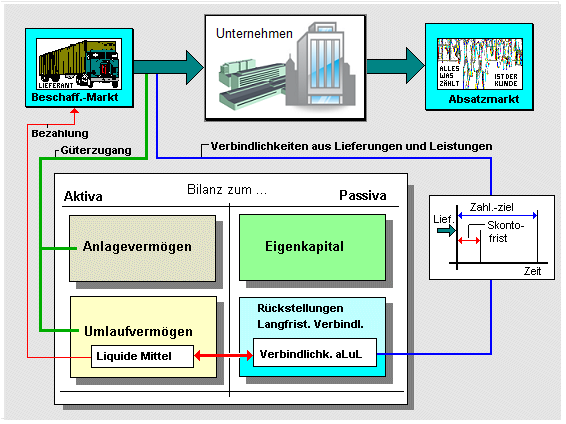
Verbindlichkeiten aus Lieferung und Leistung (often shortened to LuL) are, simply put, debts owed to suppliers for goods or services you've received but haven't yet paid for. Think of it as an "I owe you" note to your vendors. They are a crucial part of a company's short-term liabilities and reflect a company's accounts payable.
Why are they important? Understanding LuL is vital for:
- Cash flow management: Knowing your outstanding LuL helps you plan when payments are due and avoid late fees.
- Financial health assessment: High LuL compared to assets might signal liquidity problems.
- Supplier relationships: Paying on time is key to maintaining good relationships and securing favorable terms.
A Phased Walkthrough with Examples
Let's break down how Verbindlichkeiten aus LuL arise and how to track them using simple examples:
Phase 1: The Purchase
- Scenario: Your bakery, "Kuchenglück," orders flour from "Mehlparadies" worth €500 on credit terms of 30 days. You receive the flour.
- Accounting Entry:
- Debit: Einkauf von Rohstoffen (Raw Materials Purchase) - €500
- Credit: Verbindlichkeiten aus LuL (Accounts Payable) - €500
- Explanation: You've increased your inventory (flour) and simultaneously created a liability (the debt to Mehlparadies). The Verbindlichkeit aus LuL reflects this obligation.
Phase 2: Tracking the Liability
- Methods:
- Spreadsheet: A simple spreadsheet with columns for Supplier, Invoice Number, Invoice Date, Due Date, Amount, and Paid Status.
- Accounting Software: Programs like DATEV or Lexware automatically track LuL based on entered invoices.
- Example (Spreadsheet):
- Supplier: Mehlparadies
- Invoice Number: 12345
- Invoice Date: 2024-10-26
- Due Date: 2024-11-25 (30 days from invoice date)
- Amount: €500
- Paid Status: Unpaid
- Importance: Regular review of this tracking helps avoid missed payments and maintain accurate financial records.
Phase 3: The Payment
- Scenario: Kuchenglück pays Mehlparadies €500 on November 20, 2024.
- Accounting Entry:
- Debit: Verbindlichkeiten aus LuL (Accounts Payable) - €500
- Credit: Bank (Bank Account) - €500
- Explanation: Paying off the debt reduces your liability (Verbindlichkeiten aus LuL) and decreases your bank balance.
- Spreadsheet Update: Change the "Paid Status" in your spreadsheet to "Paid".
Phase 4: Understanding Potential Complications
- Discounts (Skonto): If Mehlparadies offered a 2% discount for early payment (e.g., within 10 days), the accounting becomes slightly more complex. You'd need to calculate the discount amount and adjust the entries accordingly. For example, if Kuchenglück paid within 10 days:
- Payment Amount: €500 * 0.98 = €490
- Accounting Entry:
- Debit: Verbindlichkeiten aus LuL (Accounts Payable) - €500
- Credit: Bank (Bank Account) - €490
- Credit: Erhaltene Skonti (Discounts Received) - €10
- Returns: If some of the flour was faulty and returned, you would reduce both your inventory and the Verbindlichkeit aus LuL.
- Late Payments: Can incur interest charges and damage supplier relationships. Actively manage your payables to avoid this.
Key Takeaways
- Verbindlichkeiten aus LuL represent unpaid supplier invoices.
- Accurate tracking is vital for financial health.
- Utilize spreadsheets or accounting software.
- Pay attention to payment terms, discounts, and potential returns.
Mastering the management of Verbindlichkeiten aus LuL is a cornerstone of effective financial management for any business. By understanding the principles and implementing a robust tracking system, you can ensure timely payments, maintain strong supplier relationships, and optimize your cash flow.